
















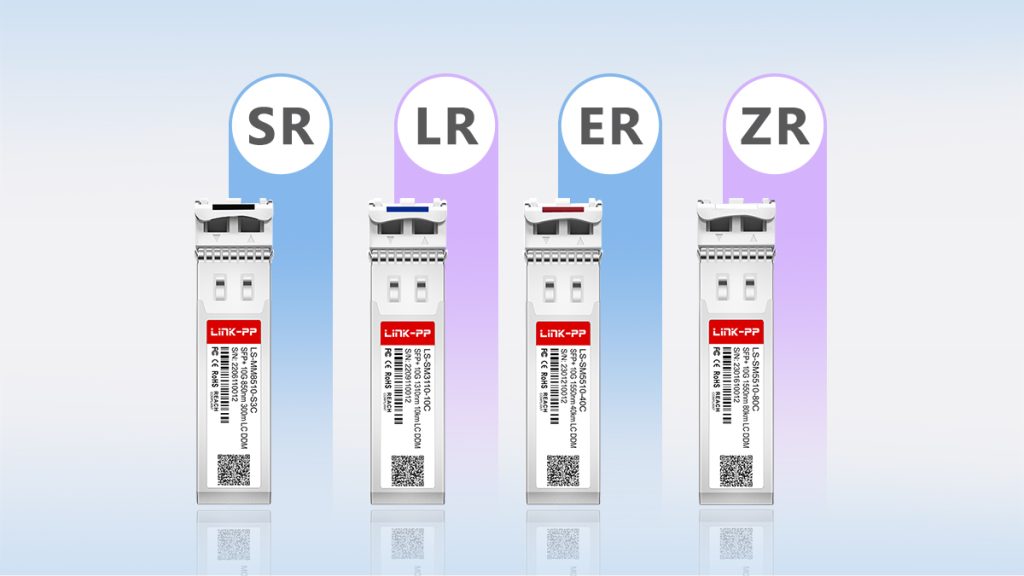
In the era of high-speed connectivity, ทรานส์ซีเวอร์ออปติคัล 10G serve as the backbone for seamless data transmission across enterprise networks, data centers, and telecom systems. ลิงก์-พีพี, a trusted manufacturer in fiber optic solutions, offers a robust portfolio of 10G optical transceivers designed to meet diverse networking demands. This guide explores the types, features, and selection criteria for โมดูล LINK-PP 10G SFP+, empowering you to make informed decisions for your infrastructure.
Overview of LINK-PP 10G Optical Transceivers
A ทรานซีเวอร์ออปติคอล 10G converts electrical signals into optical signals (and vice versa) to enable 10 Gigabit Ethernet (10GbE) communication over fiber optic cables. LINK-PP’s 10G modules are engineered for high performance, low latency, and compatibility with leading network equipment brands. Supporting a wide range of form factors, wavelengths, and transmission distances, these transceivers cater to applications from short-range data center links to long-haul metropolitan networks.
Types of LINK-PP 10G Optical Transceivers
ลิงก์-พีพี provides a comprehensive range of 10G transceivers to address varying network architectures. Below is a breakdown of key types and their use cases:
รูปทรง (Form Factor) | ความยาวคลื่น | ระยะทางสูงสุด | ชนิดของไฟเบอร์ | แอปพลิเคชัน |
|---|---|---|---|---|
SFP+ | 850 นาโนเมตร/1310 นาโนเมตร/1550 นาโนเมตร | 300m–120km | MM/SM | Data centers, enterprise networks |
XFP | 850 นาโนเมตร/1310 นาโนเมตร/1550 นาโนเมตร | 300m–80km | MM/SM | Telecom, metro/core networks |
X2/XENPAK | 1310 นาโนเมตร/1550 นาโนเมตร | 10km–80km | SM | การอัปเกรดโครงสร้างพื้นฐานแบบเก่า (Legacy infrastructure upgrades) |
BIDI SFP+ | Tx1490nm/Rx1550nm | สูงสุด 80 กม. | SM | Single-fiber bidirectional links |
CWDM/DWDM SFP+ | 1270–1610nm | 40km–120km | SM | High-density wavelength multiplexing |
1. SFP+ Modules
10G SR SFP+: Operates at 850nm over multi-mode fiber (OM3/OM4) for short-reach applications (up to 300m). Ideal for intra-rack connectivity.
SFP+ ความเร็ว 10G LR: Uses 1310nm over single-mode fiber (SMF) for distances up to 10km, perfect for campus networks.
10G ER/ZR SFP+: Delivers 1550nm wavelengths for extended reach (40km–120km), suited for metro networks.
2. XFP Modules
Similar to SFP+ but with a larger form factor, XFP modules are ideal for high-density deployments requiring long-haul transmission (up to 80km).
3. BIDI Transceivers
ของ LINK-PP BIDI (Bi-Directional) modules enable bidirectional communication over a single fiber strand, reducing fiber infrastructure costs. Available in SFP+ and XFP form factors.
4. CWDM/DWDM Modules
ของ LINK-PP CWDM (การมัลติเพล็กซ์แบบแบ่งความยาวคลื่นหยาบ) และ DWDM (Dense WDM) transceivers maximize fiber capacity by multiplexing multiple wavelengths on a single fiber pair. These are critical for scalable telecom and cloud networks.
Upgrade Your Network
Explore LINK-PP’s 10G Transceiver Portfolio now
Key Advantages of LINK-PP 10G Transceivers
ความเข้ากันได้กว้างขวาง: สอดคล้องตามมาตรฐาน MSA and rigorously tested for interoperability with Cisco, Juniper, Huawei, and 200+ other brands.
Versatile Form Factors: Support SFP+, XFP, X2, XENPAK, BIDI, and CWDM/DWDM configurations.
Extended Reach Options: Cover short-range (SR: 300m) to ultra-long-haul (ZR: 120km) applications.
Advanced Diagnostics: Built-in DDM/DOM for real-time monitoring of temperature, voltage, and optical power.
Industrial Durability: Operate in extreme temperatures (-40°C to 85°C) and harsh environments.
ความยืดหยุ่นด้านต้นทุน: Up to 70% savings compared to OEM modules, without compromising quality.
How to Choose the Right LINK-PP 10G Optical Transceiver
Step 1: Assess Network Requirements
ระยะทาง: Match the transceiver’s reach to your needs:
SR (300m): Data center interconnects.
LR (10 กม.): Campus or metro networks.
ER/ZR (40km–120km): Long-haul telecom links.
ชนิดของไฟเบอร์: Multi-mode (MMF) for cost-effective short links; โหมดเดี่ยว (SMF) for long-distance clarity.
Step 2: Verify Compatibility
Check your switch or router’s supported form factors (SFP+, XFP, etc.) and ensure wavelength alignment.
Step 3: Consider Advanced Features
BIDI: Opt for single-fiber modules to halve fiber usage.
CWDM/DWDM: Ideal for maximizing existing fiber capacity.
การรองรับ DOM: Essential for proactive network management.
Step 4: Evaluate Total Cost of Ownership
While upfront cost matters, prioritize modules with extended warranties (up to 5 years) and 24/7 technical support.
Top LINK-PP 10G Transceiver Recommendations
รูปแบบ | ประเภท | ความยาวคลื่น | ระยะทาง | กรณีการใช้งาน |
|---|---|---|---|---|
SFP+ SR | 850 นาโนเมตร | 300 เมตร | Data center racks | |
SFP+ LR | 1310 นาโนเมตร | 10 กิโลเมตร | เครือข่ายภายในมหาวิทยาลัยหรือเขตพื้นที่ | |
SFP+ ER | 1550 นาโนเมตร | 40 กม. | Metro network aggregation | |
BIDI SFP+ | 1490nm/1550nm | 80 กม. | Single-fiber backbone links | |
CWDM SFP+ | CWDM 1550nm | 40 กม. | เครือข่ายองค์กร | |
DWDM SFP+ | DWDM 1552.52nm | 40 กม. | High-capacity wavelength routing |
Final Tips for Optimal Selection
Always cross-check specifications with your equipment vendor’s compatibility list.
For industrial applications, prioritize extended temperature-range modules.
Leverage CWDM/DWDM transceivers to avoid costly fiber deployment.
By selecting LINK-PP 10G optical transceivers, you ensure a blend of performance, reliability, and cost savings. Explore LINK-PP’s full range of โมดูล 10G SFP+, BIDI transceivers, และ DWDM solutions to build a network ready for tomorrow’s challenges.
คำถามและคำตอบ
1. What is the difference between single-mode and multimode optical modules?
Single-mode modules transmit data over long distances using a narrow light beam. Multimode modules work best for short distances and use a wider light beam. Choose based on your network’s distance requirements.
💡 ข้อเสนอแนะ: Use single-mode for distances over 500 meters and multimode for shorter connections.
2. How do I know if an optical module is compatible with my equipment?
Check the module’s specifications for connector type, form factor, and cable compatibility. Ensure it adheres to industry standards like IEEE 802.3. Testing with your hardware can confirm compatibility.
3. Can I use third-party optical modules with my network equipment?
Yes, many third-party modules work well with branded equipment. However, verify compatibility and ensure the module meets your performance needs. Some manufacturers may void warranties if third-party modules are used.
4. How do I maintain the performance of my optical module?
Keep the module clean and monitor its operating temperature. Use environmental monitoring tools to ensure it stays within the recommended range. Regularly inspect cables and connectors for damage.
5. What should I prioritize when choosing an optical module?
Focus on your network’s bandwidth, distance, and environmental needs. Verify compatibility with existing equipment and consider long-term costs. Look for reliable vendors with strong warranties and support.
🔍 หมายเหตุ: Always evaluate user reviews and expert opinions before making a purchase.
ดูเพิ่มเติม
เข้าร่วมชุมชน LINK-PP อันน่าตื่นเต้นกับเราได้ตั้งแต่วันนี้