















В эпоху высокоскоростного доступа к Интернету, 10Г оптические трансиверы служат основой для бесперебойной передачи данных в корпоративных сетях, центрах обработки данных и телекоммуникационных системах. ССЫЛКА-PP, надежный производитель решений в области оптоволоконных технологий, предлагает обширный ассортимент оптических приемопередатчиков 10G, разработанных для удовлетворения разнообразных сетевых потребностей. В данном руководстве рассматриваются типы, характеристики и критерии выбора модулей LINK-PP 10G SFP+, что позволит вам принимать обоснованные решения в отношении вашей инфраструктуры.
Обзор оптических приемопередатчиков LINK-PP 10G
A оптического трансивера 10G
преобразует электрические сигналы в оптические (и наоборот), обеспечивая передачу данных по стандарту 10 Gigabit Ethernet (10GbE) по оптоволоконным кабелям. Модули 10G компании LINK-PP разработаны с учетом требований высокой производительности, низкой задержки и совместимости с сетевым оборудованием ведущих производителей. Благодаря поддержке широкого спектра форм-факторов, длин волн и расстояний передачи эти приемопередатчики подходят для различных применений — от каналов связи в центрах обработки данных на короткие расстояния до магистральных городских сетей.
Типы оптических приемопередатчиков LINK-PP 10G
ССЫЛКА-PP предлагает широкий ассортимент 10G-трансиверов, предназначенных для различных сетевых архитектур. Ниже приведена классификация основных типов и сфер их применения:
Форм-фактор | Длина волны | Максимальное расстояние | Тип волокна | Применение |
|---|---|---|---|---|
SFP+ | 850 нм / 1310 нм / 1550 нм | 300 м–120 км | ММ/СМ | Центры обработки данных, корпоративные сети |
XFP | 850 нм / 1310 нм / 1550 нм | 300 м–80 км | ММ/СМ | Телекоммуникации, сети метро/магистральные сети |
X2/XENPAK | 1310 нм/1550 нм | 10 км–80 км | СМ | Обновление устаревшей инфраструктуры |
BIDI SFP+ | Передача 1490 нм / Прием 1550 нм | До 80 км | СМ | Одноволоконные двунаправленные каналы связи |
CWDM/DWDM SFP+ | 1270–1610 нм | 40–120 км | СМ | Мультиплексирование по длине волны с высокой плотностью |
1. Модули SFP+
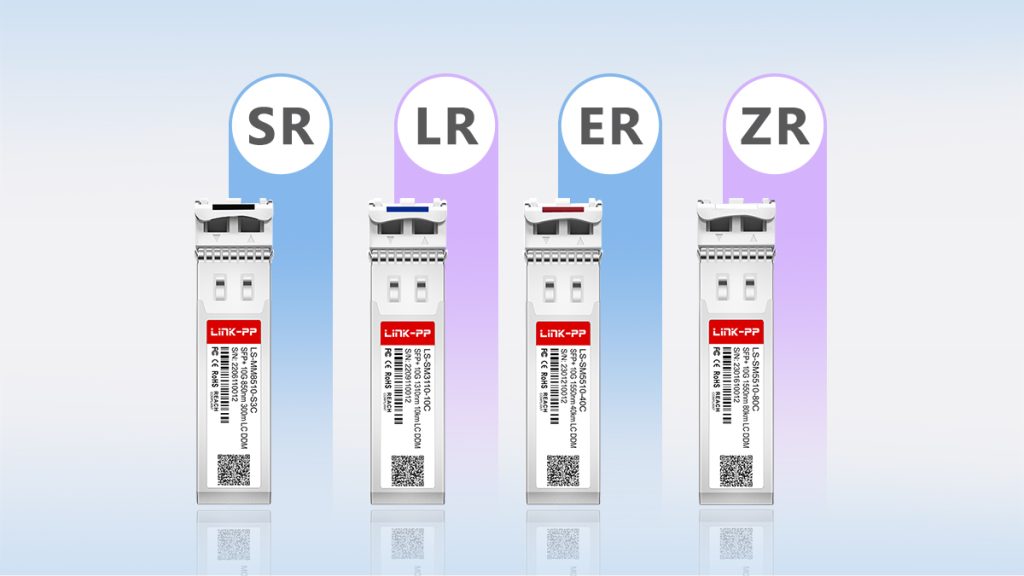
10G SR SFP+: Работает на длине волны 850 нм по многомодовому волокну (OM3/OM4) для соединений на короткие расстояния (до 300 м). Идеально подходит для соединений внутри стойки.
10G LR SFP+: Использует длину волны 1310 нм в одномодовом оптоволокне (SMF) для передачи данных на расстояния до 10 км, что идеально подходит для сетей на территории кампуса.
10G ER/ZR SFP+: Обеспечивает передачу сигнала с длиной волны 1550 нм для увеличения дальности связи (40–120 км), подходит для сетей метрополитена.
2. Модули XFP
Модули XFP, аналогичные модулям SFP+, но имеющие более крупный форм-фактор, идеально подходят для систем высокой плотности, требующих передачи сигнала на большие расстояния (до 80 км).
3. Приемопередатчики BIDI
полным ассортиментом Модули BIDI (двунаправленные) обеспечивают двунаправленную связь по одной волоконной нити, что позволяет сократить затраты на оптоволоконную инфраструктуру. Выпускаются в форм-факторах SFP+ и XFP.
4. Модули CWDM/DWDM
полным ассортиментом CWDM (грубое мультиплексирование по длине волны) и Приемопередатчики DWDM (Dense WDM) максимизировать пропускную способность оптоволокна за счет мультиплексирования нескольких длин волн на одной паре волокон. Это имеет решающее значение для масштабируемых телекоммуникационных и облачных сетей.
Модернизируйте свою сеть
Ознакомьтесь с ассортиментом 10G-трансиверов LINK-PP прямо сейчас
Основные преимущества приемопередатчиков LINK-PP 10G
Широкая совместимость: модулей, совместимых со спецификацией MSA, и прошли тщательные испытания на совместимость с оборудованием Cisco, Juniper, Huawei и более чем 200 другими брендами.
Универсальные форм-факторы: Поддержка конфигураций SFP+, XFP, X2, XENPAK, BIDI и CWDM/DWDM.
Варианты увеличения дальности действия: Охватывает области применения от ближнего радиуса действия (SR: 300 м) до сверхдального радиуса действия (ZR: 120 км).
Расширенная диагностика: Встроенный DDM/DOM для мониторинга температуры, напряжения и оптической мощности в реальном времени.
Промышленная долговечность: Работает в условиях экстремальных температур (от -40 °C до 85 °C) и в суровых условиях эксплуатации.
Экономическая эффективность: Экономия до 70% по сравнению с модулями оригинального производителя без ущерба для качества.
Как выбрать подходящий оптический трансивер LINK-PP 10G
Шаг 1: Оценка сетевых требований
Расстояние: Подберите дальность действия приемопередатчика в соответствии с вашими потребностями:
SR (300 м): Межцентровые соединения.
LR (10 км): Сети на территории кампуса или в метро.
ER/ZR (40 км–120 км): Телекоммуникационные линии дальнего действия.
Тип волокна: Многомодовый (MMF) для создания экономичных коротких ссылок; одномодовое волокно (SMF) для четкости передачи на большие расстояния.
Шаг 2: Проверка совместимости
Проверьте, какие форм-факторы поддерживает ваш коммутатор или маршрутизатор (SFP+, XFP и т. д.), и убедитесь в соответствии длины волны.
Шаг 3: Рассмотрите расширенные функции
BIDI: Выбирайте одноволоконные модули, чтобы сократить потребление оптоволокна вдвое.
CWDM/DWDM: Идеально подходит для максимального использования пропускной способности существующей оптоволоконной сети.
Поддержка DOM: Необходимо для проактивного управления сетью.
Шаг 4: Оценка совокупной стоимости владения
Несмотря на то, что первоначальные затраты имеют значение, отдавайте предпочтение модулям с расширенной гарантией (до 5 лет) и круглосуточной технической поддержкой.
Лучшие рекомендации по приемопередатчикам LINK-PP 10G
Модель | Тип | Длина волны | Расстояние | Область применения |
|---|---|---|---|---|
SFP+ SR | 850 нм | 300 м | Стойки для центров обработки данных | |
SFP+ LR | 1310 нм | 10 км | Кампусные сети | |
SFP+ ER | 1550 нм | 40 км | Агрегация сети метро | |
BIDI SFP+ | 1490 нм/1550 нм | 80 км | Магистральные линии связи на основе одноволоконных кабелей | |
CWDM SFP+ | CWDM 1550 нм | 40 км | Корпоративные сети | |
DWDM SFP+ | DWDM 1552,52 нм | 40 км | Маршрутизация по длине волны с высокой пропускной способностью |
Заключительные рекомендации по оптимальному выбору
Всегда сверяйте технические характеристики со списком совместимости, предоставленным поставщиком оборудования.
Для промышленного применения следует отдавать предпочтение модулям с расширенным диапазоном рабочих температур.
Финансовый рычаг Приемопередатчики CWDM/DWDM чтобы избежать затратного развертывания оптоволоконной сети.
Выбрав Оптические приемопередатчики LINK-PP 10G, вы обеспечите оптимальное сочетание производительности, надежности и экономии. Ознакомьтесь с полным ассортиментом продукции LINK-PP: Модули 10G SFP+, Приемопередатчики BIDI, и Решения на основе технологии DWDM чтобы создать сеть, готовую к вызовам завтрашнего дня.
Вопросы и ответы
1. В чём заключается разница между одномодовыми и многомодовыми оптическими модулями?
Одномодовые модули передают данные на большие расстояния с помощью узкого светового луча. Многомодовые модули лучше всего подходят для коротких расстояний и используют более широкий световой луч. Выбирайте модуль с учетом требований вашей сети к расстоянию передачи.
💡 Совет: Для расстояний свыше 500 метров используйте одномодовый кабель, а для более коротких соединений — многомодовый.
2. Как узнать, совместим ли оптический модуль с моим оборудованием?
Ознакомьтесь с техническими характеристиками модуля, чтобы уточнить тип разъема, форм-фактор и совместимость с кабелями. Убедитесь, что он соответствует отраслевым стандартам, таким как IEEE 802.3. Совместимость можно подтвердить путем тестирования с вашим оборудованием.
3. Можно ли использовать оптические модули сторонних производителей с моим сетевым оборудованием?
Да, многие модули сторонних производителей хорошо совместимы с фирменным оборудованием. Однако следует проверить совместимость и убедиться, что модуль соответствует вашим требованиям к производительности. Некоторые производители могут аннулировать гарантию в случае использования модулей сторонних производителей.
4. Как поддерживать работоспособность оптического модуля?
Следите за чистотой модуля и контролируйте его рабочую температуру. Используйте средства мониторинга окружающей среды, чтобы обеспечить соблюдение рекомендуемого диапазона температур. Регулярно проверяйте кабели и разъемы на наличие повреждений.
5. На что следует обратить особое внимание при выборе оптического модуля?
Обратите внимание на пропускную способность вашей сети, расстояние и требования к условиям эксплуатации. Убедитесь в совместимости с имеющимся оборудованием и просчитайте долгосрочные затраты. Выбирайте надежных поставщиков, предлагающих надежные гарантии и качественную техническую поддержку.
🔍 Примечание: Перед совершением покупки всегда изучайте отзывы пользователей и мнения экспертов.
См. также
Присоединяйтесь к увлекательному сообществу LINK-PP уже сегодня