















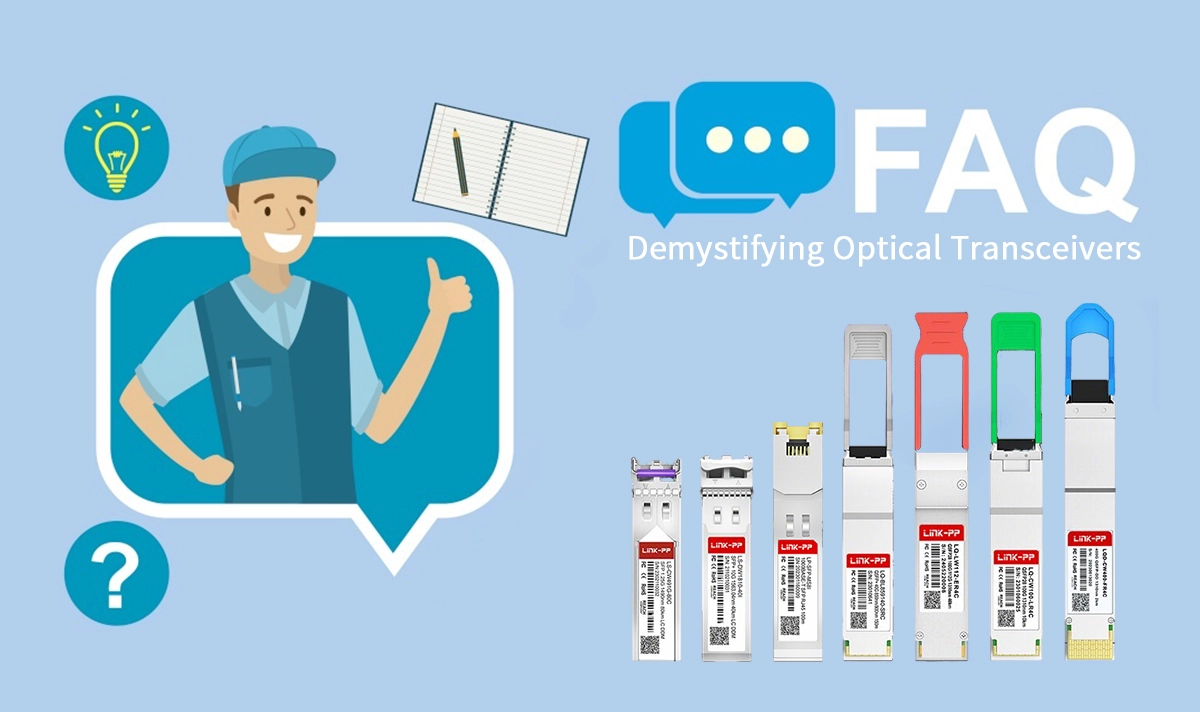
Bộ thu phát quang are the unsung heroes of modern connectivity, powering everything from cloud data centers to enterprise networks. Yet, selecting and managing them can be a complex task. Whether you’re a seasoned network architect or a procurement specialist, having the right information is key.
🚀 Optical Transceivers FAQ Summary
This comprehensive guide answers the top 12 frequently asked questions to demystify optical modules and help you make informed, cost-effective decisions.
1. What is an Optical Transceiver and what is its primary function?
Một bộ thu phát quang is a modular device that serves as both a transmitter and a receiver (hence the name). It plugs into network equipment (like switches, routers, or servers) and its primary function is to convert electrical signals from the device into light signals for transmission over fiber optic cables, and then convert received light signals back into electrical signals. It’s fundamental for truyền dẫn dữ liệu tốc độ cao.
2. What’s the difference between Multi-mode (MMF) and Single-mode Fiber (SMF), and which transceiver do I need?
This is a fundamental distinction in sợi quang của bạn.
Sợi quang đa mode (MMF): Has a larger core, allowing multiple light modes to travel. It’s used for shorter distances (within buildings or campuses) and is generally less expensive. Transceivers like SR (Short Reach) are used with MMF.
Sợi quang đơn mode (SMF): Has a smaller core, allowing only one light mode to travel. It’s used for long-distance connections (across cities or countries) with higher bandwidth. Transceivers like LR, ER, ZR are used with SMF.
Your choice depends entirely on the required transmission distance.
3. What are the most common form factors and their applications?
Form factors standardize the size and electrical interface of transceivers. Here’s a table of the most prevalent types:
Hệ số dạng | Typical Applications & Speeds | Đặc điểm chính |
|---|---|---|
SFP | 1Gbps Networks, SONET, Fibre Channel | Compact, hot-pluggable, widely used. |
SFP+ | 10Gbps Data Centers, 10G Ethernet | Same size as SFP, higher data rate. |
QSFP+ | 40G Ethernet, InfiniBand | Supports 4x 10G channels. |
QSFP28 | Ethernet 100G | The workhorse for 100G, supports 4x 25G channels. |
QSFP-DD | Ethernet 200G/400G | Backward compatible with QSFP, uses 8 channels. |
OSFP | 400G/800G Ethernet | Newer form factor for next-gen high power & density. |
For a reliable 100G solution, the LINK-PP Các bộ thu phát is an excellent choice for short-reach data center links.
4. What does the jargon “SR”, “LR”, “ER”, and “ZR” mean?
These abbreviations denote the transceiver’s reach and the type of fiber it’s designed for:
SR (Short Reach): For short distances (up to ~500m) over sợi quang đa mode (multi-mode fiber) (MMF).
LR (Long Reach): For long distances (up to 10km) over sợi quang đơn mode (SMF).
ER (Extended Reach): For extended distances (up to 40km) over SMF.
ZR (Long Haul): For very long distances (up to 80km+) over SMF.
5. Are third-party optics (like LINK-PP) compatible with my Cisco/Juniper/Arista switch?
Yes, absolutely. Modern networking equipment from major vendors is designed to work with standards-compliant (MSA-compliant) transceivers. Reputable third-party manufacturers like LINK-PP engineer their modules to meet these exact standards, guaranteeing full compatibility and performance. This is a proven strategy for reducing data center costs without sacrificing quality or reliability.
6. Why is Digital Diagnostics Monitoring (DDM/DOM) important?
Also known as Digital Optical Monitoring, DDM is a critical feature that provides real-time monitoring of transceiver parameters like temperature, optical output power, optical input power, laser bias current, and transceiver supply voltage. This allows for proactive network monitoring, simplified troubleshooting, and predictive failure analysis, helping to avoid costly network downtime.
7. What is the difference between a transceiver and a transponder?
These terms are often confused.
A Bộ thu phát (Transmitter + Receiver) is a single device that handles both transmitting and receiving signals through the same port.
A Transponder is a device that receives an optical signal on one wavelength and retransmits it on another wavelength. It’s often used in Đa Truy Nhập Phân Chia Theo Bước Sóng (WDM) systems. In simple terms, a transponder is like a translator for light signals.
8. What does “COLD” and “HOT” mean in a transceiver model number?
This refers to the operating temperature range of the transceiver, a crucial factor for mạng công nghiệp and harsh environments.
Commercial (COLD): Typically rated for 0°C to 70°C. Standard for most data center and enterprise environments.
Industrial (HOT or EXT): Rated for a much wider range, often -40°C to 85°C. Designed for outdoor, industrial, or carrier applications where temperatures can be extreme.
9. How can I troubleshoot a faulty optical transceiver?
Common troubleshooting steps include:
Check physical connections and ensure the fiber is clean.
Verify the transceiver is securely seated in the port.
Use show interface commands on your switch to check for errors or “RX power” levels.
Hãy tận dụng DDM/DOM data to check if TX power, RX power, and temperature are within normal ranges.
Swap the transceiver with a known good one from the same vendor, like a LINK-PP SFP-10G-SR
, to isolate the problem.
10. What should I consider when upgrading my network to higher speeds (e.g., 10G to 25G/100G)?
Key network upgrade considerations include:
Hệ thống cáp quang: Does your existing fiber support the new standard? (e.g., OM3/OM4 for SR, OS2 for LR).
Hình dạng (Form Factor):
Ensure your switch has the correct ports (e.g., SFP+ for 10G, QSFP28 for 100G).Power and Heat: Higher-speed transceivers may consume more power and generate more heat, impacting data center cooling.
Cost vs. Performance: Evaluate the total cost of ownership, including the savings from using compatible optics.
11. Why is fiber optic cleaning so critical for transceiver performance?
Contamination (dust, oil) on fiber connectors is the #1 cause of intermittent errors, packet loss, and complete link failure. A tiny speck of dust can scatter or absorb light, significantly attenuating the signal. Regular cleaning with appropriate tools (clicker pens, cassette reels, inspection scopes) is non-negotiable for maintaining network health.
12. What are the emerging trends in optical transceiver technology?
The industry is constantly evolving. Key trends include:
Tốc độ cao hơn: 800G and 1.6T transceivers (using OSFP and QSFP-DD form factors) are already in development.
Quang học đóng gói cùng nhau (Co-Packaged Optics) (CPO)
: Moving the optics closer to the switch ASIC to reduce power consumption and increase bandwidth density.Linear Drive/Pluggable Coherent Optics: Bringing coherent technology (traditionally for long-haul) into the data center for longer intra-DC reaches.
Greater Integration & Intelligence: More advanced diagnostics and integration with network management systems.
🚀 Power Your Network with Confidence with LINK-PP
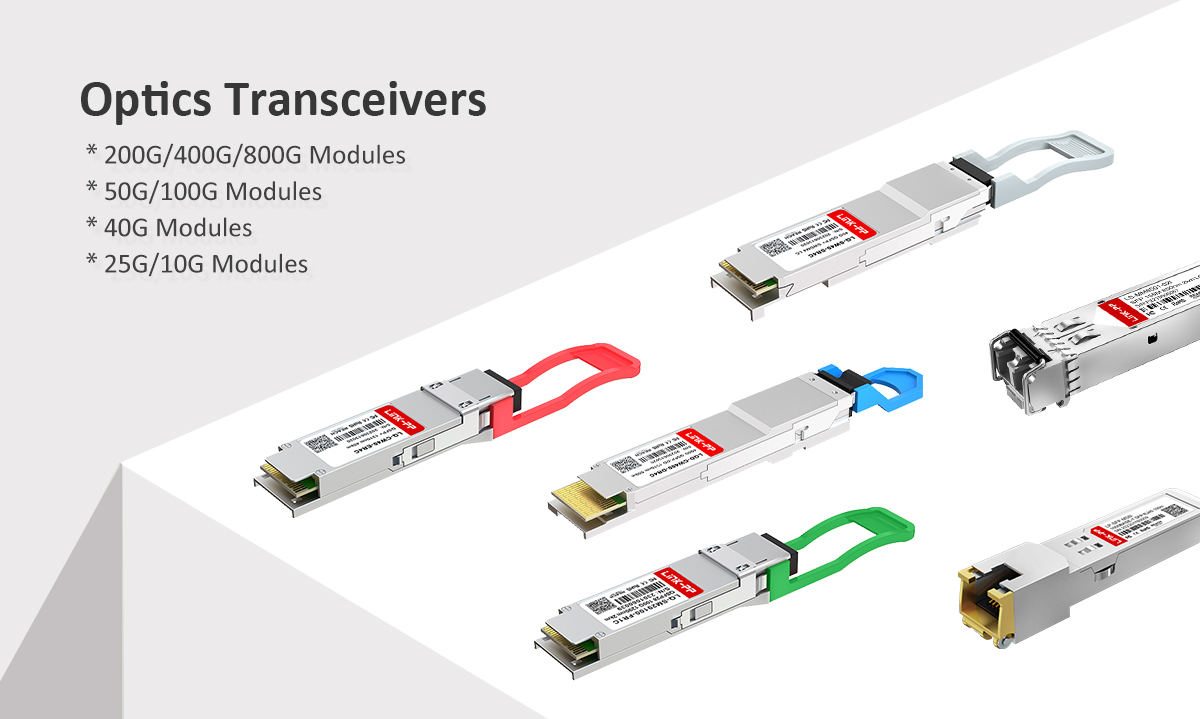
Việc hiểu rõ khả năng tương thích của bộ thu phát quang and technology is the first step. Choosing the right partner is the next. LINK-PP provides high-performance, rigorously tested optical transceivers that seamlessly integrate into your existing infrastructure, from standard SFP-10G-LR modules to cutting-edge 400G QSFP-DD giải pháp.
We guarantee 100% compatibility, lifetime warranty, and significant savings compared to OEM prices.
Ready to simplify your procurement and boost your network’s ROI?
📍 Get a personalized recommendation and quote today!
[Explore LINK-PP’s Full Product Catalog Now] or [Contact Our Experts]