















▶ Introduction
In an era where data is the new oil, modern databases must operate under the strict demands of high throughput, minimal latency, and abundant scalability. Yet behind every high-performing database cluster lies a physical layer that often goes unappreciated: the optical transceivers that connect servers, switches, and storage nodes.
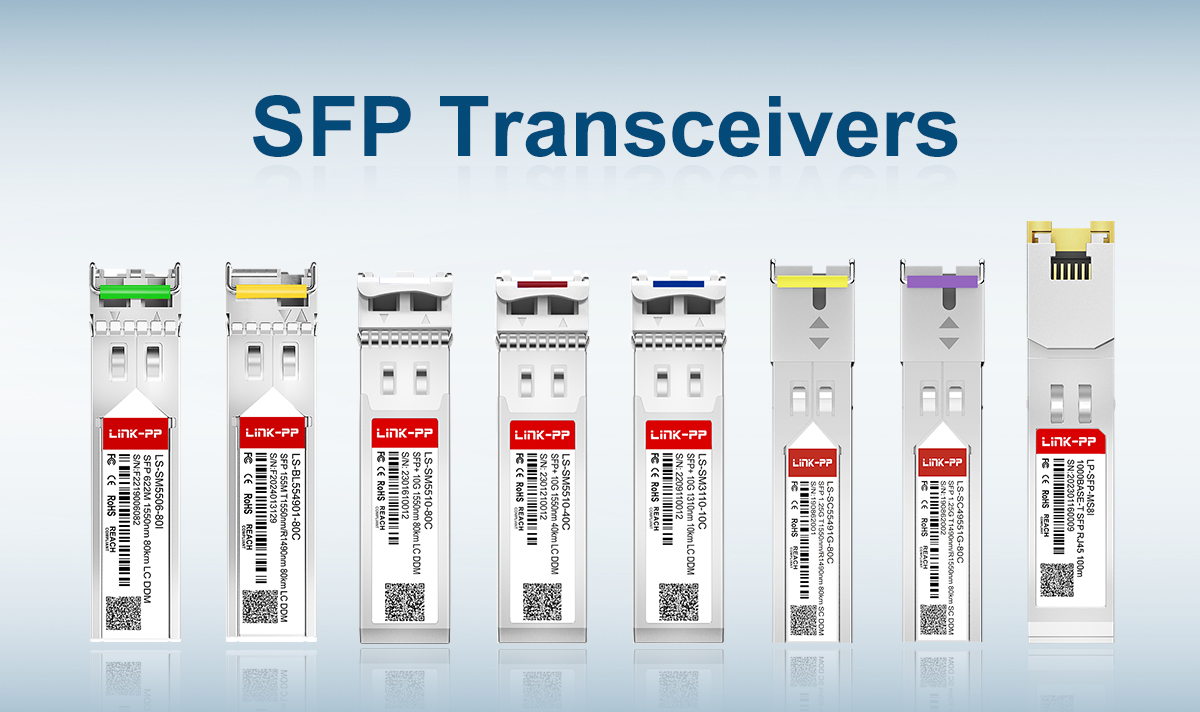
LINK-PP’s SFP / SFP+ transceiver modules play a pivotal role in ensuring that data centers and database systems maintain consistent, high-quality links. This article examines how LINK-PP 광 트랜스시버 support modern database infrastructures and data centers, from technical specifications to deployment best practices.
▶ Understanding SFP Modules & Their Role in Data Centers
What Is an SFP / SFP+ Module?
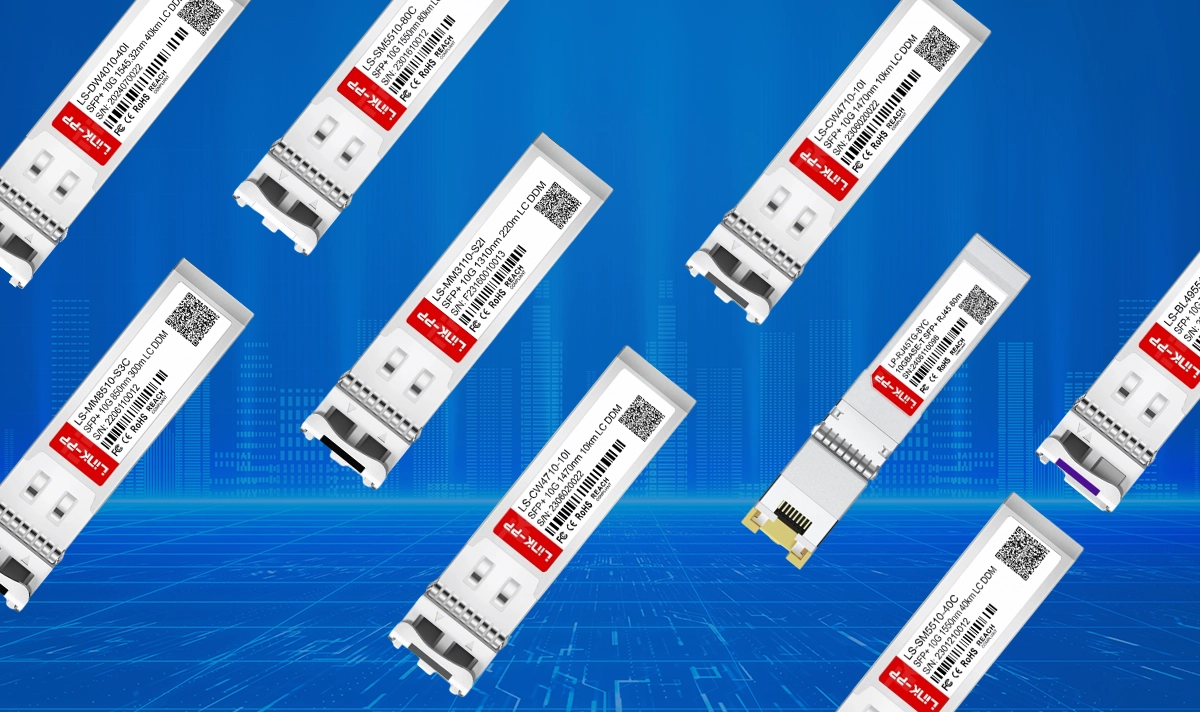
A Small Form-factor Pluggable (SFP) module is a compact, hot-swappable optical transceiver. It converts electrical signals into optical ones (and vice versa), enabling fiber-based communication between network devices.
SFP commonly supports data rates around 1 Gbps
SFP+ allows 10 Gbps and higher, retaining the same physical form factor but with higher performance
These modules adhere to industry standards (MSA, IEEE), ensuring interoperability across brands
Because of their compact size and 핫플러그 가능 nature, SFP modules are widely used in data centers to connect racks, aggregation switches, and interconnect links without requiring system downtime.
Why SFP Modules Matter for Database Networks
Databases—especially distributed or clustered ones—depend heavily on network performance. Key reasons why SFP modules are critical include:
Low Latency & High Throughput: Optical links reduce signal conversion overhead, supporting fast replication, synchronization, and query responses.
확장성: Data center links must scale in port count and bandwidth. SFP / SFP+ allow modular expansion.
Reliability & Quality of Service: With proper modules and diagnostics, you can monitor link health, detect errors early, and maintain uptime.
Media Conversion Flexibility: Some environments mix copper (RJ-45) and fiber networks. LINK-PP provides SFP+ Copper modules to bridge such heterogeneity.
▶ LINK-PP SFP Modules — Key Specifications and Advantages
When evaluating transceivers for database environments, several technical factors come into play. Below, we examine how LINK-PP’s offerings align with these requirements.
Notable LINK-PP SFP Transceivers
On the LINK-PP product catalog, you’ll find a range of modules, including:
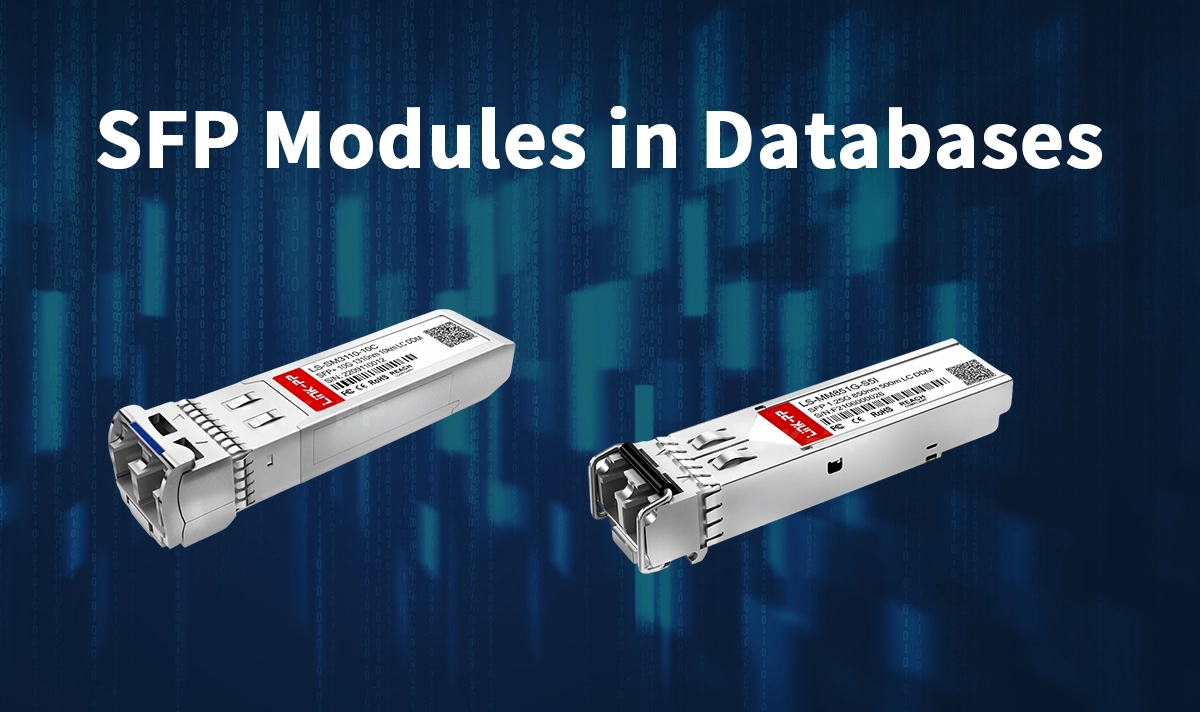
LS-MM851G-S5I — a 1G SFP 850 nm multimode fiber (MMF) module, up to 550m.
LS-SM3110-10C — 10GBASE-LR SFP+ with support for 10km reach over single-mode fiber.
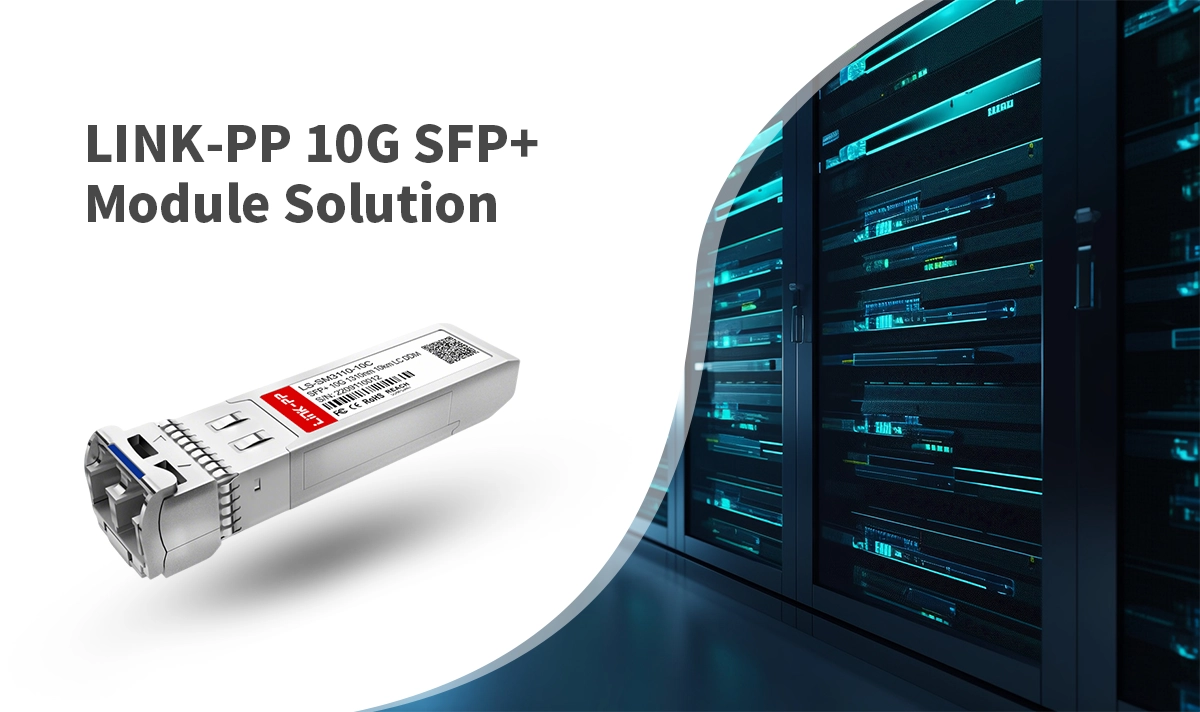
예를 들어, LS-SM3110-10C offers:
Data rate: ~10.3125 Gbps
파장: 1310 nm
Max reach: 10km over single-mode fiber
Hot-pluggable form factor
Compliance with SFF-8431, IEEE 802.3ae, and MSA standards
Low power consumption (< 1 W)
Digital Optical Monitoring (DOM) support (temperature, TX/RX power, voltage, etc.)
Typical operating range 0°C to 70°C (some variants may support industrial ranges)
These specifications make LINK-PP modules suitable for both intra-data-center links 및 inter-rack or inter-building connectivity.
Benefit for Database Infrastructure
기능 | Benefit for Databases / Data Centers |
|---|---|
핫스왑 가능 설계 | When you upgrade or replace hardware, the network stays live—critical for high-availability database clusters |
Interoperability & Standards compliance | Ensures that LINK-PP 모듈 work with major switch brands (Cisco, Juniper, Arista, etc.) |
낮은 전력 소비 | Enables high port density without excessive cooling or power costs |
Diagnostic monitoring (DOM / DDM) | Real-time link health data helps detect degradation or faults before they impact database performance |
Support for a mix of media | LINK-PP modules support hybrid architectures. |
Because database workloads are sensitive to latency and packet loss, these advantages make LINK-PP’s transceiver modules a solid choice for high-performance environments.
▶ How LINK-PP SFP Modules Support Database Use Cases
In this section, we dive deeper into how these modules operate in actual database and 데이터 센터 contexts.
Database Cluster Replication & Synchronization
In clustered database systems (e.g., PostgreSQL streaming replication, MySQL Group Replication, CockroachDB, or distributed NoSQL systems), nodes continuously exchange transaction logs, indices, and heartbeats. LINK-PP의 광 트랜스시버 help by:
Maintaining stable links with low jitter and minimal packet loss
Enabling higher 대역폭 for bulk data transfer (e.g., rebalancing, backups)
Providing real-time diagnostics so network engineers can spot performance dips
East-West Traffic (Server-to-Server)
In modern data center topologies, a large amount of traffic flows between servers (east-west) for database sharding, caching, and analytics. LINK-PP SFPs placed in top-of-rack (ToR) or aggregation switches support this high-bandwidth traffic plane without becoming a bottleneck.
Storage Area Network (SAN) & Backup Links
Many high-end databases rely on SANs or networked storage backends, often using Fibre Channel or iSCSI over optical fiber. While LINK-PP primarily offers Ethernet SFPs, the same optical backbone supports these storage networks, and clean, low-latency links are beneficial for database I/O paths.
Inter-Data-Center & Disaster Recovery
For geographically distributed databases or backups, 10 km (or longer) optical links are common. LINK-PP’s LR (long reach) modules (such as LS-SM3110-10C) are built for such distances, maintaining signal integrity and minimizing bit error rates across metro-scale fiber.
▶ Deployment Best Practices & Integration Tips
To maximize the benefit of LINK-PP SFP modules in database environments, follow these guidelines:
Right-size the link: Don’t overspecify. Use multimode SFPs for short intra-rack or intra-floor links; use single-mode LR modules for longer spans.
Match fiber type & connector: Ensure your fiber (single-mode or multimode) and connector type (LC, duplex) match the module.
Enable and monitor diagnostics: Use DOM/DDM functions to continuously monitor link quality (optical power, temperature, voltage). This helps catch degradation early.
Plan for redundancy: Use dual links (active/standby) or multiple paths in case one fails — crucial for database availability.
Thermal and power budget consideration: In high-density racks, multiple modules can add heat; ensure proper airflow and cooling.
Compatibility validation: Though LINK-PP 모듈 are designed to be interoperable, always verify compatibility with your switch or hardware platform.
결론
Modern databases demand more than just smart architecture and indexes. They also require robust, high-speed, low-latency physical connectivity as their foundation. LINK-PP’s SFP / SFP+ optical transceivers deliver that foundation with hot-swappable, standards-compliant modules designed for demanding data center environments.
By selecting the right module (e.g., LS-SM3110-10C for 10km links) and integrating proper diagnostics and redundancy, network and database architects can ensure their systems deliver the performance, reliability, and scale required today and tomorrow.
If you’re interested in browsing LINK-PP’s full SFP / optical transceiver line, you can visit the official store here: LINK-PP SFP Modules Store.