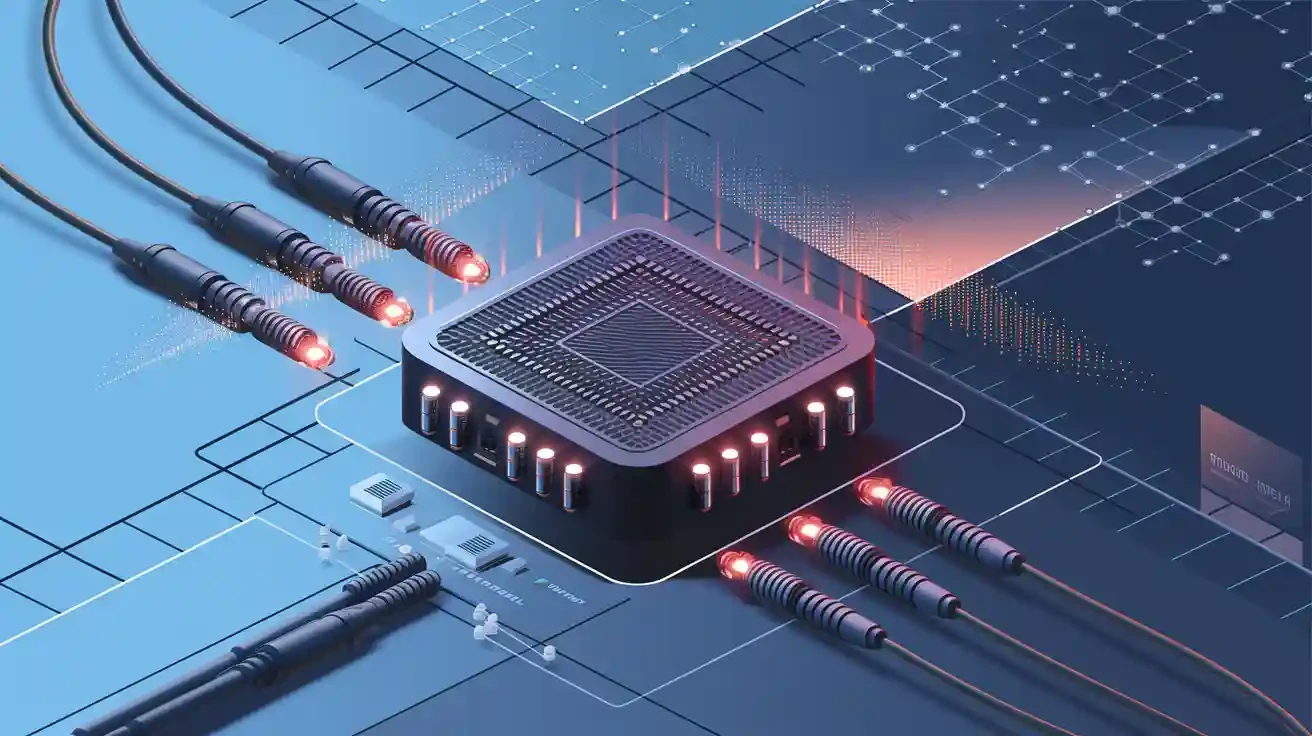
















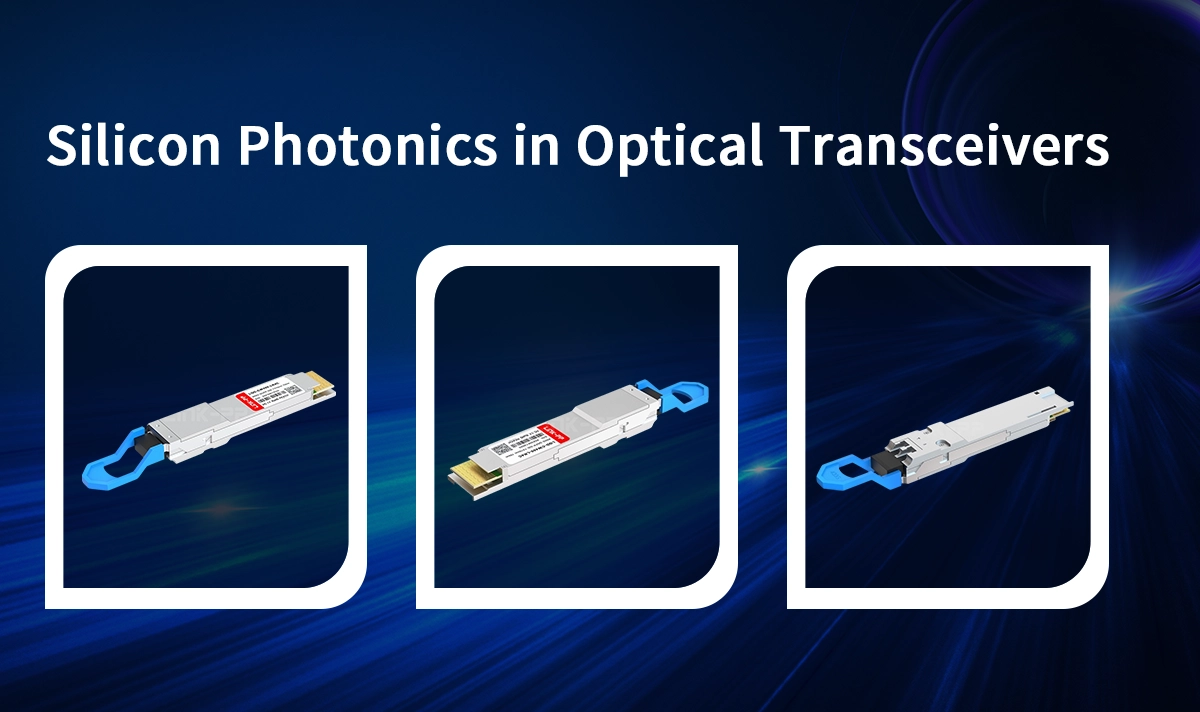
➡️ Introduction: The Rise of Silicon Photonics
As global data demand surges with AI, cloud computing, and 6G networks, the limitations of traditional copper and discrete optical systems have become evident. photonique sur silicium (SiPh) has emerged as a groundbreaking technology that merges the high bandwidth of photonics with the scalability of silicon-based semiconductor manufacturing.
By integrating optical and electronic components on a single silicon substrate, silicon photonics enables faster, smaller, and more energy-efficient communication systems — and it’s reshaping the architecture of modern émetteurs-récepteurs optiques.
➡️ What Is Silicon Photonics?
photonique sur silicium refers to the use of silicon as an optical medium to transmit, modulate, and detect light signals on a chip.
This technology takes advantage of mature CMOS fabrication processes, allowing photonic devices to be manufactured at scale — similar to how electronic integrated circuits are made.
Core Components of Silicon Photonics
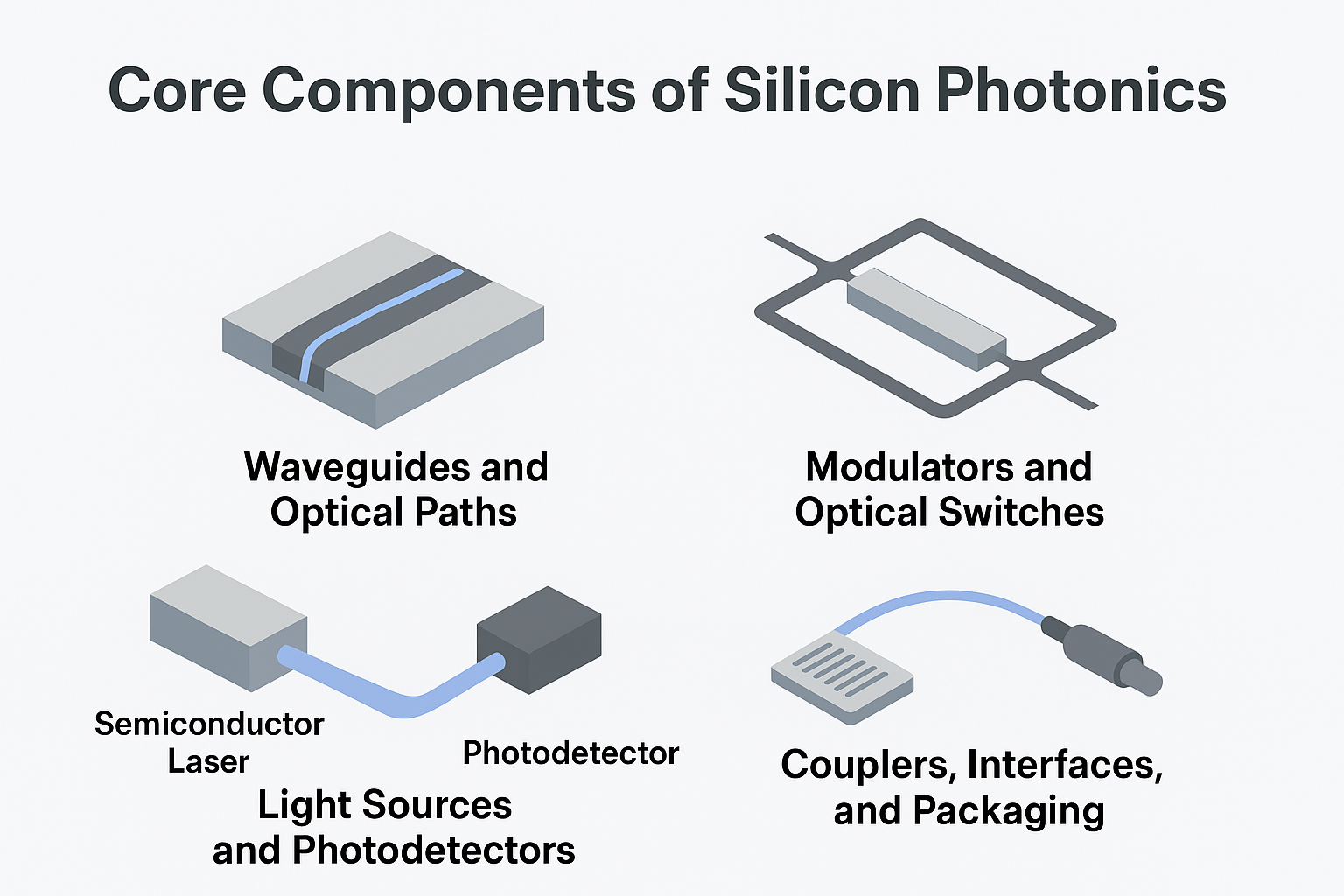
Silicon photonics systems typically consist of:
Waveguides and Optical Paths: Channel light through silicon with minimal loss.
Modulators and Optical Switches: Encode electrical signals onto light waves for data transmission.
Light Sources and Photodetectors: Semiconductor lasers generate optical signals; photodiodes convert them back into electrical form.
Couplers, Interfaces, and Packaging: Manage optical input/output and integration with fiber networks.
➡️ The Relationship Between Silicon Photonics and Optical Transceivers
émetteurs-récepteurs optiques — the key modules responsible for converting electrical and optical signals — are undergoing a profound transformation thanks to silicon photonics.
Traditional transceivers rely on discrete optical components such as VCSEL, modulators, and photodiodes. Silicon photonics, however, integrates these functions onto a single silicon chip, replacing multiple discrete parts with monolithic integration.
This shift redefines how transceivers are designed, assembled, and optimized.
➡️ How Silicon Photonics Is Changing Optical Transceiver Design
1. Higher Bandwidth and Data Rates
Silicon photonics enables multi-wavelength and advanced modulation (PAM4, QPSK, coherent detection), supporting data rates up to 400G, 800G, and beyond 1.6T per module.
By integrating waveguides and multiplexers directly on silicon, photonic transceivers achieve higher channel density and greater spectral efficiency.
➡ Example:
LIEN-PP QSFP-DD 400G transceivers series can leverage silicon photonics to handle ultra-high-speed signals while maintaining excellent signal integrity.
2. Lower Power Consumption
Optical interconnects on silicon drastically reduce power requirements by minimizing electrical-to-optical conversion losses.
For hyperscale data centers, where energy efficiency is critical, silicon photonics transceivers offer substantial reductions in per-bit power consumption compared to legacy designs.
3. Miniaturization and High Integration
Silicon photonics supports co-packaged optics (CPO) — the integration of optical engines directly with switch ASICs.
This approach shortens electrical traces, reduces latency, and enables chip-level optical interconnects, critical for next-generation AI and HPC systems.
4. Cost Reduction and Scalable Manufacturing
Because SiPh devices can be fabricated using standard CMOS foundries, production can be scaled with consistent performance and high yield.
This manufacturing compatibility reduces cost per unit and simplifies large-scale transceiver deployment.
5. Enhanced Signal Integrity and Ultra-Low Latency
Integrated silicon photonics minimizes coupling loss and interference, delivering cleaner optical signals and lower latency — essential for AI clusters, 6G fronthaul, and high-frequency trading systems.
➡️ Silicon Photonics and LINK-PP Optical Modules
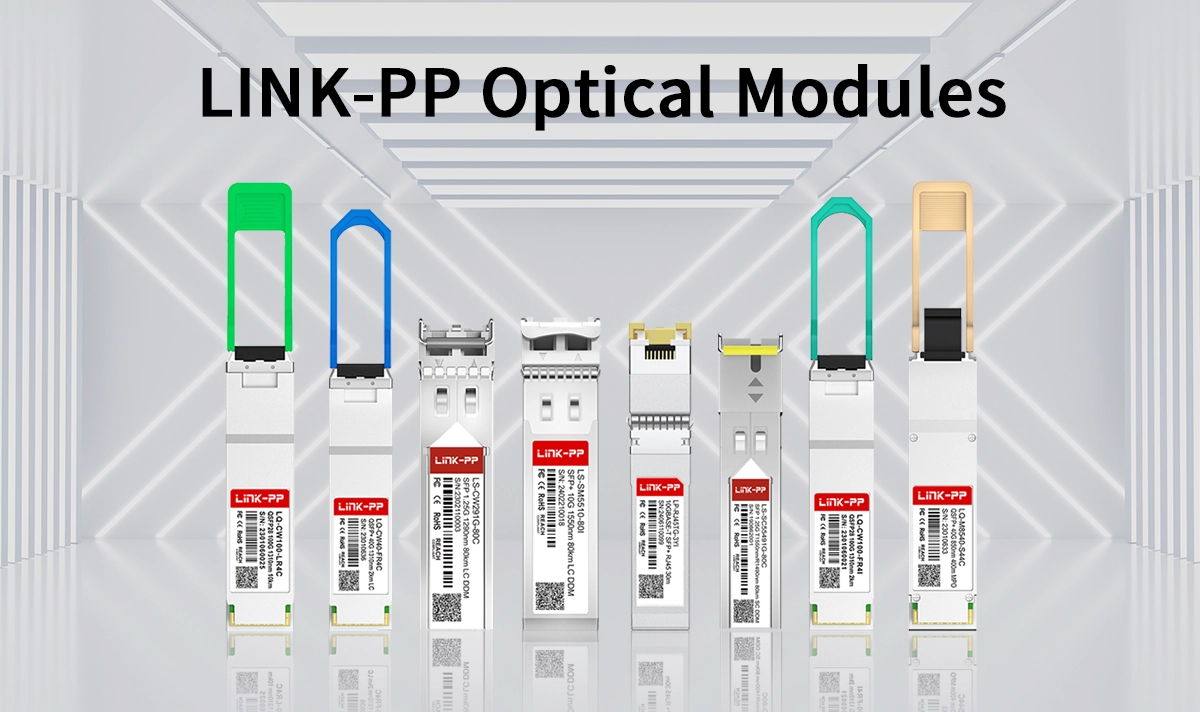
LIEN-PP offers a wide range of optical transceiver products — from compact SFP modules to high-density QSFP and AOC solutions — designed to evolve alongside silicon photonics integration.
Product Line | Description | Silicon Photonics Integration Potential |
|---|---|---|
25 Gbps single-lane modules for access networks | Compatible with SiPh-based laser/modulator design | |
100 Gbps quad-lane modules | Ideal for PAM4 silicon photonics transceivers | |
400 Gbps high-density transceivers | Leverages SiPh for wavelength multiplexing and thermal efficiency | |
Short-reach high-speed interconnects | Integrable with SiPh engines for low-latency data center links |
Through these developments, LINK-PP is positioned to support the transition toward silicon-enabled optical connectivity that powers AI, cloud computing, and next-gen communication networks.
➡️ Challenges and Limitations of Silicon Photonics
Despite its advantages, silicon photonics still faces several key engineering challenges:
Laser Integration – Silicon cannot emit light efficiently, requiring hybrid integration with materials such as InP or GaAs.
Gestion thermique – Dense photonic integration increases thermal load; advanced packaging is needed for heat dissipation.
Packaging Complexity – L'alignement optique et la précision de couplage restent critiques pour le rendement et les performances.
Tests et normalisation – Les normes industrielles pour les modules basés sur SiPh sont encore en évolution, affectant l'interopérabilité.
Ces obstacles sont activement abordés à travers des collaborations mondiales en R&D et des initiatives sur l'optique co-emballée de nouvelle génération.
➡️ Perspectives futures : La voie vers la photonique silicium co-emballée
L'avenir des interconnexions optiques réside dans CPO (Optique co-emballée) — où les commutateurs ASICs et les moteurs photoniques silicium sont combinés sur un seul substrat.
Cette architecture permettra :
Transmission de données au niveau térabit (1,6T–3,2T et plus)
Interconnexions optiques sur puce pour les accélérateurs IA
Liens ultra-basse consommation pour le calcul exascale
Alors que la photonique silicium continue de mûrir, les transceivers optiques évolueront des modules enfichables vers des moteurs optiques entièrement intégrés, marquant une nouvelle ère de vitesse, d'efficacité et de scalabilité.
➡️ Conclusion
photonique sur silicium n'est pas seulement une mise à niveau — c'est une révolution dans la technologie de communication optique.
En fusionnant l'intégration optique et électronique, elle permet une nouvelle génération de transceivers à large bande passante, économes en énergie et rentables pour les centres de données, les réseaux de télécommunications et les systèmes IA.
Avec son portefeuille avancé de modules optiques et son innovation continue, LIEN-PP comble activement l'écart entre les transceivers enfichables d'aujourd'hui et les architectures basées sur la photonique silicium de demain.