















En las redes modernas, tanto transceptores ópticos and convertidores de medios de fibra desempeñan un papel fundamental a la hora de facilitar la transmisión de datos de alta velocidad. Sin embargo, estos dispositivos tienen finalidades distintas y a menudo se confunden. Este artículo aclara sus diferencias, sus casos de uso y cómo LINK-PP optimizar estas tecnologías para lograr una conectividad fluida.
¿Qué es un transceptor óptico?
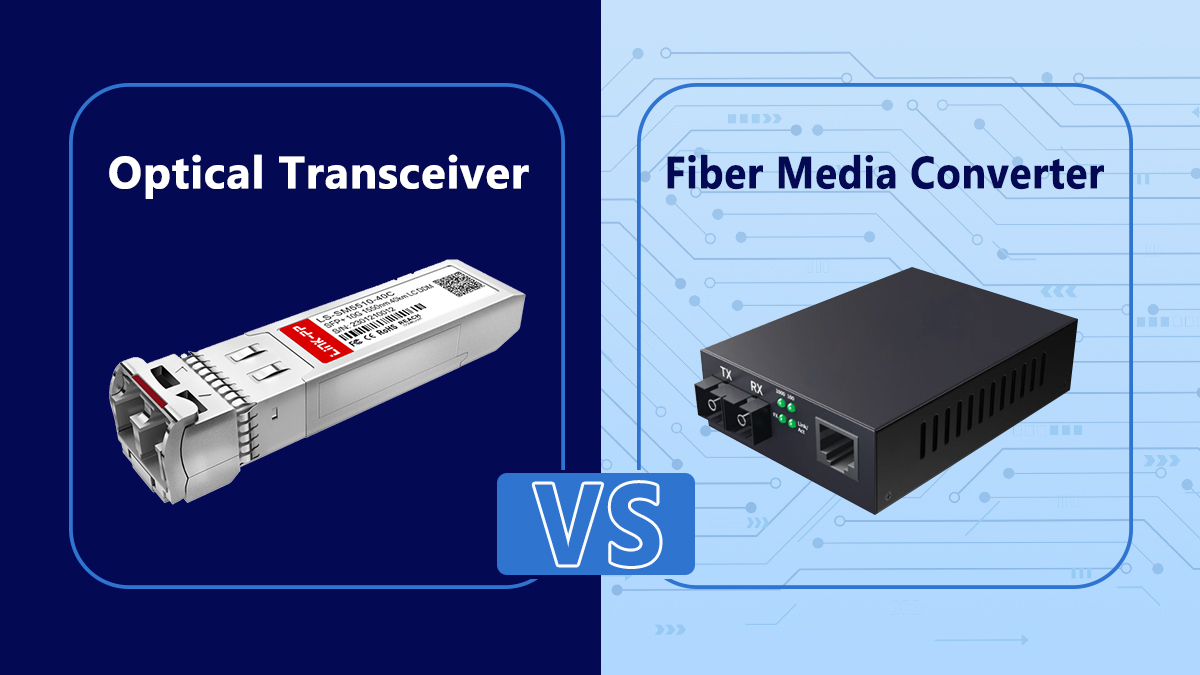
An transceptor óptico Es un dispositivo compacto y conectable en caliente que convierte señales eléctricas en señales ópticas (y viceversa). Normalmente se instala en conmutadores de red, routers o servidores para permitir la comunicación a través de cables de fibra óptica. Entre sus características principales se incluyen:
Admite múltiples protocolos (por ejemplo, Ethernet, Fibre Channel).
Disponible en formatos estandarizados (SFP, QSFP, etc.).
Permite la transferencia de datos a alta velocidad (1G/10G/100G y más).
Entre las aplicaciones más populares se encuentran centros de datos, redes de telecomunicaciones, y redes troncales empresariales. Por ejemplo, Transceptores ópticos de LINK-PP destacan por su compatibilidad con las principales marcas de conmutadores y por su rendimiento de baja latencia.
¿Qué es un convertidor de fibra óptica?
A convertidor de medios de fibra óptica Sirve de puente entre diferentes tipos de medios, por ejemplo, convirtiendo señales de fibra óptica a Ethernet de cobre (o viceversa). Estos dispositivos independientes son ideales para ampliar el alcance de la red. Entre sus características principales se incluyen:
Convierte entre fibra (monomodo/multimodo) y el cobre.
Se utiliza a menudo en actualizaciones de redes industriales o heredadas.
Ofrece flexibilidad en entornos con tecnologías mixtas.
Transceptor óptico frente a convertidor de medios de fibra: comparación detallada
Característica | Transceptor óptico | Convertidor de medios de fibra |
|---|---|---|
Función principal | Conversión de señales (eléctrica ⇄ óptica) | Conversión de medios (fibra ⇄ cobre) |
Lugar de Instalación | Instalado en los puertos de los equipos de red | Independiente o montado en carril DIN |
Caso de uso típico | Interconexiones de alta velocidad para centros de datos | Ampliación de redes LAN mediante fibra óptica |
Dependencia energética | Alimentado por el dispositivo anfitrión | Requiere una fuente de alimentación externa |
Escalabilidad | Modular y fácil de actualizar | Configuración fija |
Eficiencia energética | Mayor coste por puerto | Económico para enlaces punto a punto |
Los transceptores ópticos y los convertidores de medios de fibra óptica desempeñan un papel fundamental en las redes modernas, ya que responden a diferentes necesidades. Los transceptores ópticos convierten las señales eléctricas en ópticas, lo que facilita la transmisión de datos de alta velocidad dentro de los equipos. Los convertidores de medios de fibra conectan distintos tipos de medios, como el cobre y la fibra, lo que permite una integración perfecta. Estas tecnologías son fundamentales para ampliar la infraestructura de datos y dar soporte a que consumen mucho ancho de banda aplicaciones como la inteligencia artificial y el tráfico de vídeo.
Cómo elegir entre transceptores ópticos y convertidores de medios de fibra óptica
Factores a tener en cuenta en el diseño de redes
Elegir entre transceptores ópticos y convertidores de medios de fibra Depende de varios factores que influyen en el diseño de tu red. Cada opción ofrece ventajas únicas, y comprender estos factores te ayudará a tomar una decisión bien fundamentada.
Restricciones de distancia: Ten en cuenta la distancia que debe cubrir tu red. Fibra monomodo funciona mejor para conexiones de larga distancia, mientras que fibra multimodo es más adecuado para distancias más cortas. Por ejemplo, los transceptores integrados en conmutadores o enrutadores pueden gestionar transmisiones a larga distancia con una pérdida de señal mínima, lo que los hace ideales para redes a gran escala.
Especificaciones de ancho de banda: Evalúa los requisitos de ancho de banda de tus aplicaciones. La fibra monomodo admite un mayor ancho de banda, lo cual es esencial para tareas exigentes como la interconectividad entre centros de datos. Los transceptores destacan en estos escenarios, ya que ofrecen una transmisión de datos de alta velocidad con baja latencia.
Repercusiones financieras: Evalúa tu presupuesto. Las instalaciones de fibra monomodo suelen ser más caras debido a su complejidad, mientras que la fibra multimodo y los convertidores de medios de fibra ofrecen una solución más asequible para ampliar las distancias de la red sin necesidad de sustituir la infraestructura existente.
Design Architecture: Review your current network setup. If your system already includes sfp modules, transceivers may integrate seamlessly, enhancing performance. Fiber media converters, however, are better suited for connecting legacy equipment to modern fiber networks.
Conditions of Use: Consider environmental factors. Single-mode fiber performs well in various conditions, but its deployment may face location-based limitations. Fiber media converters, with their plug-and-play design, offer flexibility and reliability in diverse environments.
By analyzing these factors, you can determine whether transceivers or fiber media converters align better with your network’s needs.
Conclusión
While transceptores ópticos focus on enabling high-speed communication within fiber networks, fiber media converters solve connectivity challenges between copper and fiber. By understanding their distinct roles, businesses can optimize investments and ensure network flexibility. Brands like LINK-PP bridge the gap between performance and affordability, offering tailored solutions for every layer of your infrastructure.
For more insights on high-performance optical transceiver modules or LINK-PP fiber media converters, explore our product guides or contact our experts today!
Preguntas frecuentes
1. Can you use optical transceivers and fiber media converters together?
Yes, you can combine them. Transceptores ópticos handle la transmisión de datos de alta velocidad, while fiber media converters bridge copper and fiber networks for seamless integration.
2. Which is better for long-distance connections?
Optical transceivers work better for long distances. They support fibra monomodo, which minimizes signal loss and ensures reliable performance over extended ranges.
3. Are fiber media converters compatible with modern networks?
Absolutely! Fiber media converters connect legacy systems to modern fiber networks. Their plug-and-play design ensures compatibility and simplifies integration across diverse setups.
Véase también
La importancia de la supervisión digital en los transceptores ópticos