















The insatiable global appetite for data is pushing conventional optical fibers to their physical limits. While technologies like Wellenlängenmultiplextechnik (WDM) have been workhorses, a more fundamental evolution is underway. Enter Multicore Fiber (MCF) – a groundbreaking technology not just enhancing but multiplying the very pathways for light itself.
This isn’t just an incremental upgrade; it’s a paradigm shift. Let’s dive into what MCF is, why it matters, and how it will shape the future of connectivity.
📝 What Exactly is Multicore Fiber?
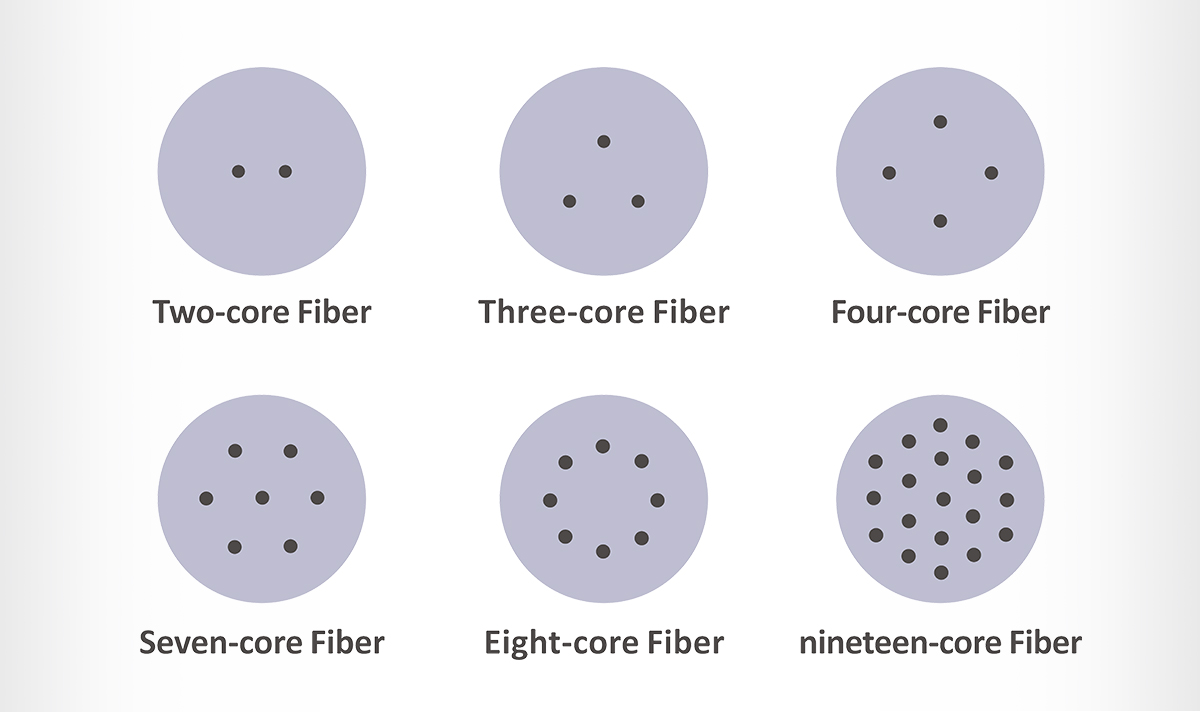
In simple terms, a Multicore Fiber is a single strand of glass fiber that contains multiple independent light-guiding cores, unlike traditional Einmodenfaser (SMF) or Multimode-Faser (MMF), which have just one.
Think of it as a multi-lane superhighway compared to a single-lane road. Each core can carry a separate data channel simultaneously, dramatically increasing the Faserkapazität et spatial density without increasing the cable’s physical size.
📝 Why is Multicore Fiber a Game-Changer? Key Advantages
The benefits of deploying MCF technology are profound, especially in an era of bandwidth-hungry applications like 5G, AI, and IoT.
Massiver Kapazitätszuwachs: This is the most significant advantage. By having multiple cores (e.g., 4, 7, 19, even 32), MCF can multiply the data throughput of a single fiber by a corresponding factor. This directly addresses fiber exhaustion in crowded ducts.
Superior Spatial Efficiency: Deploying one MCF cable can replace a bundle of traditional single-core fibers. This saves crucial space in data centers and reduces the weight and volume in aerospace and naval applications.
Geringerer Stromverbrauch: Transmitting more data through a single fiber is inherently more energy-efficient than powering multiple separate fibers and their associated electronics, contributing to greener data center interconnect (DCI) Lösungen.
Future-Proofing Networks: Investing in MCF infrastructure prepares networks for next-generation demands, making it a cornerstone for Hochgeschwindigkeitsnetzwerke et optischen Kommunikationssystemen evolution.
📝 Understanding MCF in Context: A Comparison Table
It’s crucial to understand that MCF differs from traditional fibers by its spatial architecture. The following table clarifies the key distinctions:
Funktion | Multicore Fiber (MCF) | ||
|---|---|---|---|
Defining Characteristic | Ein einziger Lichtweg | Mehrere Lichtwege (Modi) | Multiple physical cores |
Core Count | One | One | Multiple (e.g., 4, 7, 19) |
Hauptvorteil | Long-distance, low loss | Short-distance, cost-effective | Extreme spatial density & capacity |
Schlüsseltechnologie | Time/Wavelength Division Multiplexing (TDM/WDM) | ||
Am besten geeignet für | Telecom, Long-haul | Rechenzentren, LANs | DCI, HPC, Overcoming fiber exhaust |
📝 Real-World Applications of MCF Technology
Where will you see MCF making an impact?
Rechenzentrum-Verbindungen (DCI): As data centers grow, the Glasfaserverkabelung bestimmt.
between them becomes a bottleneck. MCF is the ultimate solution for moving colossal amounts of data between facilities.Hochleistungsrechnen (HPC): Supercomputers require ultra-low-latency, high-bandwidth links between nodes. MCF provides the internal “nervous system” for exascale computing.
Undersea Cables: Deploying new transoceanic cables is incredibly expensive. MCF allows for a massive capacity upgrade within existing cable designs.
Aerospace and Aviation: The weight and space savings are critical in aircraft and satellites, where every gram counts.
📝 Unlocking the Potential: The Critical Role of Optical Transceivers
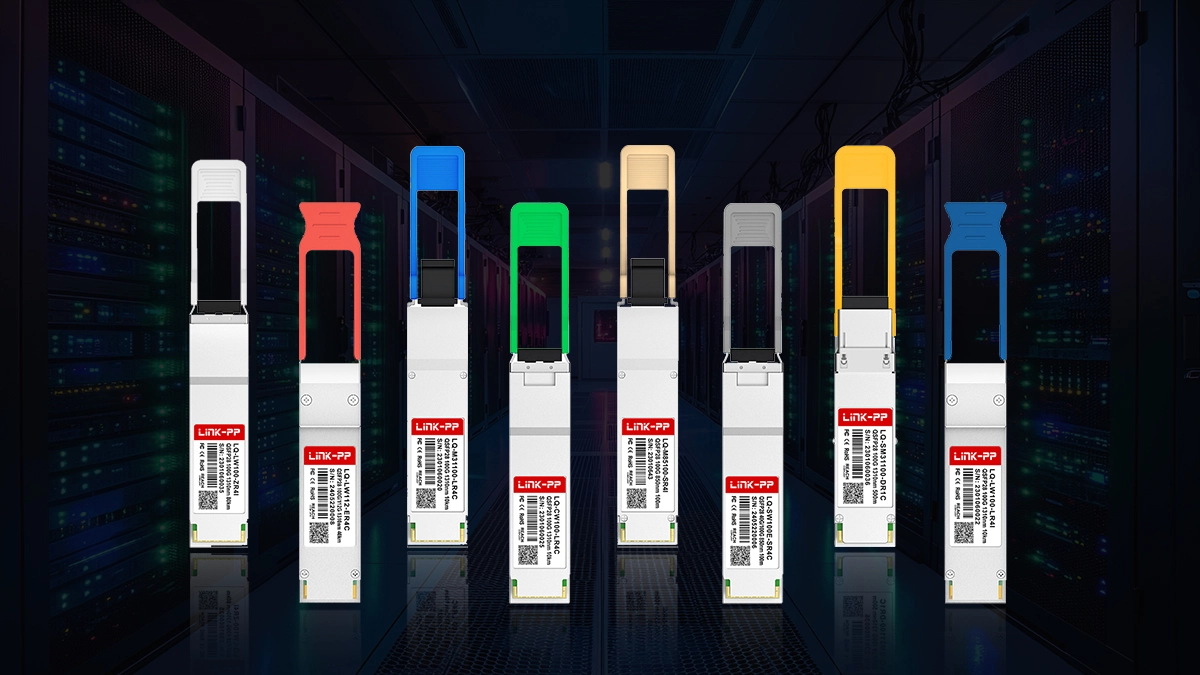
The fiber itself is only half the story. To leverage MCF’s power, you need advanced Optische Transceiver speziell für space-division multiplexing (SDM). These transceivers must efficiently launch light into and receive light from each individual core with minimal Übersprechen.
This is where precision engineering comes into play. Brands like LINK-PP are at the forefront, developing transceivers that interface seamlessly with MCF infrastructure. For instance, the LINK-PP 400G QSFP-DD Transceiver is engineered to deliver 400Gbps speeds by utilizing a 4-core MCF, providing a compact, power-efficient solution for next-generation 400G data center upgrades. When searching for the best multicore fiber optic transceiver, considering a high-performance model like this is crucial for system integrity.
For specific applications requiring immense density, exploring 800G OSFP transceivers for multicore fiber might be the next step, future-proofing your network for even greater demands.
📝 The Future is Multi-Cored
While challenges like standardized Steckverbindern and cost remain, the trajectory is clear. Multicore Fiber is not just a lab experiment; it’s a commercially viable technology that answers the call for more bandwidth, less space, and greater efficiency. As SDM and MCF continue to evolve, they will undeniably form the backbone of the world’s future digital infrastructure.
📝 FAQ
What makes multicore fiber different from regular fiber?
Multicore fiber has many cores in one cable. Each core sends its own signal. Regular fiber only has one core. Multicore fiber lets more data move at once. You get faster speeds and more space for data.
What benefits do you get from using multicore fiber?
You get higher bandwidth and faster downloads. There are more channels for data. Multicore fiber saves space and money. You can connect more devices at the same time. Streaming and downloads are smoother.
What industries use multicore fiber the most?
Multicore fiber is used in submarine cables and data centers. Hospitals also use it for fast data. These places need strong and quick connections. Multicore fiber helps send more information without waiting.
What challenges do you face with multicore fiber?
You might need new equipment for multicore fiber. It can be hard to connect old networks to new fiber. Engineers are working to fix these problems. They want multicore fiber to be easier for everyone.