

















In modern fiber-optic and Ethernet networking, OEM SFP modules play a critical role in ensuring high-speed, reliable data transmission across switches, routers, and data center infrastructure. As network bandwidth demands continue to grow—driven by cloud computing, AI workloads, and high-density enterprise environments—small form-factor pluggable (SFP) transceivers have become essential components in scalable network design.
However, when engineers and procurement teams search for OEM SFP modules, they are rarely just looking for a definition. Instead, they are trying to answer more practical, decision-driven questions: Are OEM modules worth the higher cost? Do they perform better than compatible optics? Will bộ thu phát của bên thứ ba hoạt động đáng tin cậy trên các bộ chuyển mạch doanh nghiệp mà không gây nguy cơ gián đoạn dịch vụ hoặc vấn đề hỗ trợ?
OEM SFP modules are typically produced by original optical manufacturers but sold under major networking brands such as Cisco, Arista, or Juniper
. While the underlying hardware is often very similar to compatible alternatives, differences in firmware coding, vendor validation, and support policies create a meaningful divide in how they are used in real-world deployments.
This distinction has become increasingly important in today’s networking landscape, where organizations must balance cost efficiency, vendor compatibility, and long-term operational stability. As a result, OEM SFP modules are not just a hardware choice—they are a procurement and risk-management decision.
In this article, we will break down everything you need to know about SFP OEM, including how they compare to compatible transceivers, why they are priced higher, how long they last, and what network engineers actually use in production environments. This guide is designed to help you make a fully informed, technically sound purchasing decision backed by real-world industry practices.
🔶 What Are OEM SFP Modules?
OEM SFP modules are small form-factor pluggable (SFP) bộ thu phát quang that are manufactured by original optical component suppliers but sold under the branding and part numbers of major networking equipment vendors such as Cisco, Arista, or Juniper. In essence, they are standard SFP modules designed to support high-speed data transmission over fiber or copper, but packaged and validated within a specific vendor ecosystem.
To understand OEM SFP modules clearly, it is important to first break down two key concepts: SFP technology itself and OEM manufacturing practices.
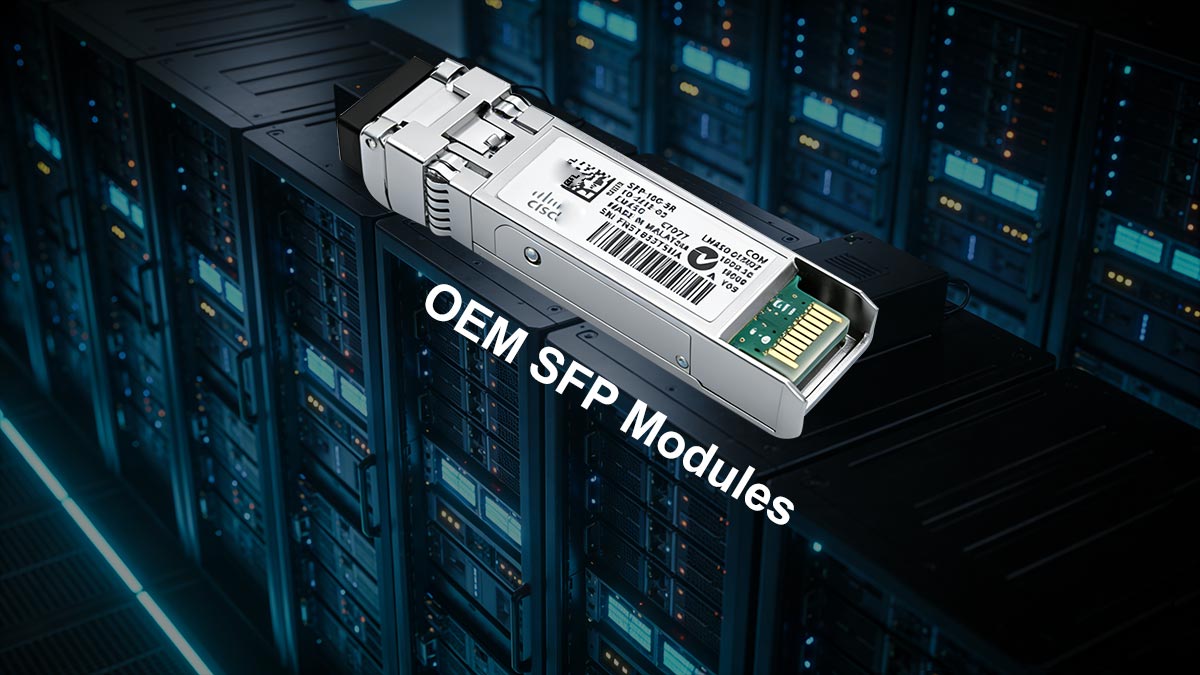
Definition of SFP and OEM Optics
An SFP (Small Form-Factor Pluggable) module is a compact, bộ thu phát có thể thay thế nóng used in networking equipment to convert electrical signals into optical signals (and vice versa). It enables connectivity over fiber optic or copper cables at various speeds, commonly ranging from 1G (SFP) to 10G (SFP+), 25G, và cao hơn nữa.
An OEM optical module, on the other hand, refers to a transceiver that is manufactured by the original equipment manufacturer (or its contracted optical supplier) and then sold under a networking vendor’s official brand. These modules are typically tested, certified, and coded to match specific vendor systems, ensuring full compatibility within that ecosystem.
How OEM SFP Modules Are Manufactured
In most cases, OEM SFP modules are produced in the same manufacturing ecosystems as third-party optical transceivers. Large optical manufacturers—such as those supplying components for Cisco or other Tier-1 vendors—produce the physical hardware using standardized designs based on Thỏa thuận Đa nguồn (MSA) specifications.
The production process generally includes:
Fabrication of optical and electrical components (đi-ốt laser, receivers, PCB assemblies)
Assembly into standardized SFP housings
Optical performance testing (wavelength accuracy, power budget, signal integrity)
Environmental and thermal stress validation
Firmware programming and EEPROM configuration
After manufacturing, modules destined for OEM branding undergo an additional layer of vendor-specific configuration and validation, which is where differentiation from compatible optics begins.
OEM Branding vs. Actual Hardware Production
One of the most important realities in the SFP ecosystem is that OEM branding does not necessarily mean unique hardware design.
In many cases:
The physical hardware is identical or nearly identical between OEM and compatible modules
The main differences lie in:
Bộ nhớ EEPROM coding
Vendor identification strings
Firmware restrictions
Qualification testing and certification
For example, an OEM Cisco-branded SFP module may be manufactured by the same optical supplier that produces a compatible module sold by a third-party vendor. However, the Cisco version will be programmed to be recognized exclusively by Cisco systems and validated under Cisco’s support framework.
This is why OEM SFP modules are often described as “software-defined compatibility products” rather than fundamentally different hardware devices.
Lý do Mã Hóa OEM Tồn Tại (Cơ Chế Khóa Nhà Cung Cấp)
The key differentiator of OEM SFP modules is the vendor coding system embedded in the module’s EEPROM (Bộ nhớ chỉ đọc có thể lập trình và xóa bằng điện).
This coding exists for several strategic and technical reasons:
Compatibility control: Ensures only approved modules are recognized by specific switches or routers
Support validation: Allows vendors like Cisco to guarantee performance only with certified optics
Quality assurance: Reduces variability by limiting deployment to tested modules
Ecosystem control: Encourages customers to remain within the vendor’s hardware ecosystem
Khi một mô-đun SFP OEM được chèn vào thiết bị mạng, hệ thống sẽ đọc dữ liệu EEPROM này để xác minh:
Danh tính nhà cung cấp
Model compatibility
Supported data rate and wavelength
Certification status
If the module does not match the expected coding, the device may:
Reject the module entirely
Display a compatibility warning
Allow operation with limited or unsupported status (depending on vendor policy)
This “vendor lock mechanism” is one of the primary reasons OEM SFP modules are priced significantly higher than third-party alternatives, even when the underlying optical performance is nearly identical.
🔶 OEM SFP Modules vs. Compatible Transceivers
Khi đánh giá OEM SFP modules vs. compatible transceivers, most users are not just comparing specifications—they are making a cost-versus-risk decision. In modern networks, both options often deliver similar optical performance, but they differ significantly in vendor recognition, support policies, and deployment flexibility.
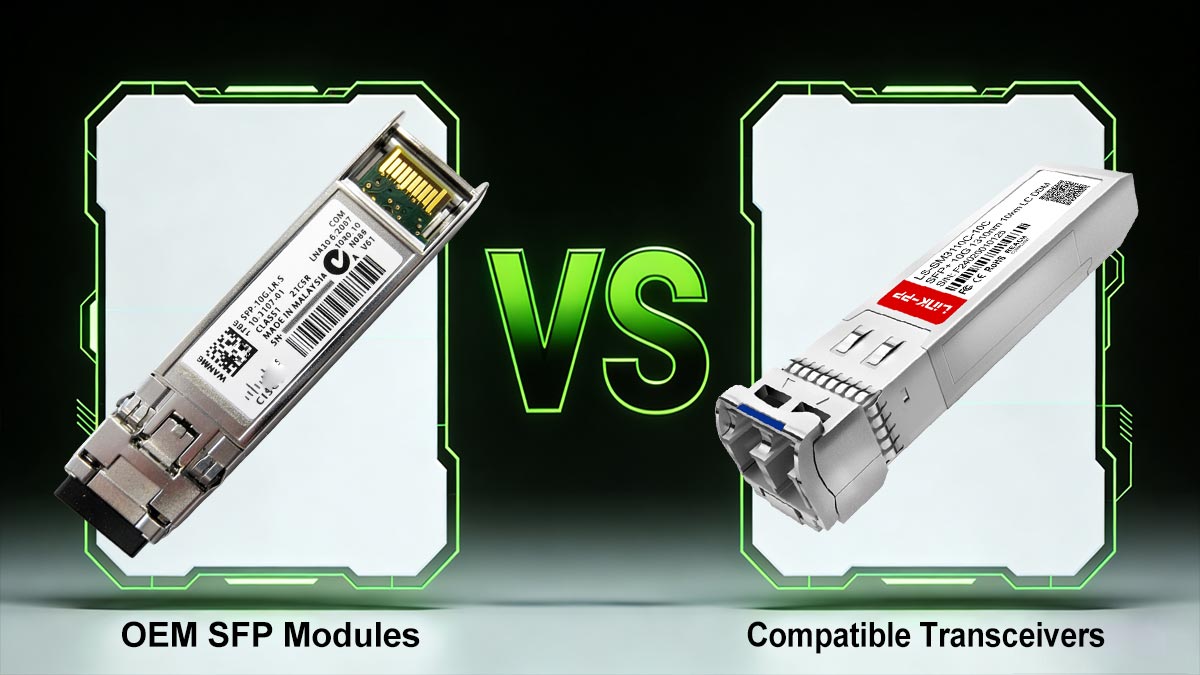
Comparison Factor | OEM SFP Modules | Compatible Transceivers |
|---|---|---|
Hardware Design | Often sourced from same optical manufacturers, but vendor-certified | Typically based on MSA standards, similar hardware design |
EEPROM Coding | Vendor-specific coding (Cisco, Arista, Juniper, etc.) | Generic or multi-vendor coding, sometimes emulates OEM |
Device Recognition | Fully recognized and validated by target vendor systems | May show warnings or be restricted on some devices |
Hiệu suất | Same optical performance in most cases | Same optical performance when high-quality sourced |
Tương thích | Guaranteed within specific vendor ecosystem | Broad compatibility across multiple brands |
Support (TAC / Vendor Help) | Fully supported under vendor contracts | May void or limit vendor support in some cases |
Cost | High (brand + certification premium) | Lower (cost-efficient alternative) |
Trường hợp sử dụng | Enterprise core, carrier-grade networks | Data centers, SMB, lab, cost-sensitive deployments |
Risk Level | Rất thấp | Low to medium (depends on supplier quality) |
Physical Hardware Similarity
From a hardware perspective, OEM and compatible SFP modules are often nearly identical in structure and performance design.
Both typically:
Follow the MSA (Multi-Source Agreement) standards
Use similar optical components (lasers, photodiodes, IC chips)
Support the same dạng chân cắm (SFP, SFP+, QSFP)
Deliver equivalent data rates (1G, 10G, 25G, etc.)
In many cases, OEM modules are produced within the same global optical manufacturing ecosystem as third-party modules. The primary distinction is not physical design, but how the module is programmed and validated for a specific vendor environment.
EEPROM Coding Differences
The most critical difference between OEM and compatible SFP modules lies in the EEPROM (Electrically Erasable Programmable Read-Only Memory) configuration.
OEM modules are programmed with:
Vendor-specific identification (e.g., Cisco, Juniper, Arista)
Approved part numbers
Certified compatibility flags
Firmware signatures recognized by the host device
Compatible transceivers, however:
Use multi-vendor or generic coding
Are designed to be recognized across multiple switch brands
May emulate OEM coding or use open MSA identifiers depending on the supplier
This difference determines whether a switch:
Accepts the module without warnings
Displays a “third-party transceiver detected” alert
Or blocks the module entirely (in strict systems)
Performance Comparison in Real Networks
In real-world deployments, performance differences between OEM and compatible SFP modules are typically minimal to non-existent when both are properly manufactured to MSA standards.
Key observations from enterprise and data center environments include:
Similar optical signal quality (Tx/Rx power levels)
Comparable latency (negligible differences at hardware level)
Equivalent throughput under normal operating conditions
Failure rates more dependent on environment than branding
However, performance perception can differ due to:
Hạn chế phần mềm固件 của nhà cung cấp
Monitoring and diagnostics limitations on non-OEM modules
Support policies during troubleshooting
In practice, most network engineers report that compatible optics perform reliably in production environments when sourced from reputable suppliers.
Compatibility with Cisco, Arista, Juniper Systems
Tương thích is one of the most important decision factors when choosing between OEM and compatible SFP modules.
Cisco systems: Often strict with Thiết bị quang học của bên thứ ba, may require coded or compatible Cisco-coded modules for full support
Arista systems: Generally more flexible, often allows third-party optics with fewer restrictions
Juniper systems: Mixed behavior depending on platform and software version, may log warnings for non-OEM modules
In all cases, compatibility is influenced by:
Device firmware version
Network operating system policy
Vendor support contract requirements
This is why many organizations adopt a mixed strategy, using bộ quang học OEM in critical links and compatible modules in less sensitive segments.
Khi OEM Là Bắt Buộc So Với Khi Là Tùy Chọn
Choosing between OEM and compatible SFP modules depends on operational risk tolerance and support requirements.
OEM SFP modules are typically required when:
Strict vendor support contracts (e.g., Cisco TAC compliance)
Mission-critical enterprise backbone networks
Carrier-grade environments with SLA enforcement
Procurement policies requiring certified components
Compatible SFP modules are often sufficient when:
Tối ưu hóa chi phí là ưu tiên hàng đầu
Large-scale deployments require budget control
Non-critical or redundant network paths are involved
Lab, testing, or development environments are used
Summary Insight
In most modern networking environments, the decision is no longer about performance differences, but about supportability vs. cost efficiency. OEM SFP modules provide maximum vendor assurance, while compatible transceivers offer scalable and cost-effective alternatives with comparable technical performance when properly selected.
🔶 Vì Sao Mô-Đun SFP OEM Lại Đắt Như Vậy?
One of the most frequently searched questions around OEM SFP modules is why they cost significantly more than compatible transceivers, even when the underlying optical performance appears nearly identical. The price difference is not driven solely by hardware—it is the result of a combination of certification processes, vendor ecosystem control, support policies, and commercial strategy.

Vendor Certification and Testing Cost
OEM SFP modules go through strict vendor-specific qualification processes before being approved for use in branded networking equipment.
This typically includes:
Compatibility testing with specific switch/router models
Thermal and environmental stress testing
Signal integrity validation under different workloads
Firmware and EEPROM compliance verification
Large vendors such as Cisco or Juniper maintain their own certification programs to ensure that only fully validated modules are labeled as “approved.” These testing layers add engineering overhead and compliance costs, which are directly reflected in the final price.
Support and Warranty Bundling
A major component of OEM pricing is not the hardware itself, but the support ecosystem attached to it.
Khi mua mô-đun SFP OEM, khách hàng thực chất đang trả tiền cho:
Guaranteed vendor technical support (e.g., Cisco TAC)
Faster troubleshooting and replacement cycles
Inclusion under enterprise support contracts (SmartNet, Juniper Care, etc.)
Reduced risk of compatibility disputes during incidents
In enterprise environments, this bundled support can be more valuable than the physical module itself, especially when downtime costs are high.
Brand Premium (Cisco, Juniper, etc.)
OEM SFP modules are also priced with a strong brand premium. Vendors such as Cisco, Arista, and Juniper position their optics as part of a fully certified ecosystem rather than standalone components.
This branding strategy allows vendors to:
Maintain ecosystem consistency
Reinforce perceived reliability and enterprise-grade quality
Differentiate from third-party optical suppliers
As a result, customers often pay significantly more for identical or near-identical hardware simply because it carries a trusted enterprise brand label.
Supply Chain and Procurement Control Strategy
OEM pricing is also influenced by supply chain management and procurement control policies.
By controlling optics through proprietary SKUs and certification systems, vendors can:
Ensure predictable revenue streams from consumable components
Reduce fragmentation of supported hardware configurations
Encourage customers to purchase within a closed ecosystem
In many enterprise contracts, procurement policies explicitly require OEM optics, which further strengthens pricing power and reduces competitive pressure.
Hidden Cost of Network Vendor Lock-In
Perhaps the most significant factor behind OEM SFP module pricing is vendor lock-in economics.
OEM modules often rely on:
Proprietary EEPROM coding
Device-level compatibility checks
Support restrictions for third-party optics
This creates a situation where organizations may feel compelled to purchase OEM modules to:
Maintain full vendor support eligibility
Avoid troubleshooting complexity during outages
Comply with enterprise procurement standards
Over time, this leads to a long-term dependency cycle, where optics become a recurring high-margin revenue stream for network vendors.
The high cost of OEM SFP modules is not primarily due to manufacturing complexity, but rather a combination of certification requirements, bundled support value, brand positioning, and ecosystem control strategies. In contrast, compatible transceivers eliminate many of these overhead costs, which is why they are often significantly more affordable while still delivering similar optical performance in standard networking environments.
🔶 OEM SFP Compatibility Risks and Network Deployment Scenarios
Khi đánh giá mô-đun SFP OEM so với các bộ thu phát tương thích, tính tương thích thường là yếu tố quan trọng nhất ảnh hưởng đến quyết định triển khai thực tế. Mặc dù hiệu suất quang học thường tương tự nhau, hành vi của các mô-đun SFP trong môi trường doanh nghiệp phụ thuộc rất nhiều vào chính sách nhà cung cấp, firmware thiết bị và thỏa thuận hỗ trợ. Điều này khiến tính tương thích ít mang tính phần cứng hơn và nhiều hơn là một quyết định liên quan đến vận hành mạng và quản lý rủi ro.

Các Mô-Đun SFP Không Phải OEM Có Hoạt Động Được Trên Các Bộ Chuyển Mạch Doanh Nghiệp Không?
In many cases, non-OEM SFP modules will work in enterprise-grade switches, especially when they fully comply with MSA (Multi-Source Agreement) standards. However, the actual behavior depends on the networking vendor.
Typical outcomes include:
The module is fully accepted and operates normally
The switch displays a warning such as “unsupported transceiver”
The port is disabled or limited in strict vendor environments
Ví dụ:
Some Cisco platforms enforce stricter validation policies
Many Arista and Juniper systems are more flexible depending on configuration and OS version
In practice, compatibility is less about physical connection and more about how strictly the device enforces vendor identification rules.
TAC Support Considerations (Cisco Case)
One of the most critical risks associated with non-OEM optics is vendor support eligibility, particularly in Cisco environments.
Cisco TAC (Technical Assistance Center) policies often state:
Issues must be reproduced using Cisco-certified optics for full support coverage
Third-party optics may be requested to be replaced during troubleshooting
Support may be limited if the root cause is suspected to involve non-certified hardware
This does not mean compatible optics will not function—it means that during critical incidents, organizations may be required to swap to OEM modules to continue formal support escalation.
As a result, many enterprises adopt a hybrid approach:
OEM optics for core infrastructure and critical links
Compatible optics for non-critical or cost-sensitive segments
Mixed Optics Environments (OEM + Third-Party)
Modern networks frequently operate in mixed optics environments, where both OEM and compatible SFP modules coexist.
Common deployment patterns include:
OEM modules used in backbone and aggregation layers
Compatible modules used in access switches or edge networks
Standardized optics policies based on link criticality
Key benefits of this approach:
Reduced total cost of ownership (TCO)
Maintained support compliance for mission-critical systems
Flexible scaling for large deployments
However, mixed environments require:
Strong asset tracking (to avoid confusion in troubleshooting)
Vendor compatibility validation per device model
Standardized procurement rules to avoid inconsistent deployments
Real-World Enterprise Deployment Practices (Reddit & Industry Insight)
In real-world discussions among network engineers (including enterprise and data center communities), a consistent pattern emerges:
Many organizations successfully use SFP của bên thứ ba modules at scale
Reliability issues are rarely reported when sourcing from reputable suppliers
OEM optics are often reserved for:
Critical uplinks
Support-sensitive environments
Compliance-driven deployments
A common engineering practice is:
“Keep OEM optics where it matters most, and use compatible modules everywhere else.”
This reflects a pragmatic balance between cost efficiency and operational risk control, rather than a strict technical limitation.
Risk vs. Cost Balancing Strategy
Choosing between OEM and compatible SFP modules ultimately comes down to a structured risk assessment:
Choose OEM SFP modules when:
Network uptime is mission-critical
Vendor support contracts are mandatory
Compliance or audit requirements exist
Troubleshooting speed is a top priority
Choose compatible SFP modules when:
Budget optimization is important
Large-scale deployments require cost control
Network segments are redundant or non-critical
You are operating lab, testing, or secondary environments
Compatibility risks associated with OEM SFP modules vs compatible transceivers are not primarily about physical functionality, but about vendor enforcement policies and support boundaries. In most modern enterprise networks, both types of optics can coexist successfully when deployed with clear segmentation strategies and proper operational governance.
🔶 Do SFP Modules Go Bad? Lifespan and Reliability
Có—các mô-đun SFP thực tế sẽ suy giảm theo thời gian, dù chúng thường được thiết kế để vận hành lâu dài trong môi trường doanh nghiệp và trung tâm dữ liệu. Tuổi thọ của chúng không cố định; thay vào đó, nó phụ thuộc rất nhiều vào điều kiện môi trường, mức độ tải công việc và yêu cầu về chất lượng tín hiệu quang. Trong hầu hết các triển khai thực tế, các mô-đun SFP vẫn ổn định trong nhiều năm, nhưng sự suy giảm hiệu suất hoặc hỏng hóc cuối cùng là điều có thể dự đoán được trong các mạng quy mô lớn.
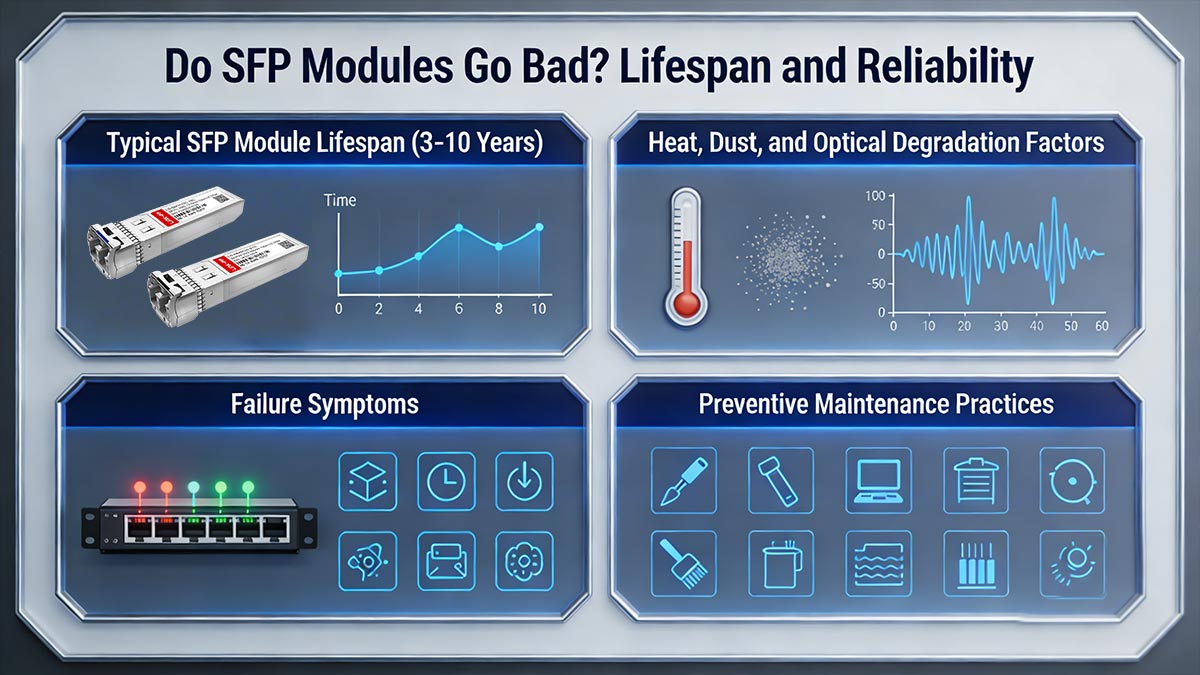
Typical SFP Module Lifespan (3–10 Years)
The average lifespan of an OEM SFP module or compatible transceiver typically ranges from:
3–5 years in harsh environments (high heat, dust, poor airflow)
5–7 years in standard enterprise environments
7–10 years or more in well-controlled data center conditions
Key factors influencing lifespan include:
Operating temperature stability
Power cycling frequency
Quality of optical components (laser diode aging)
Network traffic intensity and utilization patterns
Unlike active computing components, SFP modules do not “expire” suddenly—they gradually degrade in signal quality over time.
Heat, Dust, and Optical Degradation Factors
Environmental stress is the primary driver of SFP module degradation.
Key contributors include:
Heat exposure: High temperatures accelerate laser diode aging and reduce optical output power
Dust contamination: Dirt on fiber connectors increases signal loss and reflection
Humidity fluctuations: Can affect internal electronics and fiber interface stability
Connector wear: Frequent plugging/unplugging can degrade physical contact quality
In data center environments, poor airflow or inadequate cleaning practices can significantly shorten module lifespan.
Failure Symptoms (CRC Errors, Link Drops, Attenuation)
Khi các mô-đun SFP bắt đầu gặp sự cố, các triệu chứng thường diễn ra từ từ và ban đầu có thể biểu hiện dưới dạng mất ổn định mạng thay vì hỏng hoàn toàn.
Common indicators include:
CRC errors increasing over time
Intermittent link drops or flapping
Rising optical suy hao levels
Reduced transmit (Tx) or receive (Rx) power
Packet loss under high traffic load
Device logs showing “optical power low” warnings
These symptoms are often mistaken for switch or cable issues, making proper diagnostics essential.
Preventive Maintenance Practices
To extend the lifespan and reliability of OEM SFP modules and compatible optics, network operators typically implement structured maintenance practices:
Regular fiber connector cleaning and inspection
Monitoring optical power levels via switch diagnostics
Avoiding excessive bending or stress on fiber cables
Ensuring proper airflow and thermal management in racks
Periodic replacement of high-utilization or critical-link modules
A widely adopted best practice is the Inspect → Clean → Inspect quy trình làm việc cho kết nối sợi quang trước khi giả định mô-đun đã hỏng.
Replacement Strategy in Trung tâm dữ liệu
In enterprise and data center environments, SFP modules are usually managed as consumable infrastructure components rather than permanent hardware.
Common replacement strategies include:
Reactive replacement: Replace modules only after failure symptoms appear
Preventive replacement cycles: Replace every 5–7 years in critical systems
Risk-based replacement: Prioritize uplinks, core switches, and high-traffic paths
Bulk refresh strategy: Replace optics during hardware refresh cycles to reduce operational risk
Large-scale operators often maintain spare inventories of both OEM and compatible modules to ensure rapid recovery during failures.
Mặc dù các mô-đun SFP rất đáng tin cậy, chúng không miễn nhiễm với sự suy giảm. Tuổi thọ của chúng chịu ảnh hưởng nhiều hơn bởi điều kiện môi trường và áp lực quang học chứ không phải bởi thương hiệu (OEM hay tương thích). Trong vận hành mạng chuyên nghiệp, việc giám sát chủ động và các chiến lược thay thế có cấu trúc là điều thiết yếu nhằm duy trì kết nối sợi quang ổn định và hiệu năng cao theo thời gian.
🔶 OEM SFP Modules Real-World Usage: What Network Engineers Actually Use
In theory, the choice between OEM SFP modules and compatible transceivers is a technical decision. In practice, however, real-world deployment is driven by a combination of cost constraints, operational risk, vendor policies, and scale requirements. Across enterprise networks, ISPs, and SMB environments, engineers rarely adopt a “one-size-fits-all” approach—instead, they build hybrid optics strategies based on network criticality and budget priorities.
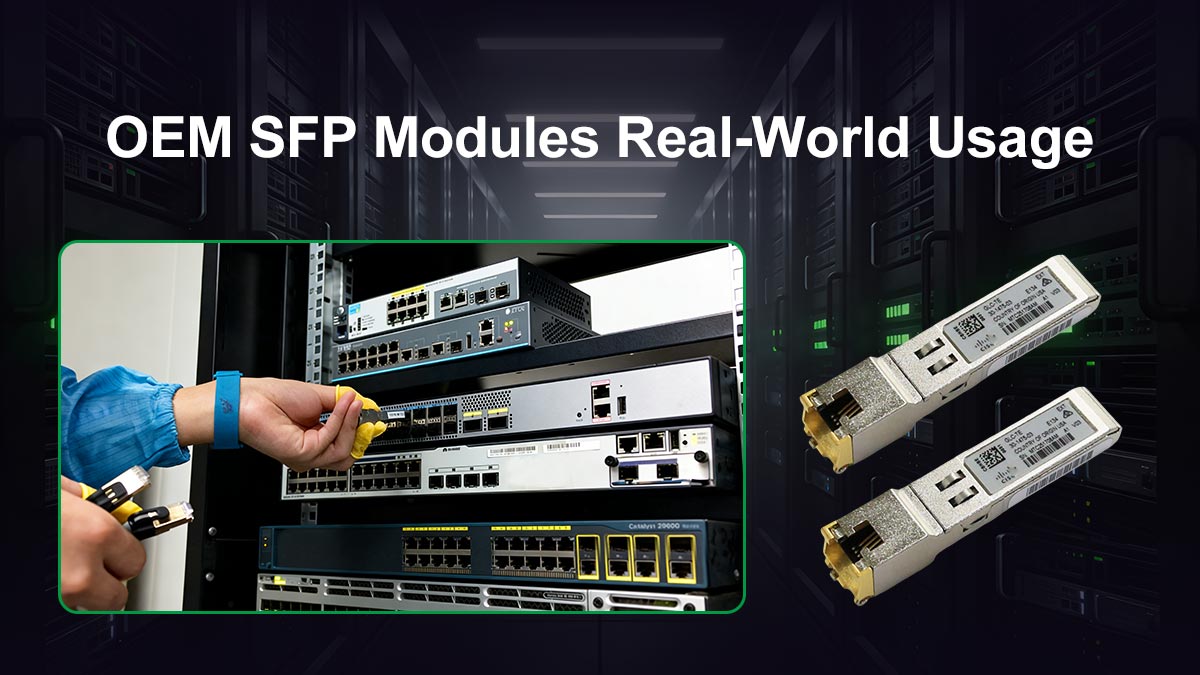
Enterprise vs. ISP vs. SMB Deployment Patterns
Different types of organizations adopt very different strategies when deploying SFP modules:
Enterprise networks:
Prefer OEM SFP modules in core and aggregation layers
Use compatible optics selectively in access layers
Prioritize vendor support and SLA compliance
ISPs and telecom operators:
Focus heavily on cost efficiency at scale
Frequently deploy high-quality compatible optics in large volumes
Maintain strict testing standards before production rollout
SMB (Small and Medium Businesses):
More cost-sensitive overall
Often rely heavily on compatible transceivers
Use OEM optics only when required by vendor support policies
These differences reflect not technical limitations, but budget structure and operational risk tolerance.
Vì Sao Kỹ Sư Kết Hợp Cả Quang Học OEM Và Quang Học Tương Thích
A very common real-world practice is the hybrid deployment model, where both OEM and compatible SFP modules are used within the same network.
Engineers typically follow this logic:
OEM optics are used where downtime is unacceptable
Compatible optics are used where cost optimization is more important than vendor certification
This approach allows organizations to:
Maintain compliance in critical network segments
Reduce overall infrastructure cost
Avoid overpaying for non-critical connectivity
In many environments, optics are treated as tiered infrastructure components, not uniform assets.
Cost Optimization Strategies in Large-Scale Networks
At scale, SFP module cost becomes a significant operational expense, especially in data centers with thousands of ports.
Common optimization strategies include:
Standardizing on compatible optics for non-core layers
Bulk purchasing from trusted third-party suppliers
Keeping OEM modules only for troubleshooting or critical links
Implementing centralized optics procurement policies
Reusing validated transceivers across compatible platforms
Over time, even small per-unit savings can translate into substantial reductions in total network CapEx.
Lab Testing vs Production Environments
Another important distinction in real-world usage is how optics are treated in lab environments versus production networks.
Lab environments:
Almost always use các module SFP tương thích
Focus on flexibility and multi-vendor testing
Prioritize cost efficiency and rapid iteration
Production environments:
Require stricter validation
May enforce OEM-only policies in sensitive systems
Focus on stability, supportability, and uptime guarantees
This separation allows engineers to test freely while maintaining production reliability standards.
Common Industry Practices from Real Deployments
Across real-world engineering discussions and deployment patterns, several consistent practices emerge:
Keep a small stock of OEM SFP modules for support escalation scenarios
Use compatible optics for scale-out deployments and access layers
Validate third-party optics before mass deployment
Avoid mixing low-quality optics with enterprise-grade infrastructure
Maintain clear documentation of optic types per network segment
A widely shared engineering mindset is:
“Use OEM where failure is expensive. Use compatible where scale is expensive.”
This reflects a practical balance between risk management and cost efficiency, rather than ideological preference.
In real network deployments, the choice between OEM SFP modules and compatible transceivers is not binary. Instead, engineers implement layered optical strategies based on business criticality, operational scale, and support requirements. This hybrid approach has become the dominant industry standard, enabling organizations to achieve both enterprise-grade reliability and cost-effective scalability.
🔶 FAQ about OEM SFP Modules
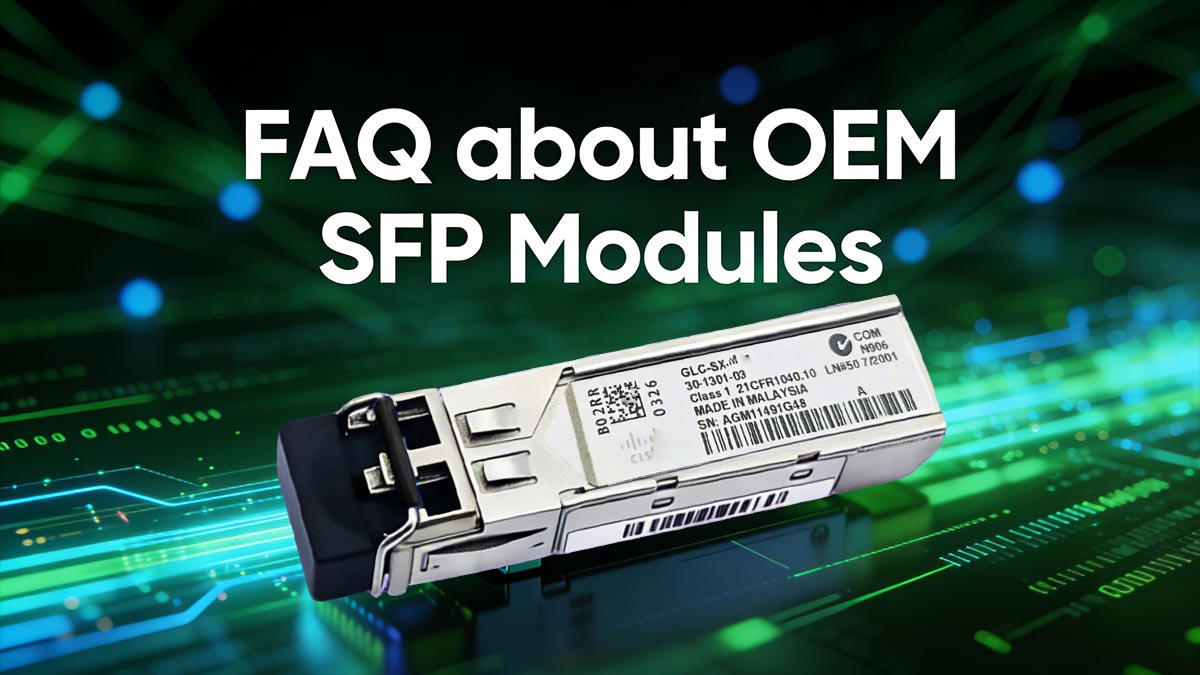
1. Can OEM SFP modules be used across different device generations?
Có, trong nhiều trường hợp, các mô-đun SFP OEM có thể được sử dụng trên nhiều thế hệ thiết bị của cùng một nhà cung cấp (ví dụ: các nền tảng Cisco Catalyst và Nexus), miễn là thông số kỹ thuật quang học và tiêu chuẩn tốc độ phù hợp. Tuy nhiên, các nền tảng mới hơn có thể áp dụng các quy tắc xác thực nghiêm ngặt hơn, do đó tính tương thích luôn cần được kiểm tra đối chiếu với ma trận tương thích chính thức của nhà cung cấp.
2. What happens if an SFP module is inserted into a mismatched speed port?
If an mô-đun SFP is inserted into a port that does not support its speed or standard, the device will typically:
Reject the module during initialization, or
Bring the port up in a disabled or error state
For example, a 10G SFP+ module will not function in a 1G-only SFP port. This limitation applies to both OEM and compatible transceivers.
3. Are OEM SFP modules interchangeable between vendors?
No. OEM SFP modules are generally not interchangeable across different vendor ecosystems. A Cisco-coded module will not be recognized as a valid transceiver in Juniper or Arista systems due to EEPROM identification differences and vendor-specific validation rules.
4. Can firmware updates affect SFP module compatibility?
Có. Trong một số môi trường mạng, việc cập nhật firmware bộ chuyển mạch hoặc bộ định tuyến có thể thay đổi cách xác thực các mô-đun SFP. Điều này có thể dẫn đến:
Previously accepted compatible modules being flagged as unsupported
Stricter enforcement of vendor-coded optics
Updated compatibility lists restricting certain models
For this reason, large-scale networks often test firmware changes in staging environments before production rollout.
5. Do OEM SFP modules require special configuration before use?
In most cases, OEM SFP modules are plug-and-play within their intended vendor ecosystem. However, depending on the network design, administrators may still need to:
Configure port speed manually
Enable optical diagnostics (DDM/DOM monitoring)
Verify link negotiation settings
No additional firmware or driver installation is typically required.
6. How should spare SFP modules be stored to avoid failure?
Proper storage significantly extends module reliability. Best practices include:
Keeping modules in anti-static packaging
Avoiding exposure to dust and humidity
Storing at stable room temperature (15–30°C recommended)
Using protective dust caps on optical interfaces
Rotating inventory in long-term storage environments
Poor storage conditions can degrade optical connectors even before deployment.
7. Is there any difference in diagnostic visibility between OEM and compatible modules?
Có, trong một số hệ sinh thái nhà cung cấp, các mô-đun SFP OEM có thể cung cấp:
Full DOM (Digital Optical Monitoring) integration
More detailed telemetry reporting
Vendor-specific diagnostic fields
Compatible modules may still support basic DOM functions, but the level of detail and visibility can vary depending on how the module firmware is implemented.
🔶 How to Choose the Right SFP Module (OEM vs. Alternative)
Choosing between OEM SFP modules and compatible transceivers is ultimately a strategic decision that balances cost, support requirements, and network compatibility. In modern networking environments, there is no universal “best” option—only the most appropriate choice based on deployment context.
Decision Matrix: Cost vs. Support vs. Compatibility
A practical way to evaluate SFP modules is through a three-factor model:
Cost efficiency: Compatible optics generally provide significant savings at scale
Hỗ trợ của nhà cung cấp: OEM modules ensure full compliance with vendor TAC policies
Compatibility flexibility: MSA-compliant transceivers offer broader multi-vendor usage
In most enterprise scenarios, organizations adopt a tiered procurement strategy, using OEM optics for critical infrastructure while deploying compatible modules in scalable access or edge layers.
Khi Các Mô-Đun SFP OEM Là Bắt Buộc
OEM SFP modules are typically required in situations where supportability and compliance are non-negotiable, such as:
Enterprise backbone or mission-critical network links
Environments under strict vendor support contracts (e.g., Cisco TAC coverage)
Regulated industries requiring certified hardware validation
Infrastructure where downtime risk must be minimized at all costs
In these cases, OEM optics provide maximum operational assurance and vendor-backed accountability.
Khi Quang Học Tương Thích Là Đủ
Compatible SFP modules are widely used when organizations prioritize scalability and cost optimization, including:
Large-scale data center deployments
ISP and telecom access networks
Redundant or non-critical network paths
Lab, testing, and development environments
Khi được cung cấp từ các nhà sản xuất uy tín và tuân thủ các tiêu chuẩn MSA, quang học tương thích có thể mang lại hiệu suất gần như giống hệt với chi phí thấp hơn đáng kể.
Procurement Checklist for Engineers
Before selecting an loại mô-đun SFP, network engineers typically evaluate:
Switch/vendor compatibility matrix
Support contract obligations
Long-term replacement strategy
Supplier reliability and certification level
This checklist helps ensure that procurement decisions align with both technical requirements and operational risk tolerance.
Future Trend: Growth of MSA-Compatible Optics
The industry is steadily moving toward greater adoption of MSA-compliant and multi-vendor compatible optics. As networking hardware becomes more standardized and interoperability improves, organizations are increasingly prioritizing:
Open compatibility ecosystems
Reduced dependency on vendor-locked optics
Cost-efficient scaling strategies
Flexible multi-supplier procurement models
This trend is expected to continue as enterprises seek to optimize total cost of ownership (TCO) without sacrificing performance or reliability.
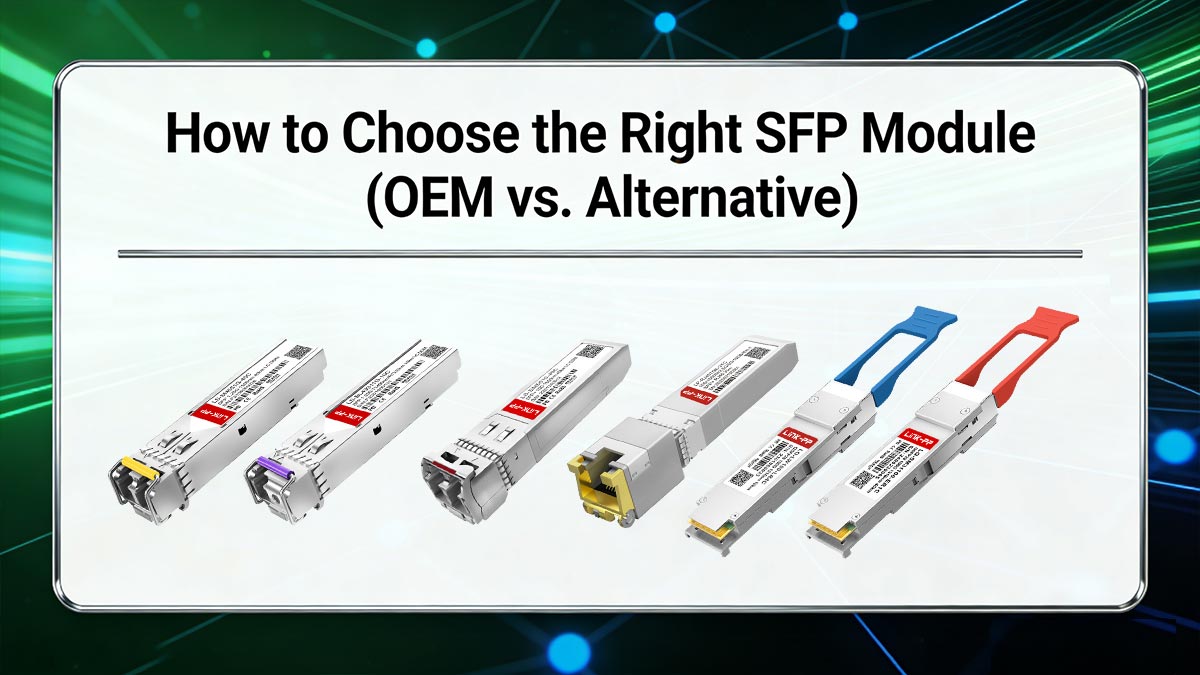
The choice between OEM and alternative Các mô-đun SFP is no longer purely technical—it is a business decision shaped by risk, scale, and support requirements. The most effective networks today are those that strategically combine both approaches to achieve optimal balance between performance assurance and cost efficiency.
For organizations looking to explore high-quality, MSA-compliant optical solutions, you can visit the Cửa hàng Chính thức LINK-PP, where a wide range of compatible networking modules is available for enterprise and data center applications.