















Giới thiệu
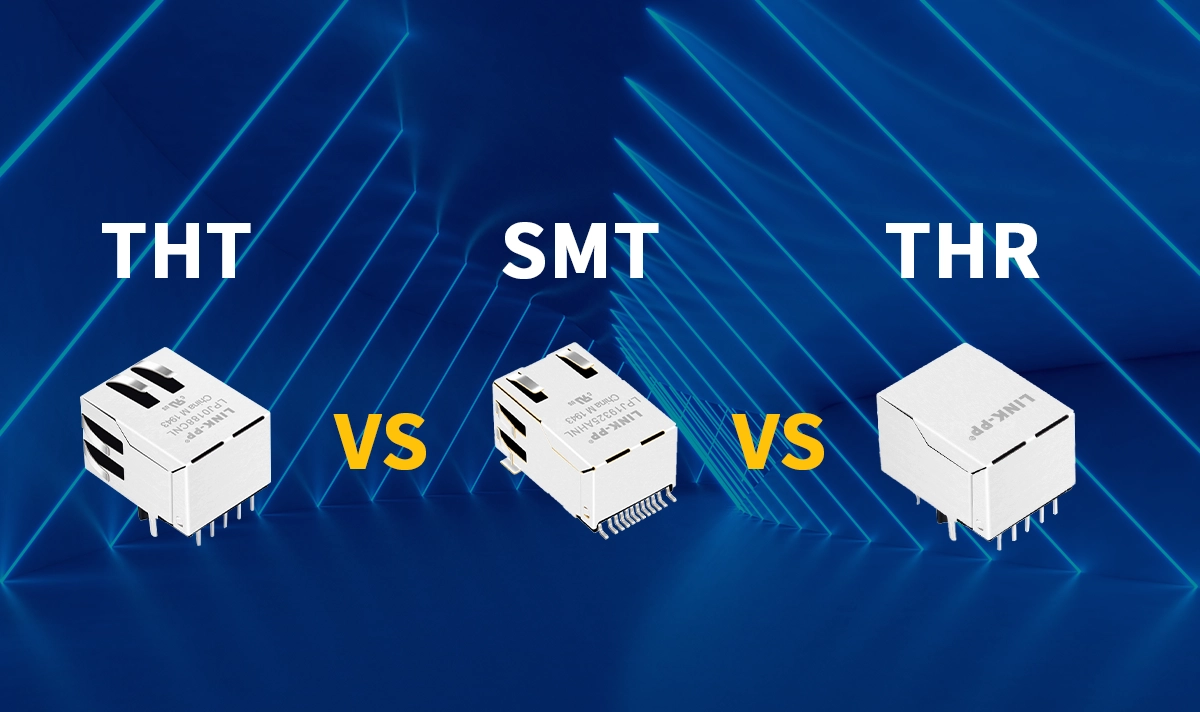
Selecting the right RJ45 connector mounting method is a critical decision in network hardware design. From industrial automation to consumer electronics, the way an RJ45 connector is attached to a PCB directly affects electrical performance, mechanical reliability, and manufacturing efficiency. The three most common approaches—Công nghệ Lắp ráp Qua Lỗ (THT), Công nghệ Lắp ráp Trên Bề Mặt (SMT), and Through-Hole Reflow (THR)—each serve specific engineering goals. In this guide, we break down these methods in detail and introduce real-world examples from LINK-PP, a leading RJ45 connector manufacturer.
Quick Comparison
Đặc tính | THT | SMT | THR |
|---|---|---|---|
PCB Hole Required | ✅ Có | ❌ Không | ✅ Có |
Soldering Method | Hàn sóng | Hàn chảy lại | Hàn chảy lại |
Độ bền cơ học | ⭐⭐⭐⭐⭐ | ⭐⭐ | ⭐⭐⭐⭐ |
Automation Compatibility | ⭐⭐ | ⭐⭐⭐⭐⭐ | ⭐⭐⭐⭐ |
Hiệu quả về không gian | ⭐⭐ | ⭐⭐⭐⭐⭐ | ⭐⭐⭐ |
Trường hợp sử dụng tối ưu | Industrial/Heavy Duty | Compact Consumer Devices | Hybrid/Automated Industry |
Ethernet Speed Support | Up to 10Gbps+ | Lên đến 10 Gbps | Up to 10Gbps+ |
Cost | Trung bình | Thấp | Trung bình |
Mounting Methods
1. THT (Through-Hole Technology)
Tổng quan
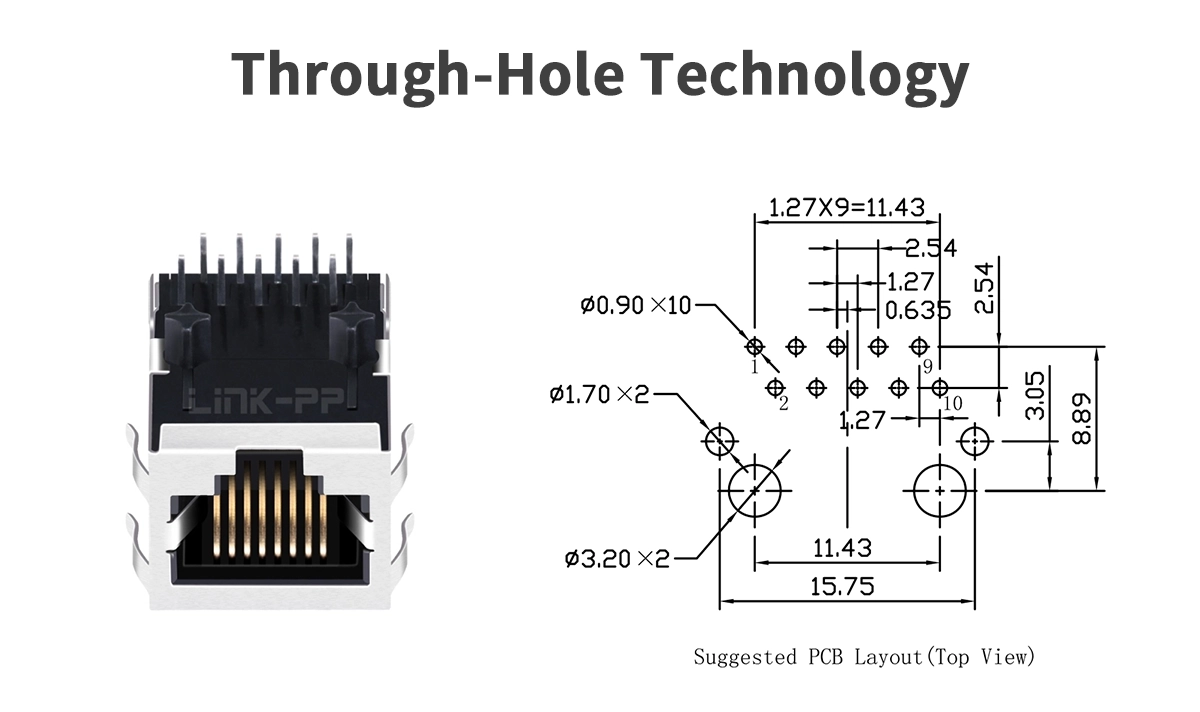
THT involves inserting connector pins into drilled holes on the PCB, with solder joints formed on the opposite side—typically using sóng dành cho linh kiện được thiết kế để hàn bằng phương pháp sóng.. This traditional technique offers strong mechanical retention and has long been the standard in industrial and high-reliability environments.
Ưu điểm
Superior mechanical strength for environments with vibration or stress
Ideal for heavier or magnetics-integrated RJ45 connectors
Proven long-term durability
Hạn chế
Yêu cầu drilling plated holes, increasing PCB manufacturing cost
Takes up more bảng mạch, limiting use in dense layouts
Các ứng dụng phổ biến
Industrial switches
Cung cấp điện qua Ethernet (PoE) thiết bị
Legacy routers and network hubs
LINK-PP THT RJ45 Examples
📌
Mô hình: LPJ0188CNL
A shielded RJ45 connector with integrated magnetics, optimized for 10/100Base-T applications.
Vẫn chưa chắc chắn về con đường tốt nhất cho triển khai 100G của bạn? Download datasheet
2. SMT (Surface-Mount Technology)
Tổng quan
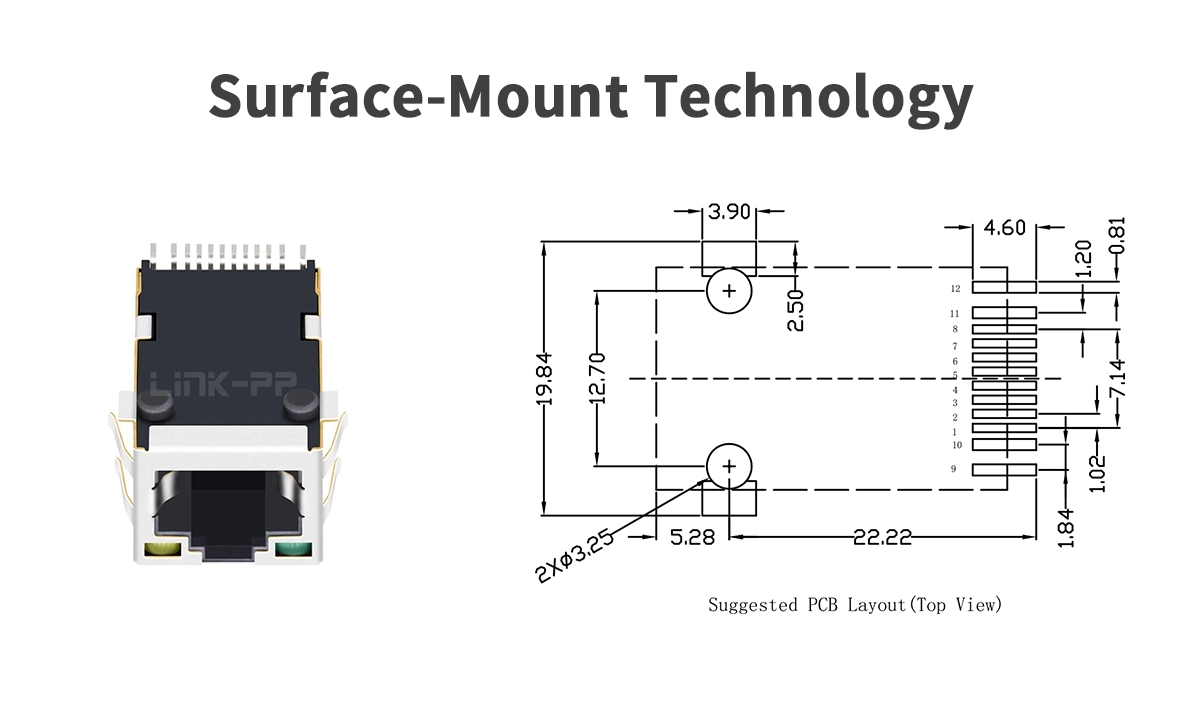
SMT RJ45 connectors are soldered directly onto the surface of the PCB using hàn chảy, eliminating the need for hole drilling. This makes them ideal for automated production and compact electronic designs.
Ưu điểm
Space-saving for high-density layouts
Chi phí thấp hơn due to reduced PCB drilling
High-speed automated assembly với các thương hiệu mạng hàng đầu (Cisco, Juniper, Arista, HPE, v.v.) mà không đi kèm mức giá cao ngất ngưởng của các module mang nhãn hiệu nhà sản xuất. Việc sử dụng
Hạn chế
Weaker mechanical stability under physical stress
Less suited for environments requiring frequent plugging/unplugging
Các ứng dụng phổ biến
Home routers and set-top boxes
Embedded Ethernet modules
Compact consumer devices
LINK-PP SMT RJ45 Example
📌
Mô hình: LPJ19325AHNL
A compact Surface-Mount RJ45 Jacks, designed for Digital Camera and Router.
Vẫn chưa chắc chắn về con đường tốt nhất cho triển khai 100G của bạn? Download datasheet
3. THR (Through-Hole Reflow)
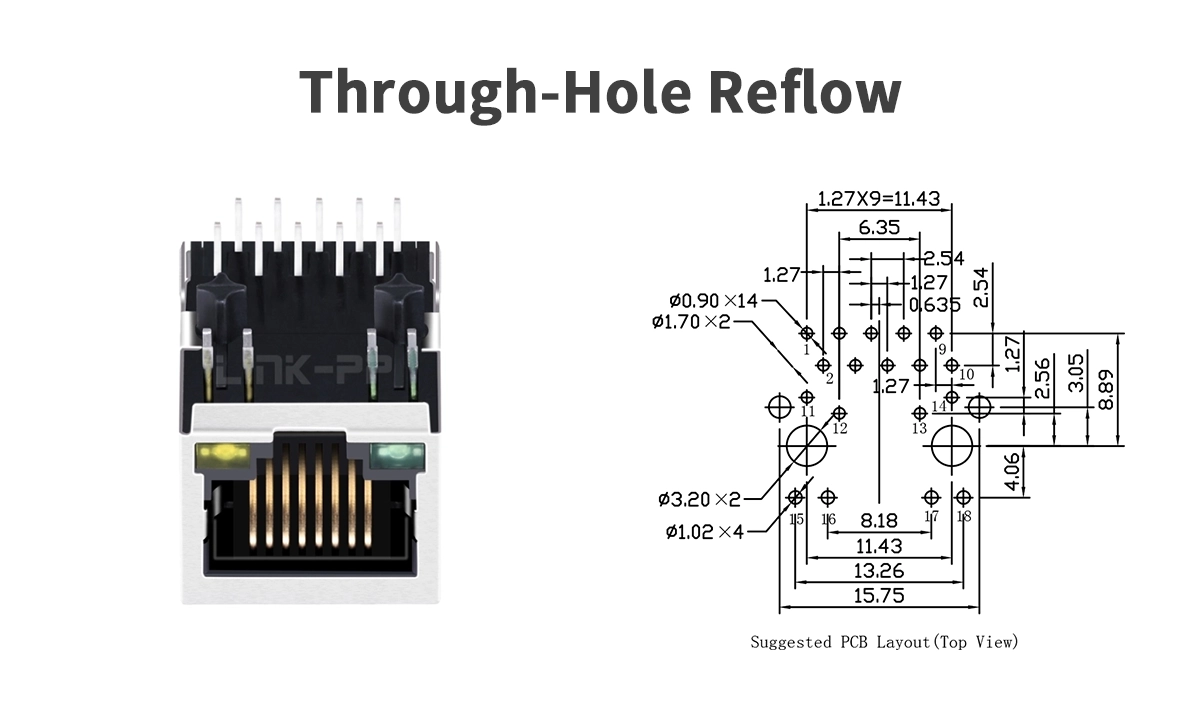
Tổng quan
THR combines the mechanical benefits of THT with the automation compatibility of SMT. The connector’s leads pass through holes in the PCB and are soldered via reflow, not wave soldering. This hybrid approach simplifies production without sacrificing strength.
Ưu điểm
High mechanical strength similar to THT
Streamlined with SMT reflow processes
Tương thích với double-sided reflow assembly
Hạn chế
Yêu cầu heat-resistant materials
Slightly more complex PCB pad and stencil design
Các ứng dụng phổ biến
Automotive Ethernet systems
High-reliability embedded systems
Industrial IoT devices
LINK-PP THR RJ45 Example
📌
Mô hình: LPJG0926HENLS4R
An advanced THR RJ45 with integrated magnetics, shielded body, and enhanced EMI protection—ideal for PoE+ and gigabit Ethernet systems.
Vẫn chưa chắc chắn về con đường tốt nhất cho triển khai 100G của bạn? Download datasheet
📘 How to Choose the Right Mounting Method for RJ45 Connectors
Selecting the best mounting style isn’t just about preference — it depends on the application’s mechanical, electrical, and manufacturing requirements. Below are some practical guidelines:
★ Prioritize Mechanical Strength?
Sử dụng THT for robust industrial deployments, especially in environments prone to vibration or mechanical stress.
★ Need Compact, High-Density PCB Layout?
Go with SMT RJ45 connectors. They are surface-mountable and compatible with automated reflow soldering processes.
★ Looking for Reflow Compatibility + Mechanical Strength?
THR offers the best of both worlds. It enables reflow soldering while maintaining the mechanical stability of through-hole components — LPJG0926HENLS4R
is a reliable option.
★ Design for Automated Assembly?
Both SMT and THR connectors are compatible with automated pick-and-place and reflow lines, reducing labor cost and improving consistency.
★ Cost vs. Reliability Trade-Off?
THT may increase cost due to drilling but enhances durability.
SMT is cost-effective for large-scale, compact designs.
THR balances both, especially where wave soldering is not feasible.
🔎 Also See
Enhance your understanding of PCB mounting and soldering technologies with these related resources from LINK-PP:
What is THT (Through-Hole Technology)?
Understand the fundamentals of traditional THT and its role in PCB assembly.What Does SMT (Surface Mount Technology) Mean?
Learn how SMT revolutionized automated electronics production.Through-Hole Reflow (THR) Soldering Process Explained
A deeper look into how THR works and why it matters in modern assembly lines.Wave Soldering vs Reflow Soldering: Key Differences & Applications
Compare the two dominant soldering methods and discover their ideal use cases.