















ในสภาพแวดล้อมของ MPLS (การสลับป้ายกำกับแบบมัลติโพรโทคอล) เครือข่าย, เราเตอร์สลับป้ายกำกับ (Label Switch Routers: LSRs) และ เราเตอร์ขอบป้ายกำกับ (Label Edge Routers: LERs) form the backbone of efficient, high-speed data transport. Understanding their roles is essential for network engineers, integrators, and data center designers looking to optimize traffic flow, enforce quality of service, and ensure reliable connectivity.
✅ What Are LSRs and LERs?
▷ Label Switch Router (LSR)
หนึ่งตัว LSR is a core MPLS router that forwards packets based solely on labels, rather than IP addresses. By using a Label Forwarding Information Base (LFIB), LSRs can swap incoming labels for outgoing ones and send packets to the next hop at wire speed.
LSRs are the intermediate nodes ใน เส้นทางการสลับป้ายกำกับ (Label Switched Path: LSP), ทำให้
fast, deterministic, and scalable packet forwarding.
▷ Label Edge Router (LER)
หนึ่งตัว LER operates at the edge of an MPLS network, handling traffic entering and exiting the network. Its primary functions are:
Ingress LER: Assigns MPLS labels to incoming IP packets (Label Imposition).
Egress LER: Removes labels before forwarding packets to the destination network (Label Disposition).
LERs also maintain routing information to map IP prefixes to labels and communicate with LSRs via protocols like LDP (โปรโตคอลการแจกจ่ายป้ายกำกับ).
✅ How LSRs and LERs Work Together
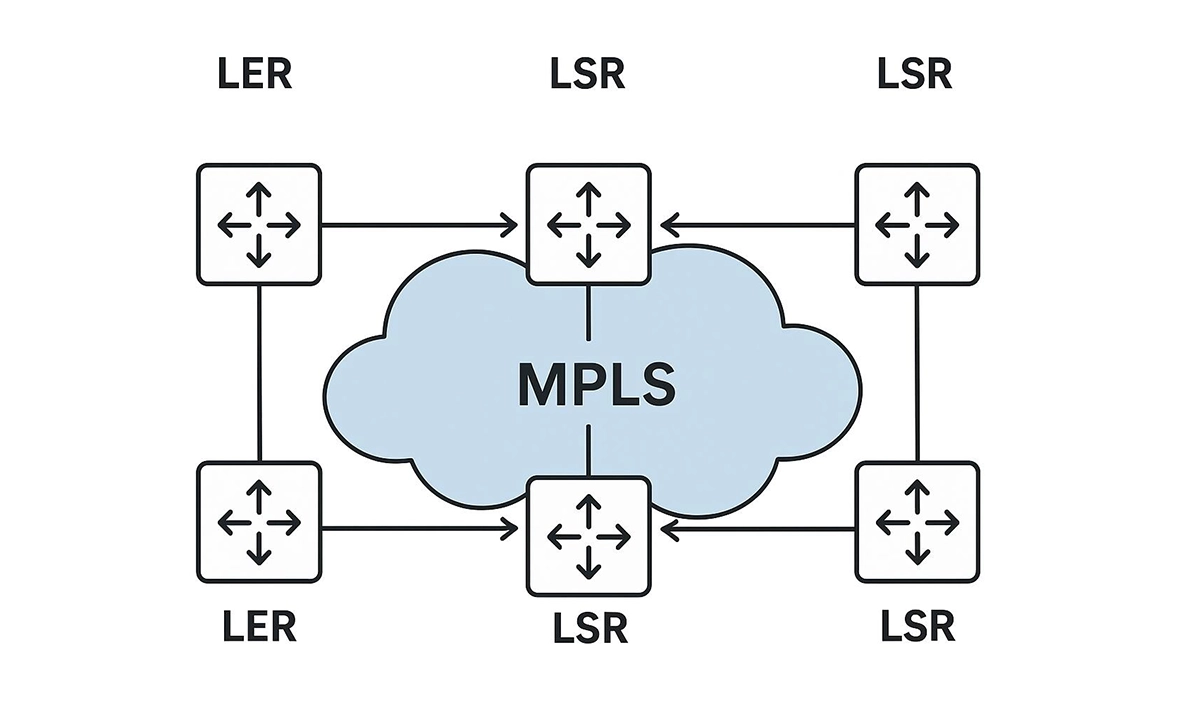
MPLS networks typically involve three stages of packet forwarding:
อุปกรณ์ | บทบาท | ฟังก์ชัน |
|---|---|---|
Ingress LER | Entry point | Adds labels to IP packets |
Core LSR | Transit node | Swaps labels and forwards packets based on LFIB |
Egress LER | Exit point | Removes labels and forwards to the destination IP network |
This label-based forwarding allows substantially faster packet processing compared to traditional IP routing, while enabling traffic engineering และ QoS differentiation.
✅ Applications of LSRs and LERs
Carrier Backbones: LSRs manage high-volume traffic; LERs handle customer ingress/egress.
การเชื่อมต่อศูนย์ข้อมูล (DCI): LERs enable multi-site connectivity; LSRs maintain low-latency core paths.
MPLS VPNs: LERs isolate customer traffic; LSRs forward efficiently through the shared core.
Traffic Engineering and QoS: LSRs enforce LSP paths; LERs mark traffic classes for differentiated service.
★ LINK-PP Products Supporting LSR and LER Deployments
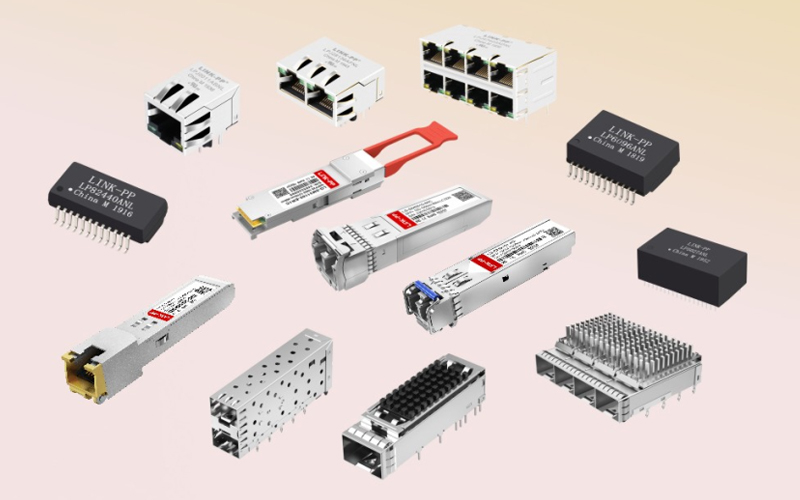
ของ LINK-PP optical transceivers and integrated RJ45 connectors provide the physical layer reliability required for LSRs and LERs to maintain stable and low-latency Label Switched Paths (LSPs) across telecom and data center networks.
SFP/SFP+/QSFP Optical Transceivers: Support high-speed fiber links for core LSR interconnects.
Magnetics RJ45 และ USB Combo Connectors: Provide EMI protection and stable Ethernet connections for LER management ports and edge interfaces.
By bridging logical label-based forwarding with robust physical infrastructure, LINK-PP ensures high-performance MPLS deployments for carriers and enterprises alike.
✅ Future Trends: SDN and Segment Routing
Segment Routing (SR-MPLS): Ingress LER defines the entire path via label stacks, reducing protocol overhead.
การเชื่อมต่อเครือข่ายแบบกำหนดด้วยซอฟต์แวร์ (Software-Defined Networking: SDN): Centralized controllers program LSRs and LERs dynamically for optimal traffic distribution.
LINK-PP’s optical and electrical interconnect products are designed to meet next-generation MPLS bandwidth, latency, and reliability demands.
✅ Conclusion
Label Switch Routers (LSRs) and Label Edge Routers (LERs) are central to MPLS network efficiency, enabling fast, reliable, and predictable packet forwarding.
โดยการรวมกันของ
high-speed LSR/LER functionality ต่างจากเลเซอร์แบบ Fabry–Pérot ซึ่งพึ่งพากระจกปลายเพื่อการฟีดแบ็กและปล่อยแสงหลายความยาวคลื่น (แบบหลายโหมด) DFB เลเซอร์จะกดโหมดข้างเคียงและให้ผลลัพธ์แบบ ของ LINK-PP ของผู้ผลิตรายบุคคลที่น่าเชื่อถือ และ คอนเนกเตอร์ RJ45, network designers achieve robust, low-latency, and scalable MPLS infrastructure—essential for modern data centers, telecom backbones, and enterprise networks.
✅ FAQ: Label Switch Routers (LSRs) and Label Edge Routers (LERs)
Q1: What is the main function of an LSR in MPLS networks?
An LSR (Label Switch Router) operates within the MPLS core network, forwarding packets based on short labels rather than long IP addresses. It switches labels at high speed to ensure efficient traffic flow and low latency.
Q2: How does an LER differ from an LSR?
A Label Edge Router (LER) works at the edge of the MPLS network. It assigns (pushes) labels to incoming IP packets when entering the MPLS domain and removes (pops) labels when they exit. In contrast, LSRs inside the network mainly swap labels to route packets efficiently.
Q3: Why are LERs and LSRs important in MPLS?
They are critical for building เส้นทางการสลับป้ายกำกับ (Label Switched Paths: LSPs), which enable deterministic routing, QoS (Quality of Service), and traffic engineering — essential for telecom and data center networks.
Q4: What protocols do they use for label exchange?
Most MPLS networks rely on Label Distribution Protocol (LDP) หรือ Resource Reservation Protocol with Traffic Engineering (RSVP-TE) to distribute and manage labels dynamically across routers.
Q5: How does LINK-PP support LER and LSR deployment?
LINK-PP มอบความน่าเชื่อถือสูง ของผู้ผลิตรายบุคคลที่น่าเชื่อถือ and integrated magnetics คอนเนกเตอร์ RJ45 that form the physical backbone for MPLS-based routers. These components ensure stable data transmission, signal integrity, and minimal packet loss across LER and LSR infrastructures.