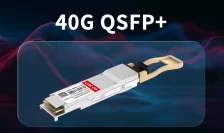
40G QSFP+ Transceivers

100G Optical Transceivers

Topics
MUX and DEMUX streamline data transmission by combining and splitting signals, reducing cables, and enhancing network efficiency and reliability.
Compare Fiber Optic Splitter and coupler functions, signal loss, and best uses to choose the right device for efficient modern network distribution.
A cloud managed network lets you control devices remotely via a web dashboard, offering easy management, automatic updates, and strong security.
Open source gives control over software code, while open networking lets you mix hardware and software from multiple vendors for flexible networks.
Open networking enables flexible, vendor-neutral networks by separating hardware and software, offering more control, choice, and cost efficiency.
A fiber optic coupler splits or combines light signals in optical networks, improving data flow, reliability, and network flexibility for various applications.
Learn what IEEE 802.3bm is and how it defines the key PHY interfaces for 40G and 100G Ethernet. Explore SR4, LR4, CR4 technologies and why this standard powers modern data centers.
Aging and burn-in tests ensure optical transceiver reliability by detecting early failures, improving performance, and extending module lifespan.
Pluggable optics offer flexible upgrades, while on-board optics provide higher speed and integration. Compare both for your data center needs.
On-Board Optics boosts data speed, power efficiency, and channel density for data centers, supercomputers, and advanced network systems.
Network visualization uses graphs and diagrams to reveal connections, patterns, and relationships in complex data sets.
Solve common network problems in data center networks, including outages, slow speeds, and configuration errors, with practical troubleshooting tips.
Discover the differences between P2P, P2MP, MP2P, and MP2MP network architectures. Learn how LINK-PP optical transceivers enable efficient, high-speed connectivity.
Open source software allows anyone to use, modify, and share code freely, offering flexibility, collaboration, and community-driven innovation.
Optical modules enable high-speed, low-latency links across 5G fronthaul, midhaul, and backhaul. Learn how transceiver types, standards, and deployment needs shape modern telecom networks.
SSH vs SSL: SSH secures remote access and file transfers, while SSL protects web communication. Choose the right protocol for your security needs.
VLAN vs VXLAN: Compare scalability, flexibility, and cost to choose the best network segmentation for small setups or large, cloud-based environments.
Reduce power consumption of optical transceivers with efficient modules, smart cooling, and intelligent management in modern data centers.
IPv4 Address uses a 32-bit numeric format, while IPv6 offers 128-bit alphanumeric addresses, more capacity, and improved security for growing networks.
Link budget loss measures signal power drop in fiber networks, helping you identify, manage, and reduce losses for reliable communication performance.
Receiver sensitivity shows the lowest signal a device can detect. Learn how it impacts connection quality and what values mean for your device’s performance.
Discover the LQ‑SW40‑SR4C 40GBASE‑SR module: high-speed, low-power, QSFP+ optics for multimode fibre networks. Perfect for data centres and network upgrades.

Learn QSFP+ 40GBASE-LR4 specs, distance limits, compatibility tips, and buying advice. Avoid common deployment issues with this expert guide.
Learn what 40GBASE-ER4 is, how far it reaches over duplex single-mode fiber, what it supports, and how to choose the right QSFP+ optic.
Spine-Leaf Architecture in optical networks enables scalable, non-blocking connectivity and high performance for modern data centers.

LQ-BL859140-SRC offers better value, wider compatibility, and faster speeds than Cisco QSFP-40G-SR-BD for your network upgrade needs.

Learn what the SFF-8436 specification is, how it defines QSFP+ transceivers, and why it matters for 40G Ethernet, InfiniBand, and Fibre Channel.
40G QSFP+ transceiver LQ-M8540-SR4I delivers reliable, high-speed data and durability for industrial networks, even in extreme conditions.

Add Your Heading Text Here