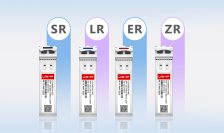
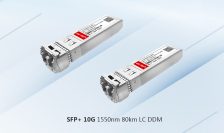
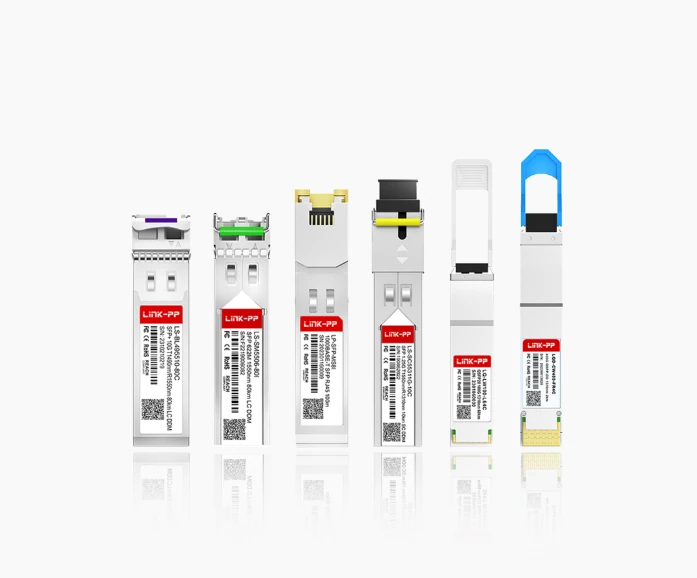
10G SFP+ Transceivers

100G Optical Transceivers

Topics
Compare 100G LR4, CWDM4, and PSM4 to find the best 100G transceiver for your network based on distance, cost, and cabling requirements.
SCP (Secure Copy) enables secure, encrypted file transfers between computers using SSH. See how to use SCP, its features, and best practices.
FTP over SSL (FTPS) secures file transfers by encrypting data with SSL/TLS, protecting sensitive information from unauthorized access during transit.
HTTP over SSL encrypts your data, ensuring secure, private communication and protecting sensitive information from hackers during web browsing.
VLAN vs SVI explained: VLAN segments networks at Layer 2, while SVI enables inter-VLAN routing at Layer 3 for communication between VLANs.
MUX and DEMUX streamline data transmission by combining and splitting signals, reducing cables, and enhancing network efficiency and reliability.
SVI in networking lets you assign IP addresses to VLANs, enabling inter-VLAN routing and efficient Layer 3 switch management for your network.
exploring cloud migration and its benefits, strategies, best practices, also delve into the essential hardware, like optical modules, that make it all possible.
Compare Fiber Optic Splitter and coupler functions, signal loss, and best uses to choose the right device for efficient modern network distribution.
A cloud managed network lets you control devices remotely via a web dashboard, offering easy management, automatic updates, and strong security.
Learn what an SFP link is, why it fails, and how to fix compatibility, cabling, and link-flap issues with practical checks and clear steps.
Can you use a 1Gb SFP in a 10Gb port? Learn compatibility rules, limitations, configuration tips, and how to choose the right SFP module safely.
Learn how SFP small form-factor pluggable transceivers work, compare SFP vs SFP+/RJ45, choose UPC/APC connectors, and get spec-driven buying + troubleshooting tips.
SFP+ Types overview: Compare optical, copper, and direct attach modules, their features, distances, and compatibility for optimal network performance.
AWS (Amazon Web Services) powers global cloud computing with scalable services and high-speed data center networks. Learn AWS basics, architecture, and how optical transceivers support AWS connectivity.
Compare 100G LR4, CWDM4, and PSM4 to find the best 100G transceiver for your network based on distance, cost, and cabling requirements.
VLAN vs SVI explained: VLAN segments networks at Layer 2, while SVI enables inter-VLAN routing at Layer 3 for communication between VLANs.
MUX and DEMUX streamline data transmission by combining and splitting signals, reducing cables, and enhancing network efficiency and reliability.
Compare Fiber Optic Splitter and coupler functions, signal loss, and best uses to choose the right device for efficient modern network distribution.
A cloud managed network lets you control devices remotely via a web dashboard, offering easy management, automatic updates, and strong security.
A Content Delivery Network speeds up website load times by delivering web content from servers closest to users, improving reliability and security.
SERDES interfaces convert parallel data to serial for high-speed, reliable transmission, reducing wiring and improving signal integrity in electronics.
I/O modules connect control systems to sensors and devices, enabling accurate data exchange, real-time control, and reliable automation performance.
Learn what a Network Operating System (NOS) is, how it runs switches and routers, and why it is essential for routing, automation, telemetry, and modern data center networks.
Dispersion-shifted fibers offer low dispersion and attenuation for high-speed, long-distance optical data transmission with improved signal quality.
Learn what Multipoint-to-Point (MP2P) architecture is, how it works, and how LINK-PP optical transceivers enhance data efficiency in modern fiber networks.
Learn how multipoint-to-multipoint (MP2MP) networks work, their advantages, and applications in optical communications. Discover LINK-PP optical modules supporting MP2MP systems.
Explore point-to-multipoint (P2MP) network architecture, working principle, advantages, and applications. Learn how LINK-PP optical transceivers support P2MP deployments.
Precision Time Protocol synchronizes network device clocks for microsecond accuracy, reducing errors and improving reliability in critical applications.
A converged network adapter combines network and storage connectivity in one device, reducing hardware and simplifying data center management.
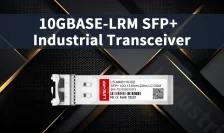
10GBASE-LRM Industrial Transceiver Supports 10.3Gbps, 220m MMF reach, industrial temperature (-40~85°C), and full compatibility with Cisco, Arista, Dell, H3C.
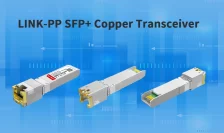
Discover the LINK-PP 10GBase-T Copper SFP+ Transceiver. Supporting 10Gbps over Cat6a/7 cables up to 80m. Compatible with Cisco, Dell, H3C, Juniper, and Arista.
Explore the LINK-PP LS-SM3110-10C 10G 10km SFP+ module. Discover specs, applications & why it's a top choice for reliable, long-distance fiber connectivity.
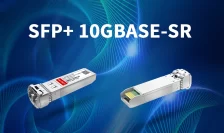
Explore the LINK-PP LS-MM8510-S3C SFP+ 850nm 10GBASE-SR optical transceiver. Up to 300m reach on MMF with low power consumption and full compatibility.
Choose the right 10G SFP+ transceiver by comparing compatibility, speed, media type, distance, and cost for reliable network upgrades.
Learn how to choose the best LINK-PP 10G optical transceivers for your network by evaluating compatibility, performance, cost, and scalability effectively.
The LINK-PP LS-DW2810-40I DWDM Transceiver offers 10Gbps speed, 40km range, energy efficiency, and compatibility with major brands for seamless networking.

The LINK-PP 10G SFP+ Transceiver LS-SM5510-80C delivers 10.7Gbps speed, 80km range, low power use, and compatibility with top networking devices.

Add Your Heading Text Here