100G Optical Transceivers

100G Optical Transceivers

Topics
HTTP over SSL encrypts your data, ensuring secure, private communication and protecting sensitive information from hackers during web browsing.

VLAN vs SVI explained: VLAN segments networks at Layer 2, while SVI enables inter-VLAN routing at Layer 3 for communication between VLANs.
Learn what IEEE 802.3cd defines for 50G, 100G and 200G Ethernet. Explore PAM4 technology, key PMDs, deployment use cases and suitable LINK-PP optical transceivers.
MUX and DEMUX streamline data transmission by combining and splitting signals, reducing cables, and enhancing network efficiency and reliability.
SVI in networking lets you assign IP addresses to VLANs, enabling inter-VLAN routing and efficient Layer 3 switch management for your network.
exploring cloud migration and its benefits, strategies, best practices, also delve into the essential hardware, like optical modules, that make it all possible.
Data center virtualization uses software to create virtual servers, storage, and networks, improving efficiency, reducing costs, and boosting flexibility.
Compare Fiber Optic Splitter and coupler functions, signal loss, and best uses to choose the right device for efficient modern network distribution.
A cloud managed network lets you control devices remotely via a web dashboard, offering easy management, automatic updates, and strong security.
Open source gives control over software code, while open networking lets you mix hardware and software from multiple vendors for flexible networks.
Network visualization uses graphs and diagrams to reveal connections, patterns, and relationships in complex data sets.
Solve common network problems in data center networks, including outages, slow speeds, and configuration errors, with practical troubleshooting tips.
Discover the differences between P2P, P2MP, MP2P, and MP2MP network architectures. Learn how LINK-PP optical transceivers enable efficient, high-speed connectivity.
Discover how silicon photonics is reshaping optical transceivers with higher bandwidth, lower power, and advanced integration for AI, 5G, and data center networks.
Explore how 6G networks challenge optical transceivers with ultra-high bandwidth demands, and discover advanced solutions like CPO, silicon photonics, and LINK-PP 6G-ready optical modules.
100 Gigabit Ethernet offers faster speeds, improved reliability, and scalability for data centers and businesses needing high-performance networks.
Open source software allows anyone to use, modify, and share code freely, offering flexibility, collaboration, and community-driven innovation.
Optical modules enable high-speed, low-latency links across 5G fronthaul, midhaul, and backhaul. Learn how transceiver types, standards, and deployment needs shape modern telecom networks.
Machine Learning (ML) enables computers to learn from data, identify patterns, and make predictions, powering tools like voice assistants and recommendations.
SSH vs SSL: SSH secures remote access and file transfers, while SSL protects web communication. Choose the right protocol for your security needs.
Photonic integrated circuits use light to transmit data, offering faster speeds, lower power use, and reliable connections for modern networks.
Uplink Failure Detection quickly identifies network link failures, enabling fast response to prevent downtime and maintain business continuity.
A VLAN segments a network at the data link layer, improving security, performance, and management by isolating devices within virtual groups.
Virtual Extensible LAN enables scalable, secure, and flexible network virtualization, supporting millions of segments for modern data center needs.
An IPv4 address uniquely identifies your device on a network, enabling internet access and secure data transfer between devices worldwide.
Mean Time Between Failure (MTBF) shows how long equipment runs before failing, helping you plan maintenance and boost reliability.
Receiver overload occurs when signals are too strong, causing distortion, shutdowns, or equipment damage. Learn causes, symptoms, and prevention tips.
Receiver sensitivity shows the lowest signal a device can detect. Learn how it impacts connection quality and what values mean for your device’s performance.
Compare CFP4 vs. QSFP28 by size, power, density, and deployment fit. Learn which 100G module is better for data centers, telecom, and upgrades.
QSFP28 vs. QSFP-DD explained for engineers. Compare electrical lanes, speed, power, compatibility, and deployment scenarios to select the right 100G or 400G optical module.
Unlock flexible, high-density 100G/112G connectivity. The LQ-LW112-LR4C is a dual-rate QSFP28 10km transceiver supporting both 100GBASE-LR4 and 112GBASE-OTU4 over SMF.
Spine-Leaf Architecture in optical networks enables scalable, non-blocking connectivity and high performance for modern data centers.
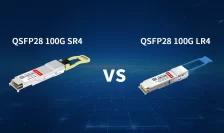
Compare QSFP28 100G SR4 vs LR4 to choose the right 100G transceiver for your network based on distance, fiber type, connectors, and budget.
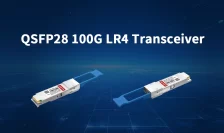
A 100G LR4 transceiver enables 100Gbps data transfer up to 10km using single-mode fiber, ideal for high-speed, long-distance network connections.
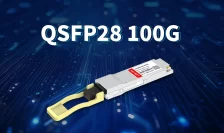
Discover the LINK-PP LQ-M85100-SR4C QSFP28 100G SR4 transceiver—ideal for short-reach 100G Ethernet over MMF. Compatible with Cisco, Arista, FS, Dell, and more.
LINK-PP 100G transceivers deliver high-speed connectivity, energy efficiency, and seamless integration, making them ideal for modern networks and data centers.

Add Your Heading Text Here