Blog
Blog Type
Product
Topic
Blog Type
Product
Topic
Knowledge Center
Industry
Product
Product
Glossary
Category
Showing results for: "What is"
Topics
166
SVI in networking lets you assign IP addresses to VLANs, enabling inter-VLAN routing and efficient Layer 3 switch management for your network.
exploring cloud migration and its benefits, strategies, best practices, also delve into the essential hardware, like optical modules, that make it all possible.
Learn what the EtherCAT Slave Controller (ESC) is and how it processes real-time frames, manages FMMU mapping, and enables high-speed industrial automation.
Data center virtualization uses software to create virtual servers, storage, and networks, improving efficiency, reducing costs, and boosting flexibility.
A cloud managed network lets you control devices remotely via a web dashboard, offering easy management, automatic updates, and strong security.
Open networking enables flexible, vendor-neutral networks by separating hardware and software, offering more control, choice, and cost efficiency.
Learn what IEEE 802.3bm is and how it defines the key PHY interfaces for 40G and 100G Ethernet. Explore SR4, LR4, CR4 technologies and why this standard powers modern data centers.
Pluggable optics offer flexible upgrades, while on-board optics provide higher speed and integration. Compare both for your data center needs.
Spine-Leaf Architecture in optical networks enables scalable, non-blocking connectivity and high performance for modern data centers.
A clear, professional guide to IIoT (Industrial Internet of Things), covering architecture, protocols, security best practices, and suitable networking components for industrial deployments.
59
Learn what an SFP duplex LC connector is, how it works in optical transceivers, and why it is widely used in fiber networks for reliable full-duplex communication.
What Is QSFP-DD? QSFP-DD enables high-speed Ethernet with double density, backward compatibility, and up to 800G bandwidth for modern data centers.
Learn what a ToR (Top-of-Rack) switch is, how ToR architecture works, and why it’s the preferred networking model in modern data centers. Includes benefits, use cases, and compatible optical transceiver solutions from LINK-PP.
A cloud managed network lets you control devices remotely via a web dashboard, offering easy management, automatic updates, and strong security.
Data center virtualization uses software to create virtual servers, storage, and networks, improving efficiency, reducing costs, and boosting flexibility.
Open networking enables flexible, vendor-neutral networks by separating hardware and software, offering more control, choice, and cost efficiency.
Learn what IEEE 802.3bm is and how it defines the key PHY interfaces for 40G and 100G Ethernet. Explore SR4, LR4, CR4 technologies and why this standard powers modern data centers.
Pluggable optics offer flexible upgrades, while on-board optics provide higher speed and integration. Compare both for your data center needs.
XLPPI electrical interface connects 40G QSFP+ modules to network hardware using four lanes, ensuring high-speed, reliable data transfer and compatibility.
Coherent WDM enables high-capacity, long-distance optical data transmission by using amplitude, phase, and polarization detection.
96
EMC Electromagnetic Compatibility ensures devices work safely and reliably in shared environments by minimizing interference and meeting compliance standards.
Electromagnetic interference (EMI) disrupts electronic devices by introducing unwanted electromagnetic energy, causing malfunctions and performance issues.
Through-Hole Technology (THT) involves inserting component leads into PCB holes and soldering them, ensuring durable connections for high-reliability applications.
PCBA stands for Printed Circuit Board Assembly. It's essentially a bare PCB that has had all the necessary electronic components soldered onto it.
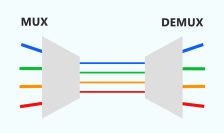
Wavelength Division Multiplexing (WDM) uses optical transceiver modules to send multiple data streams through a single fiber, boosting bandwidth and efficiency.

The TOSA is a critical component in optical transceivers, converting electrical signals into optical signals for high-speed fiber optic communication.
11
ODN in PON networks connects OLTs to ONUs, ensuring efficient optical signal transmission, scalability, and cost-effective high-speed connectivity.

Subscribe to LINK-PP
newsletter
Don’t miss anything. Get all the latest posts delivered straight to your inbox.

Video
00:41
Global Delivery Service | LINK-PP
https://resources.l-p.com/wp-content/uploads/2026/06/f3707104ff423f50cb51a7617d4e6a25.mp4
Jun 26, 2024
- 1.2k
- 888
×