
















In today’s high-speed digital world, reliable fiber optic networks are the backbone of telecommunications, data centers, and 5G infrastructure. But how do engineers ensure these networks are fault-free and optimized? Enter the Ondas de Tempo-Domínio Refletômetro (OTDR)—a powerful tool for diagnosing, testing, and maintaining cabos de fibra óptica. This guide dives deep into OTDR technology, its applications, and how it integrates with modern components like transceptores ópticos. Whether you’re a network engineer or a tech enthusiast, you’ll discover why OTDR is essential for minimizing downtime and maximizing performance. Let’s explore the ins and outs of this critical instrument!
📜 Principais Destaques
An OTDR is very important for checking fiber optic cables. It helps find breaks, shows cable length, and checks connection quality.
Using an OTDR often stops network problems. It lets technicians find issues early. This saves both time and money.
Always get your OTDR ready before testing. Clean the connectors. Check the settings. Make sure the device is charged. This gives correct results.
Reading the OTDR trace is very important. Look for spikes and drops. These show faults and help measure signal loss.
Write down all OTDR tests in a log. This helps you watch your fiber network’s health over time.
📜 What is an Optical Time-Domain Reflectometer (OTDR)?
An OTDR is an optoelectronic instrument used to characterize optical fibers by emitting light pulses and analyzing the backscattered signals. Think of it as a “radar for fiber optics”—it detects faults, splices, bends, and losses along a cable, providing a visual trace of the fiber’s health. This non-destructive testing method is vital for problemas em fibras ópticas, network installation, and preventive maintenance.
Key features of OTDR include:
High precision in locating faults (e.g., breaks or macrobends).
Ability to measure distance, loss, and reflectance.
Compatibilidade with single-mode and multimode fibers.
According to industry standards, OTDR testing is crucial for fiber optic certification and ensuring compliance with protocols like ITU-T G.650.
📜 How Does an OTDR Work?
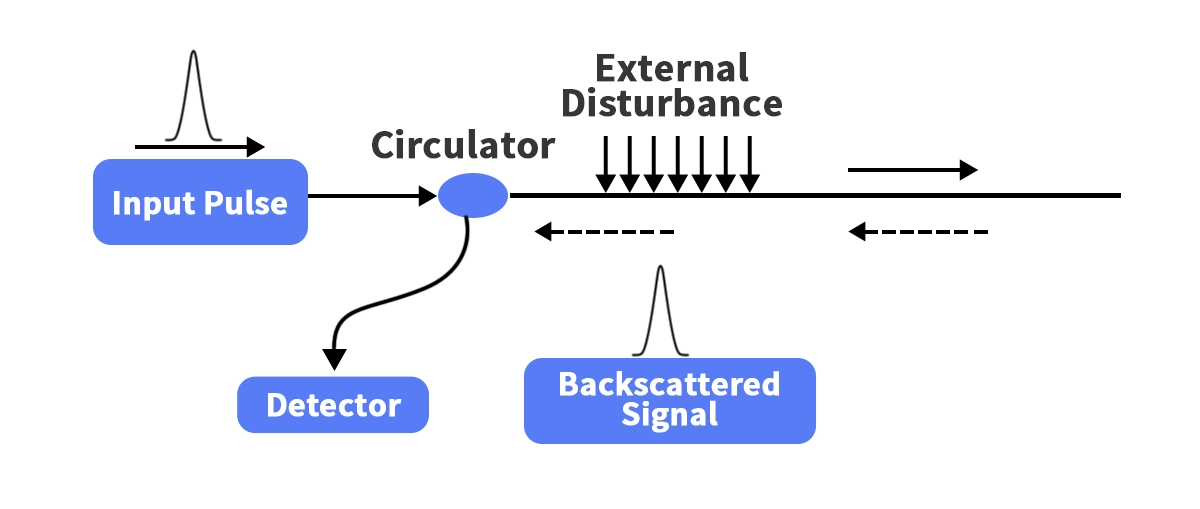
The OTDR operates on the principle of backscattering and Fresnel reflection. Eis uma explicação simplificada:
Pulse Transmission: The OTDR sends a short, high-intensity laser pulse into the fiber.
Signal Analysis: As the pulse travels, it encounters imperfections (e.g., splices or cracks), causing light to scatter back toward the OTDR.
Data Interpretation: The device measures the time delay and intensity of returning signals to generate a trace graph, highlighting events like losses or reflections.
Esse processo permite que OTDR trace analysis to pinpoint issues such as:
Atenuação (signal loss over distance).
Reflective events (e.g., connectors or breaks).
Non-reflective events (e.g., splices or bends).
For accurate results, parameters like pulse width and wavelength must be optimized—a topic we’ll cover in best practices.
📜 Key Applications of OTDR in Modern Networks
OTDRs are indispensable across various sectors. Here are some high-impact use cases:
Telecomunicações: Ensuring fiber optic network integrity for 5G backhaul and FTTH (Fibra até o Lar).
Centros de dados: Validating cabling during installation and fault location in optical networks.
IoT Industrial: Monitoring long-haul fibers in smart cities and critical infrastructure.
Aerospace and Defense: Deploying rugged OTDRs for harsh environments.
These applications rely on OTDRs to reduce network downtime e suporta transmissão de dados em alta velocidade.
📜 Benefits of Using OTDR for Fiber Testing
Why is OTDR a go-to tool? Let’s highlight its advantages:
Proactive Maintenance: Detect issues before they cause outages.
Eficiência de custo: Save time and resources with precise fault localization.
Comprehensive Reporting: Generate detailed traces for audits and compliance.
Por exemplo, using OTDR for fiber optic network maintenance can slash troubleshooting time by up to 50%, according to industry studies.
📜 Step-by-Step Guide to OTDR Testing
Performing an OTDR test involves careful setup and analysis. Follow these steps:
Connect the OTDR to the fiber via an adapter or launch cable.
Set Parameters: Choose wavelength (e.g., 1310nm or 1550nm), pulse width, and range.
Acquire Trace: Run the test and capture the OTDR graph.
Analyze Events: Identify peaks and dips in the trace to locate faults.
Document Results: Save data for reports or further action.
👉 Pro Tip: Use a launch cable to avoid “dead zones” that mask near-end events!
📜 Integrating OTDR with Optical Transceivers
Transceptores ópticos, como o Módulos SFP, are critical for converting electrical signals to optical ones in networks. But how do they relate to OTDR? When deploying or testing fiber links, OTDRs verify the integrity of connections involving transceivers. For example, if a LINK-PP SFP-10G-LR module is used in a data center, an OTDR can ensure the fiber patch cords and connectors meet loss budgets, preventing issues like high bit error rates.
Por que isso importa:
Compatibility Checks: OTDR testing validates that transceivers like the LINK-PP SFP28-25G-ER operate within specified loss thresholds.
Performance Optimization: By identifying excessive loss at transceiver interfaces, engineers can troubleshoot fiber optic link performance effectively.
Na prática, how to integrate OTDR with optical modules is a common query among network designers. Always refer to manufacturer guidelines—for instance, LINK-PP provides datasheets detailing insertion loss limits for their transceivers.
📜 Common OTDR Event Types and Characteristics
To simplify trace interpretation, here’s a table summarizing typical OTDR events:
Event Type | Descrição | Causes | OTDR Trace Signature |
|---|---|---|---|
Reflective Event | Sudden spike in signal due to reflection | Connectors, breaks, or mismatches | Sharp peak followed by drop |
Non-Reflective Event | Gradual signal loss without reflection | Splices, bends, or microbends | Smooth dip in the trace |
Atenuação | Signal decrease over distance | Fiber material or environmental factors | Steady downward slope |
End of Fiber | Terminal point of the cable | Open fiber end or break | Large reflection then flatline |
This table aids in OTDR trace analysis for beginners and experts alike.
📜 Best Practices for Effective OTDR Testing
Maximize your OTDR‘s accuracy with these tips:
Calibrate Regularly: Ensure the device is aligned with standards.
Use Appropriate Settings: Tailor pulse width to fiber length—shorter for short fibers, longer for long-haul.
Include Launch and Receive Cables: Mitigate dead zones for clear near-end analysis.
Leverage Auto-Testing: Many modern OTDRs, like those used with Transceptores LINK-PP, offer automated features for consistency.
Adopting these practices enhances fiber optic testing accuracy and supports confiabilidade da rede.
📜 Spotlight on LINK-PP Optical Modules
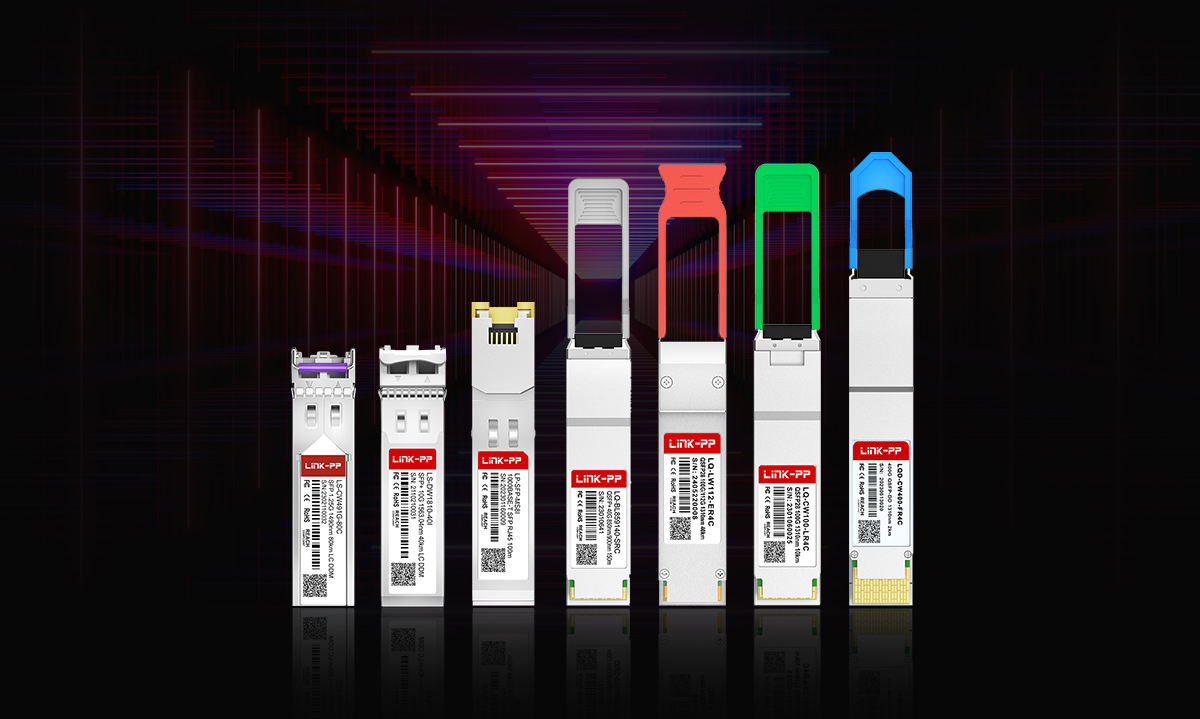
As a leader in fiber optics, LINK-PP offers a range of high-performance transceivers designed for seamless OTDR integration. For example, the LINK-PP QSFP28-100G-LR4
module supports 100G Ethernet and is ideal for long-reach applications where OTDR testing validates link integrity. By choosing LINK-PP products, you benefit from:
Baixa Perda por Inserção: Minimizes signal degradation, as verified by OTDR traces.
Durabilidade: Built to withstand rigorous field conditions.
Conformidade: Meets industry standards for interoperability.
Seja você implantando LINK-PP Módulos SFP+ in a data center or using OTDR for fiber characterization in 5G networks, this synergy ensures optimal performance.
📜 Conclusão
OTDR is a cornerstone of modern fiber optic management, enabling precise fault detection and efficient maintenance. By understanding its principles, applications, and integration with components like LINK-PP optical modules, you can build resilient networks that meet the demands of today’s digital economy. Remember, regular OTDR testing isn’t just a best practice—it’s a smart investment in uninterrupted connectivity.