















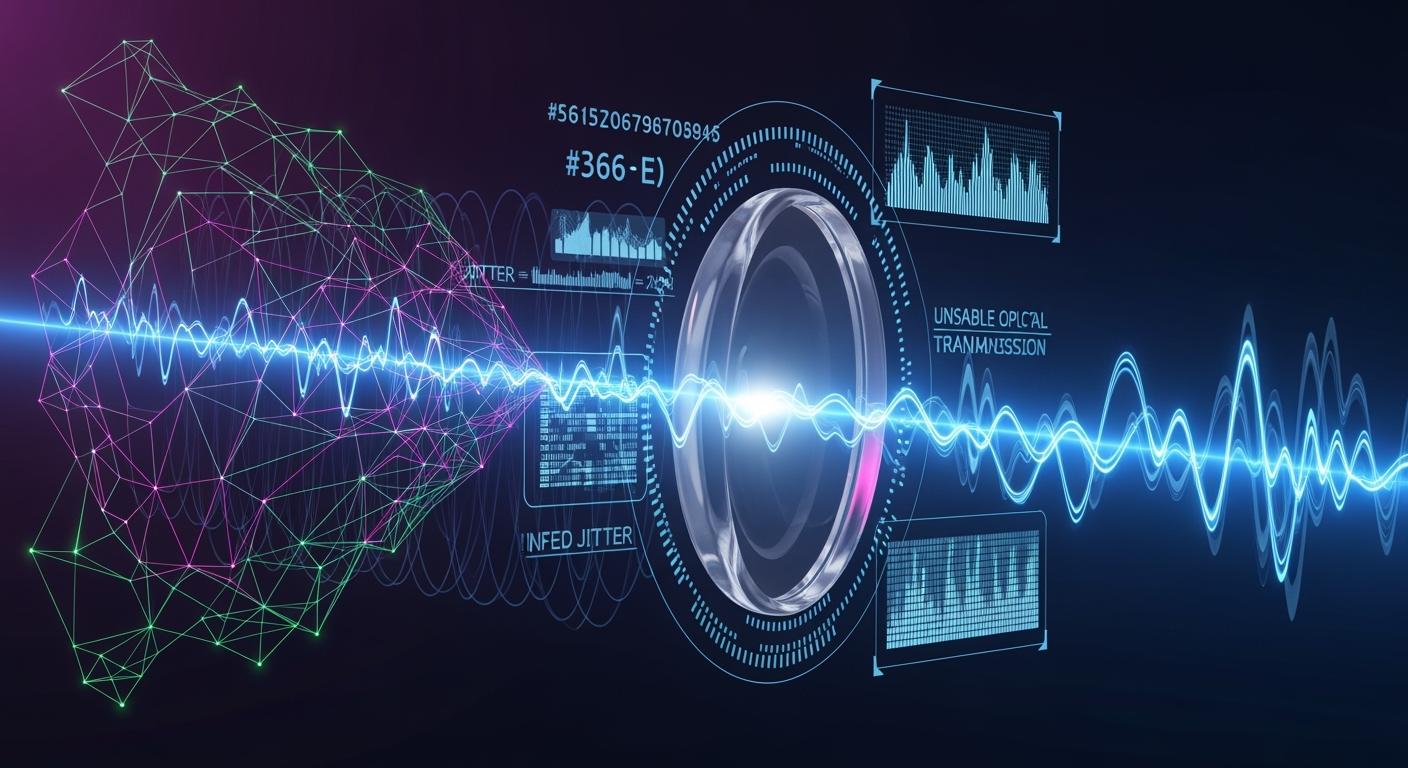
In de razendsnelle wereld van de optische communicatie worden gegevens met de snelheid van het licht verzonden. Maar wat gebeurt er als deze onberispelijke stroom fotonen op een subtiele, maar cruciale onvolkomenheid stuit? Deze onvolkomenheid staat bekend als jitter, and it’s one of the most significant factors determining the performance and reliability of your network.
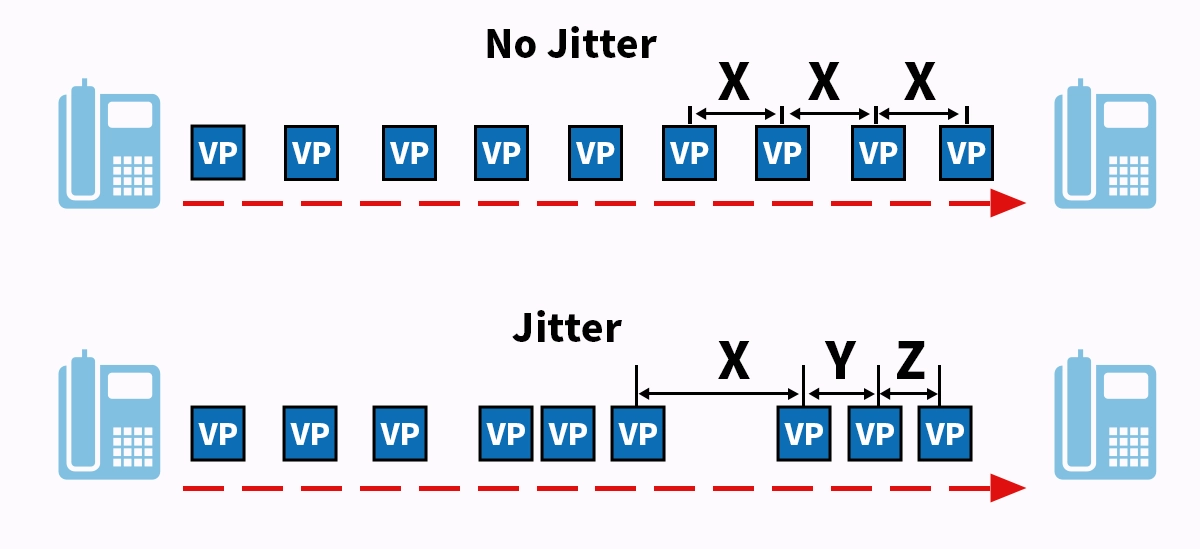
Simpel gezegd is jitter de deviation in the timing of a signal’s edges from their ideal positions. Imagine a perfectly metronomic drummer suddenly speeding up and slowing down erratically—the music becomes distorted. Similarly, jitter distorts the digital “rhythm” of your data, leading to errors and potential system failure.
In this article, we’ll demystify jitter, explore its root causes, classify its types, and provide actionable strategies for mitigation. Understanding hoe jitter in optische netwerken kan worden verminderd is van cruciaal belang voor iedereen die hogesnelheidsdata-infrastructuur ontwerpt, beheert of erop vertrouwt.
🚀 What Exactly is Jitter? The “When” Matters More Than the “What”
In digital signals, information is decoded at specific, predetermined intervals. The receiver samples the signal, expecting a ‘1’ or a ‘0’ at a precise moment. Jitter introduces uncertainty into this timing. A rising edge that arrives too early or too late can cause the receiver to sample the wrong value, resulting in a Bitfoutenpercentage (BER).
Jitter wordt doorgaans gemeten in Eenheidsintervallen (UI) or picoseconden (ps). Eén UI is de tijdsduur van één bit. Voor een signaal van 10 Gbps is 1 UI gelijk aan 100 picoseconden. Zelfs een paar picoseconden van jitter kan bij datasnelheden van meerdere gigabit catastrofaal zijn.
🚀 The Usual Suspects: Common Sources of Jitter in Optical Links
Jitter doesn’t appear out of nowhere. It’s generated by various components and phenomena within a communication system:
❌ Random Jitter (RJ): Veroorzaakt door willekeurige, onvoorspelbare ruisbronnen zoals thermische ruis en schotruis in optische componenten en elektronica. Het is onbegrensd en volgt een Gauss-verdeling.
📊 Deterministic Jitter (DJ): Dit is voorspelbaar en heeft een specifieke oorzaak. Het kan verder worden uitgesplitst zoals weergegeven in de onderstaande tabel.
In de onderstaande tabel worden de belangrijkste componenten van deterministische jitter samengevat:
Type jitter | Afkorting | Hoofdoorzaak | Kenmerken |
|---|---|---|---|
Gegevensafhankelijke jitter | DDJ | Inter-symboolinterferentie (ISI), bandbreedtebeperkingen van de glasvezel en de zendontvanger. | Pattern-dependent; linked to the sequence of ‘1’s and ‘0’s. |
Periodieke jitter | PJ | Ruis in de stroomvoorziening, overspraak van aangrenzende kanalen of onvolkomenheden in de klokbron. | Herhaalde, sinusvormige variaties in de timing. |
Beperkte, niet-gecorreleerde jitter | BUJ | Crosstalk van andere datastromen die geen verband houden met het hoofdsignaal. | Onvoorspelbaar, maar heeft een eindige piek-tot-piekwaarde. |
Begrijpen van de verschillende soorten jitter en de onderliggende oorzaken daarvan is de eerste stap op weg naar effectieve risicobeperking. Bij het ontwerp van een robuust systeem moet rekening worden gehouden met zowel de willekeurige als de deterministische componenten.
🚀 Why Should You Care? The Real-World Impact of Jitter
Ongecontroleerde jitter leidt rechtstreeks tot een verslechtering van de netwerkprestaties. De gevolgen hiervan zijn onder meer:
Verhoogde bitfoutfrequentie (BER): This is the most direct impact. As jitter increases, the “eye” in an eye diagram closes, making it harder for the receiver to correctly distinguish bits.
Systeeminstabiliteit: Intermittent link failures and “flapping” connections can often be traced back to marginal jitter tolerance.
Beperkt operationeel bereik: Een verbinding die op 1 km perfect werkt, kan op 10 km uitvallen als gevolg van de opeenstapeling van jitter in de glasvezel.
Overtredingen van het protocol: Standaarden zoals Ethernet, Fibre Channel en OTN hebben strikte maskers voor het genereren van jitter en de toegestane afwijkingen. Als deze limieten worden overschreden, is uw apparatuur niet interoperabel.
Voor netwerkingenieurs is het beheer van jittertolerantie bij hogesnelheids-transceivers is niet verhandelbaar voor het onderhoud van een gezonde en scalabel netwerk.
🚀 De kern van de verbinding: hoe optische transceivers invloeden op jitter
De optische transceiver is een cruciale hub voor de generatie en beheer van jitter. Elk component binnen een transceiver kan bijdragen aan de totale jitterbudget:
Laserdriver en -modulator: Onjuistheden bij het opvoeren van de laser kunnen timing skew en jitter veroorzaken die afhankelijk zijn van het patroon.
Foto Detector & Amplifier (TIA): Op de ontvangerkant is de conversie van licht naar een elektrische signalen gevoelig voor stroom, wat resulteert in willekeurige jitter.
CDR Schakelingen (klok- en gegevensherstel): Dit is de transceiver's “jitter filter.” Een hoge kwaliteit CDR filtert de ingaande signalen door een duidelijke clock te extraheren en de data te retimeren, waardoor de ingaande jitter wordt verlaagd.
Het kiezen van transceivers met superieure componenten en robuuste CDR-circuits is cruciaal. Dit is waar de belangrijkheid van hoge kwaliteit, voldoende optische modules zichtbaar wordt.
Voor toepassingen die onomgekeerd signalenintegriteit vereisen, is de LINK-PP PSM4-100G-LR4 transceiver ontworpen voor zeer lage jitter generatie. Zijn advanced CDR en hoge lineaire optica zorgen ervoor dat uw 100G verbindingen blijven stabiel en foutvrij, zelfs over lange afstanden, direct oplossing vormen voor problemen zoals jitter in 100G optische netwerken.
🚀 Conclusie: jitterbeheer is gelijkwaardig met netwerkexcellente
Jitter is een onvermijdelijke component in hoge snelheids optische communicatie, maar niet onoverkomen. Door het begrip van zijn natuur, het kiezen van hoge kwaliteit componenten zoals die van LINK-PP, en de naleving van correcte ingenieursprincipes, kunt u ervoor zorgen dat uw datastromen blijven helder, nauwkeurig en betrouwbaar.
Bereid om jitter uit te sluiten uit uw cruciale optische verbindingen?
Ga naar de volledige portefeuille van hoge prestaties, lage jitter LINK-PP optische transceivers en spreken met onze technische experts om de juiste oplossing te vinden voor uw streng eisen. Bezoek onze website link-pp.com or Neem contact op vandaag een consultatie!
🚀 FAQ
Wat is de hoofdreden voor jitter in optica?
Je ziet je vaak jitter wanneer delen van je optische systeem snel bewegen. Deze beweging kan komen door schommelingen, vibraties of veranderingen in de omgeving. Ook kleine, snelle bewegingen kunnen jitter veroorzaken.
Wat doet jitter op jouw beelden of gegevens?
Jitter kan je beelden verbluren of ze doen eruit zien als zeer schommend. Je kunt ook fouten in je gegevens vinden. Jitter maakt je systeem minder betrouwbaar en kan de kwaliteit van je resultaten verlagen.
Welke tools kun je gebruiken om jitter te meten?
Je kunt gebruik maken van hoge snelheidscamera's, vibratiesensoren of oscilloskopen. Deze tools helpen je om snelle bewegingen of timingveranderingen in je systeem te zien. Elk tool controleert een ander deel van je setup.
Welke stappen helpen je bijzonder te verminderen bij jitter in je optische systeem?
Je kunt gebruik maken van robuuste montage, vibratiepaden of signaalfilters. Deze stappen houden je systeem stabiel en verlagen ongewenste beweging of geluid. Goede ontwerp en regelmatige controleën helpen ook.
Welke soorten optische systemen zijn het meest beïnvloed door jitter?
Je ziet jitter meest in camera's, teleskopen, kabelverbindingen en laserapparatuur. Systeem die hoge nauwkeurigheid of heldere beelden nodig hebben, hebben het meest zorgen voor problemen met jitter.