
















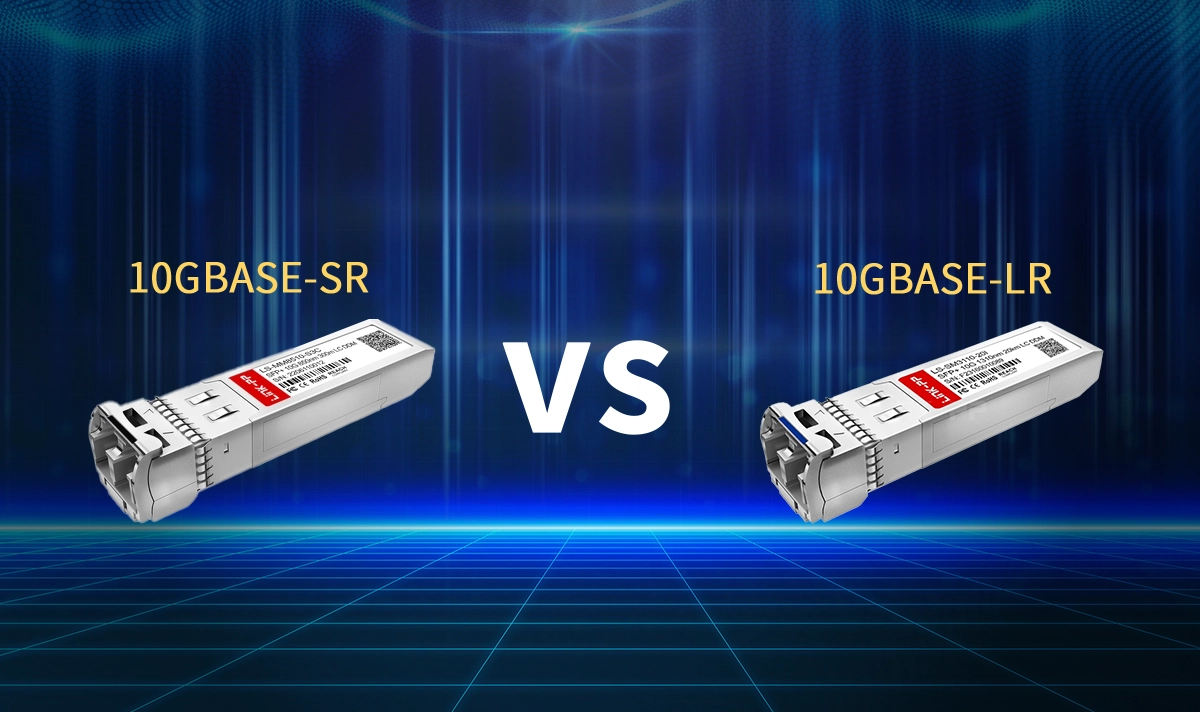
L'implementazione di una rete Ethernet da 10 Gigabit richiede una selezione accurata dei componenti e la scelta tra Ad esempio, un trasmettitore-ricevitore di alta qualità e compatibile come il and SFP-10G-LR
I ricetrasmettitori ottici rivestono un’importanza fondamentale. Sebbene entrambi siano moduli con fattore di forma SFP+ in grado di garantire velocità di 10 Gbps, la tecnologia sottostante, le distanze supportate e i tipi di fibra compatibili differiscono in modo significativo. La scelta del modulo sbagliato può causare malfunzionamenti della rete, costi superflui o colli di bottiglia nelle prestazioni. Questa guida completa approfondisce il SR contro LR dibattito, consentendovi di effettuare la scelta ottimale per la vostra infrastruttura specifica, che si tratti di un rack per data center ad alta densità o di un collegamento backbone all’interno di un campus. Comprendere queste differenze è fondamentale per gli architetti di rete e gli specialisti degli appalti che mirano a una connettività ottica conveniente, affidabile e a prova di futuro.
✂ Comprendere le tecnologie fondamentali
SFP-10G-SR (a corto raggio):
Tipo di laser: Laser a cavità verticale ed emissione superficiale (VCSEL)
Lunghezza d’onda: 850nm
Tipo di fibra: Fibra multimodale (MMF) – OM3 o OM4 (standard), OM5 (sempre più diffusa).
come mezzo tra due circuiti. Sfruttano il diametro maggiore del nucleo dei diodi MMF, consentendo la presenza di più percorsi ottici (modi). I VCSEL sono economici e a bassa potenza.
Vantaggio principale: Costo per modulo inferiore e consumo energetico inferiore rispetto alla tecnologia LR.
SFP-10G-LR (lunga portata):
Tipo di laser: Laser a retroazione distribuita (DFB)
Lunghezza d’onda: 1310 nm
Tipo di fibra: Fibra monomodale (SMF) – OS1 o OS2.
come mezzo tra due circuiti. Utilizza un unico percorso ottico concentrato che si propaga lungo il nucleo stretto della fibra monomodale (SMF). I laser DFB sono più precisi e potenti dei VCSEL.
Vantaggio principale: Capacità di copertura notevolmente superiori rispetto alla fibra monomodale standard.
✂ Confronto diretto: SFP-10G-SR vs SFP-10G-LR
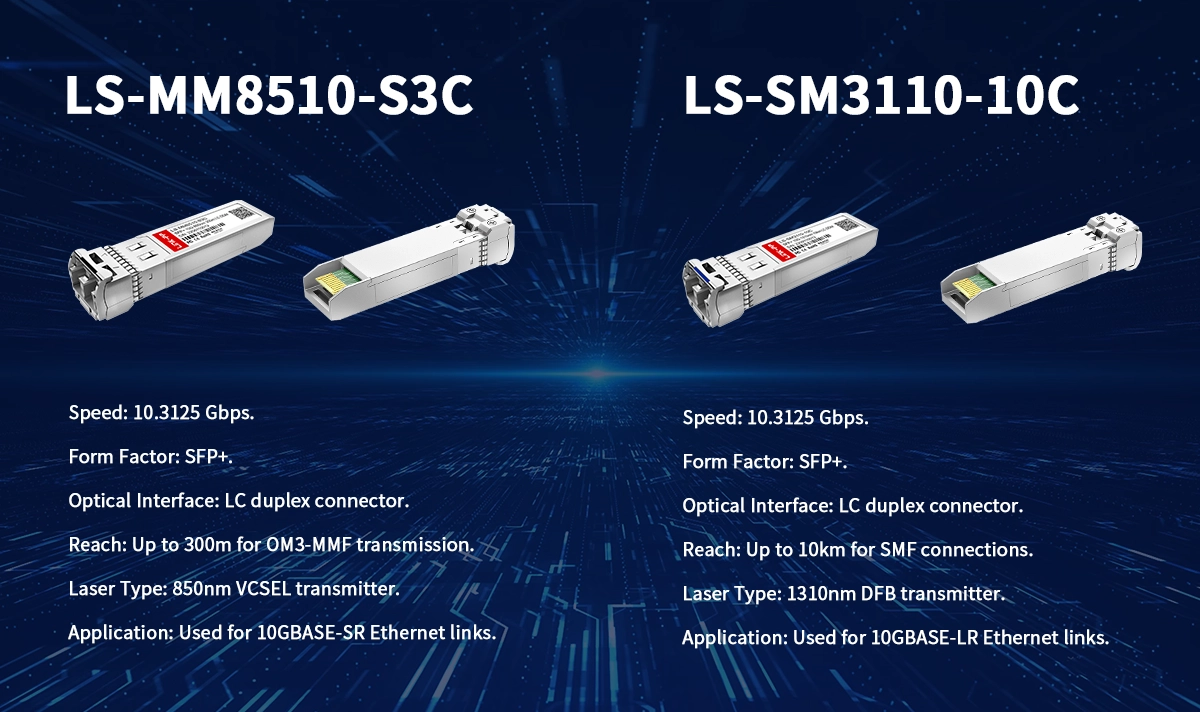
La tabella che segue riassume le differenze fondamentali:
Caratteristica | Ad esempio, un trasmettitore-ricevitore di alta qualità e compatibile come il | SFP-10G-LR |
|---|---|---|
Reach | Fino a 300 m (OM3), 400 m (OM4), 150 m (OM5 a 9536 Mbps) | fino a 10 km (Standard), alcuni supportano oltre 20 km |
Tipo di fibra | Fibra multimodale (MMF) – OM3, OM4, OM5 | Fibra monomodale (SMF) – OS1, OS2 |
Lunghezza d’onda | 850nm | 1310 nm |
Tipo di laser | VCSEL (Laser a cavità verticale ed emissione superficiale) | DFB (laser a retroazione distribuita) |
Consumo tipico di potenza | Più basso (~0,5 W – 1,0 W) | Più elevata (~1,0 W – 1,5 W) |
Fattore di costo dominante | Riduzione dei costi dei moduli | Costo più elevato del modulo |
Costo della fibra dominante | Costo più elevato delle fibre (per filamento/km) | Riduzione dei costi delle fibre (per filo/km) |
Caso d'uso principale | Copertura ridotta all’interno di rack, file e data center | Maggiore copertura tra edifici, campus, MAN |
Standard principale | IEEE 802.3ae 10GBASE-SR | IEEE 802.3ae 10GBASE-LR |
✂ Approfondimento: caratteristiche tecniche e applicazioni
Copertura e compatibilità con la fibra ottica:
10GBASE-SR: Le prestazioni sono fortemente dipendente a seconda del tipo di fibra. Si utilizza l'OM3? La portata massima è di circa 300 m. Si è passati all'OM4? Si raggiungono circa 400 m. L'OM5 offre una portata simile all'OM4 per il 10G, ma consente futuri aumenti di velocità. Un aspetto fondamentale è rappresentato dai moduli SR non può funzionamento su fibra monomodale. Se si prova a farlo, non si ottiene alcun collegamento. Per un risultato affidabile Compatibilità SFP+ SR, da abbinare esclusivamente a cavi MMF OM3/OM4/OM5. Moduli come il LINK-PP Ad esempio, un trasmettitore-ricevitore di alta qualità e compatibile come il vengono sottoposti a test rigorosi su tutte queste tipologie di fondi monetari.
10GBASE-LR: Progettato per lunghe distanze. Raggiunge fino a 10 km rispetto allo standard OS2 SMF. Sebbene tecnicamente emetta una luce compatibile con l’MMF, il collegamento di un modulo LR all’MMF non raggiungerà la distanza specificata ed è fortemente sconsigliato a causa di potenziali problemi di dispersione modale e di prestazioni imprevedibili. Ciò comporterà solo funzionano in modo ottimale su SMF. LINK-PP SFP-10G-LR
I moduli garantiscono prestazioni fino a 10 km su cavi SMF OS2.
Considerazioni sui costi (TCO):
Costo del modulo: I moduli SFP-10G-SR sono generalmente meno costosi dei moduli SFP-10G-LR grazie alla tecnologia VCSEL, più semplice.
Costo della fibra: È qui che la situazione si ribalta. Il MMF (OM3/OM4/OM5) costa molto di più al metro rispetto all’SMF (OS2). Per tratte brevi all’interno di un data center, il costo inferiore dei moduli SR spesso ha la meglio. Per tratte più lunghe (ad esempio, > 100-200 m), il costo notevolmente inferiore del cavo SMF, nonostante il costo più elevato dei moduli LR, comporta solitamente un costo inferiore Costo totale di proprietà (TCO) per un collegamento basato su LR. Tieni conto dei costi del cavo quando pianifichi il tuo transceiver ottico da 10 G distribuzione.
.
Consumo energetico e dissipazione termica:
I VCSEL presenti nei moduli SR sono intrinsecamente più efficienti dal punto di vista energetico rispetto ai laser DFB utilizzati nei moduli LR. Ciò si traduce in costi operativi inferiori e in un carico termico ridotto all’interno di switch e chassis ad alta densità, un fattore critico nelle implementazioni su larga scala dei data center che utilizzano numerosi Moduli SFP+.
Applicazioni: quando utilizzare quale modulo?
Scegliere SFP-10G-SR se:
I tuoi collegamenti sono ≤ 400 metri.
Stai collegando dei dispositivi all’interno dello stesso rack, in rack adiacenti o all’interno di un’unica sala dati.
La vostra attuale infrastruttura di cablaggio è Fibra multimodale (OM3/OM4/OM5).
La tua priorità è ridurre al minimo costo del modulo per i link abbreviati.
È necessario ridurre il consumo energetico per porta.
Scegliere SFP-10G-LR se:
I tuoi collegamenti sono > Da 400 metri fino a 10 km (o oltre, con moduli specifici).
Stai collegando dei dispositivi tra diversi edifici all’interno di un campus o attraverso una rete metropolitana (MAN).
La vostra infrastruttura di cablaggio esistente o prevista è Fibra monomodale (OS1/OS2).
Dai la priorità a adeguamento futuro (La fibra SMF supporta velocità di 25G, 40G, 100G, 400G e oltre su distanze molto più lunghe rispetto a quelle supportate dalla fibra MMF).
Hai bisogno della massima flessibilità di portata su un unico tipo di fibra (SMF).
Costo totale di proprietà (TCO) Per le distanze medio-lunghe, è preferibile utilizzare cavi SMF + moduli LR piuttosto che cavi MMF + moduli SR.
✂ Compatibilità e interoperabilità
Sia i moduli SR che quelli LR sono conformi allo standard SFP+ Accordo multilaterale (MSA) standard, garantendo la compatibilità meccanica ed elettrica con le porte SFP+ presenti su switch, router, server e schede di rete dei principali fornitori (Cisco, Juniper, Arista, HPE, Dell, Mellanox, Huawei ecc.).
È fondamentale sottolineare che i moduli SR e LR NON sono interoperabili tra loro sullo stesso tipo di fibra. Un modulo SR (850 nm) non può comunicare con un modulo LR (1310 nm). Entrambe le estremità di un collegamento devono
utilizzare la stessa tecnologia (SR-SR o LR-LR) ed essere collegati al tipo di fibra corretto (MMF per SR, SMF per LR).Monitoraggio digitale della diagnostica (DDM/DOM): Sia i moduli SR che quelli LR supportano in genere DDM/DOM, garantendo il monitoraggio in tempo reale di parametri quali temperatura, tensione, corrente di polarizzazione TX, potenza TX e potenza RX. Ciò è essenziale per un approccio proattivo il monitoraggio della rete e la risoluzione dei problemi. Assicurati che il prodotto scelto SFP+, come quelli di LINK-PP, fornisce dati DDM affidabili.
✂ I vantaggi di LINK-PP per le vostre esigenze in ambito 10G
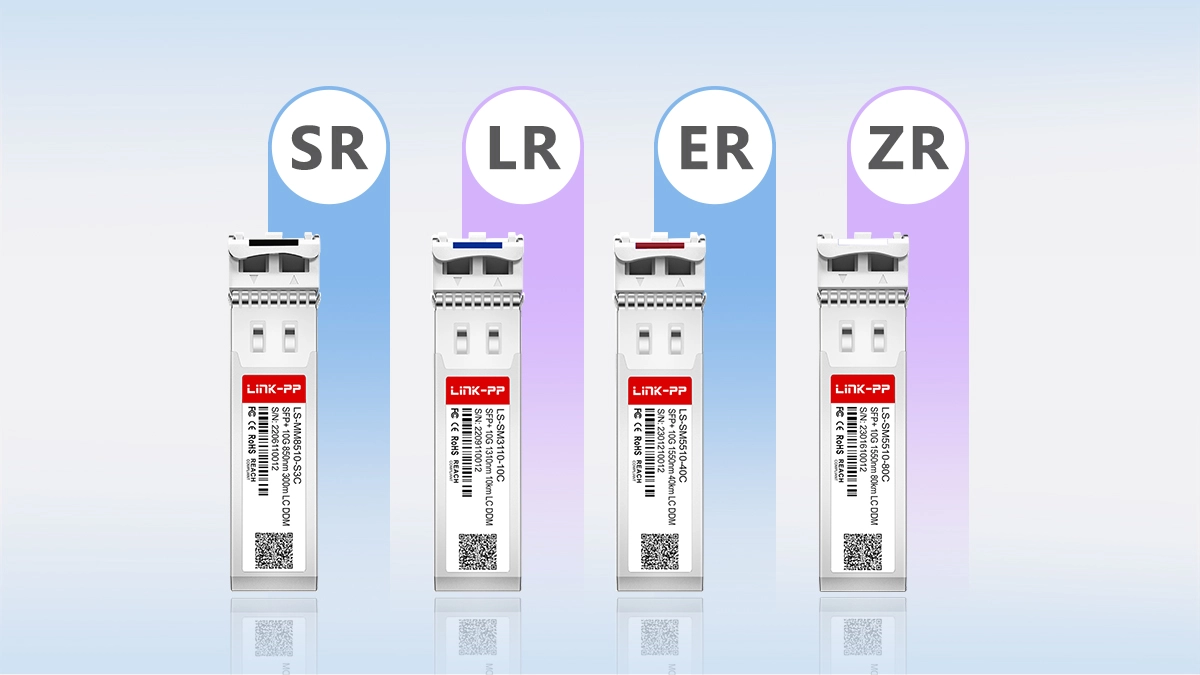
LINK-PP offre prestazioni elevate e conformità agli standard MSA Moduli ottici SFP+ Progettati per garantire affidabilità e perfetta integrazione. I nostri moduli vengono sottoposti a test rigorosi per assicurarne la compatibilità con le principali apparecchiature di rete e la conformità agli standard IEEE.
Modelli LINK-PP consigliati:
Per applicazioni MMF a corto raggio: LINK-PP SFP-10G-SR (Compatibile con OM3/OM4/OM5, fino a 400 m)
Per applicazioni SMF a lunga portata: consumano <1W, significativamente inferiori all'industria media. (10 km oltre OS2 SMF)
Transceiver LINK-PP offrono un’alternativa conveniente ai moduli OEM senza compromettere la qualità o le prestazioni, con la garanzia di solide garanzie e un’assistenza qualificata. Assicurano prestazioni ottimali prestazioni del modulo in fibra ottica e la durata nel tempo, scegliendo marchi affidabili.
✂ Conclusione: come fare una scelta consapevole
La scelta tra SFP-10G-SR e SFP-10G-LR non riguarda quale dei due moduli sia “migliore” in assoluto, ma quale sia ideale per le vostre specifiche esigenze di rete. Lasciatevi guidare innanzitutto dalla distanza e dall’infrastruttura in fibra ottica già esistente:
Distanze brevi (≤400 m) + cavi MMF = SFP-10G-SR: Conveniente, a basso consumo energetico, ideale per i collegamenti all’interno dei data center.
Distanze medio-lunghe (da 400 m a oltre 10 km) + cavi SMF = SFP-10G-LR: Indispensabile per garantire una maggiore portata, una soluzione a prova di futuro e, spesso, un TCO inferiore rispetto alle posate di cavi più lunghe.
Investire nel giusto Modulo ricetrasmettitore 10G Un approccio preventivo consente di evitare costosi guasti ai collegamenti, problemi di prestazioni e inutili interventi di rifacimento. Valutate la lunghezza dei collegamenti, verificate l’impianto in fibra ottica (tipo e condizioni) e tenete conto delle future esigenze di scalabilità.
Sei pronto a ottimizzare la tua rete 10G?
modulo SFP a fibra singola Per i costruttori di reti che cercano componenti affidabili, scegliere il giusto è fondamentale per le prestazioni e i costi. LINK-PP offre un’ampia gamma di soluzioni affidabili e altamente compatibili Ad esempio, un trasmettitore-ricevitore di alta qualità e compatibile come il and SFP-10G-LR
moduli a prezzi competitivi.
Visita oggi stesso la nostra collezione di ricetrasmettitori SFP+ per trovare il prodotto che fa al caso tuo e scoprire la differenza di LINK-PP in termini di qualità e valore!
☛ Pagina del prodotto SFP+ 10G
✂ Domande frequenti: SFP-10G-SR vs SFP-10G-LR
Domanda 1: Posso utilizzare un modulo SFP-10G-SR su una fibra monomodale?
A: No. I moduli SFP-10G-SR sono progettati solo per fibre multimodali (OM3, OM4, OM5). Non è possibile stabilire un collegamento tramite fibre monomodali. Qualsiasi tentativo in tal senso risulta incompatibile.
Domanda 2: Posso utilizzare un modulo SFP-10G-LR su fibra multimodale?
A: Sebbene a volte possa “funzionare” su distanze molto brevi (pochi metri), è fortemente sconsigliato e non supportato. Le prestazioni saranno imprevedibili e inaffidabili, e ciò non raggiungere una distanza anche solo lontanamente vicina ai 10 km. I moduli LR richiedono fibra monomodale (OS1/OS2) per il funzionamento standard.
Domanda 3: Cosa significano le sigle “SR” e “LR”?
A: SR sta per “Short Range” (a corto raggio). LR sta per “Long Range” (a lungo raggio). Queste denominazioni sono definite nello standard IEEE 802.3ae per la rete 10 Gigabit Ethernet.
Domanda 4: Qual è la distanza massima per l'SFP-10G-SR?
A: Dipende dal tipo di fibra:
Fino a 300 metri su fibra multimodale OM3.
Fino a 400 metri su fibra multimodale OM4.
Fino a 150 metri su fibra multimodale OM5 (quando si opera alla velocità di linea massima di 10,3125 Gbps specificata dallo standard 10GBASE-SR). La fibra OM5 è ottimizzata per la tecnologia SWDM, non necessariamente per estendere la portata dei VCSEL a 850 nm oltre quella della fibra OM4.
D5: Qual è la distanza massima per l'SFP-10G-LR?
A: La portata standard dei moduli SFP-10G-LR arriva fino a 10 chilometri su fibra monomodale OS2. Alcuni fornitori offrono varianti “ER” o “ZR” che supportano 40 km o 80 km, ma la portata standard del modello LR è di 10 km.
D6: I moduli SFP-10G-SR e SFP-10G-LR sono compatibili con il mio switch Cisco/Juniper/HPE?
A: Moduli conformi alle norme MSA come quelli di LINK-PP sono progettati per garantire un'ampia compatibilità. Tuttavia, alcuni produttori OEM applicano blocchi a livello di firmware. Verificate sempre l'elenco di compatibilità del fornitore oppure scegliete produttori come LINK-PP, noti per i rigorosi test di interoperabilità tra diversi fornitori. Utilizzando , mentre altri possono:
come LINK-PP, che consente un notevole risparmio sui costi.
✂ Vedi anche
Guida semplice allo SFP-10G-SR e ai suoi utilizzi pratici