
















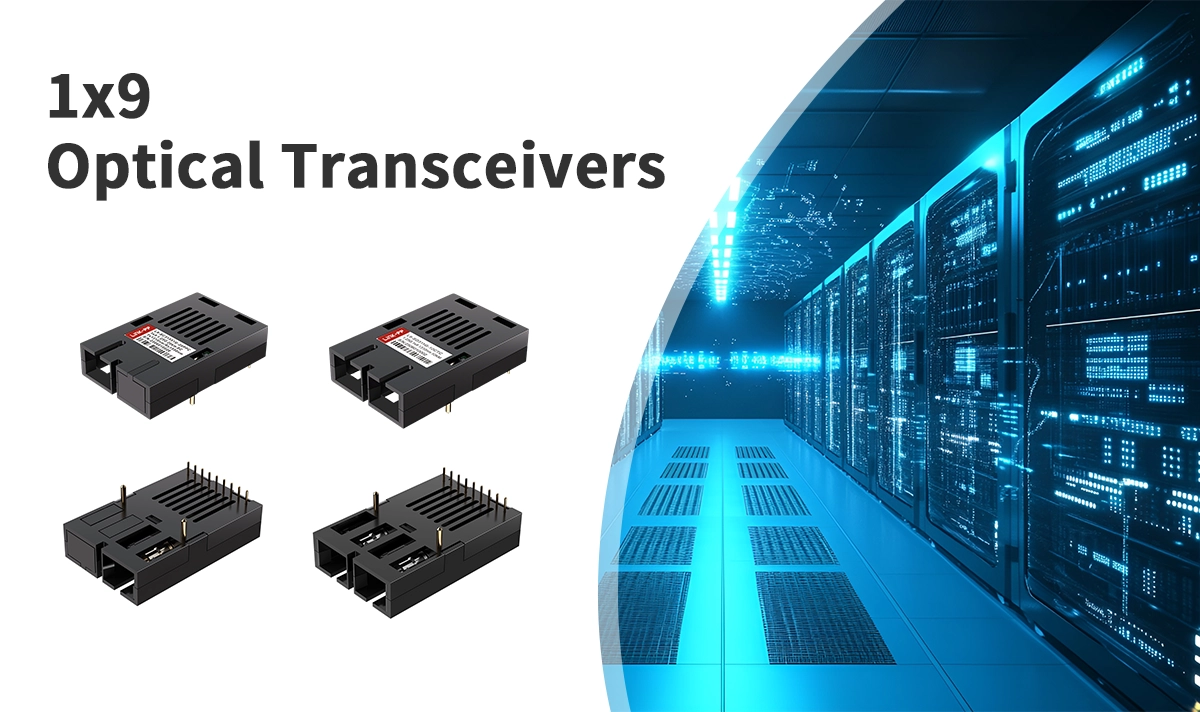
⚡ In a nutshell: Naviguer dans le monde de des transceivers optiques 1×9? This comprehensive guide cuts through the complexity. Learn key selection criteria (distance, fiber type, data rate, environment), decode specs, avoid pitfalls, and discover why LIEN-PP‘s industrial-grade modules are the reliable choice for demanding applications. Make the right connection!
While newer form factors like SFP+ and QSFP dominate headlines, the humble 1×9 transceiver modules remains a vital workhorse in specific, often demanding, networking environments. Its legacy design offers robustness and simplicity, making it indispensable for industrial automation, telecom access networks, and specialized equipment where newer modules might not fit or be cost-effective. Choosing the right one, however, requires careful consideration beyond just plug-and-play.
This definitive guide equips you with the knowledge to confidently select the optimal émetteur-récepteur optique 1×9 for your specific application needs.
🚀 Understanding the 1×9 Transceiver Form Factor
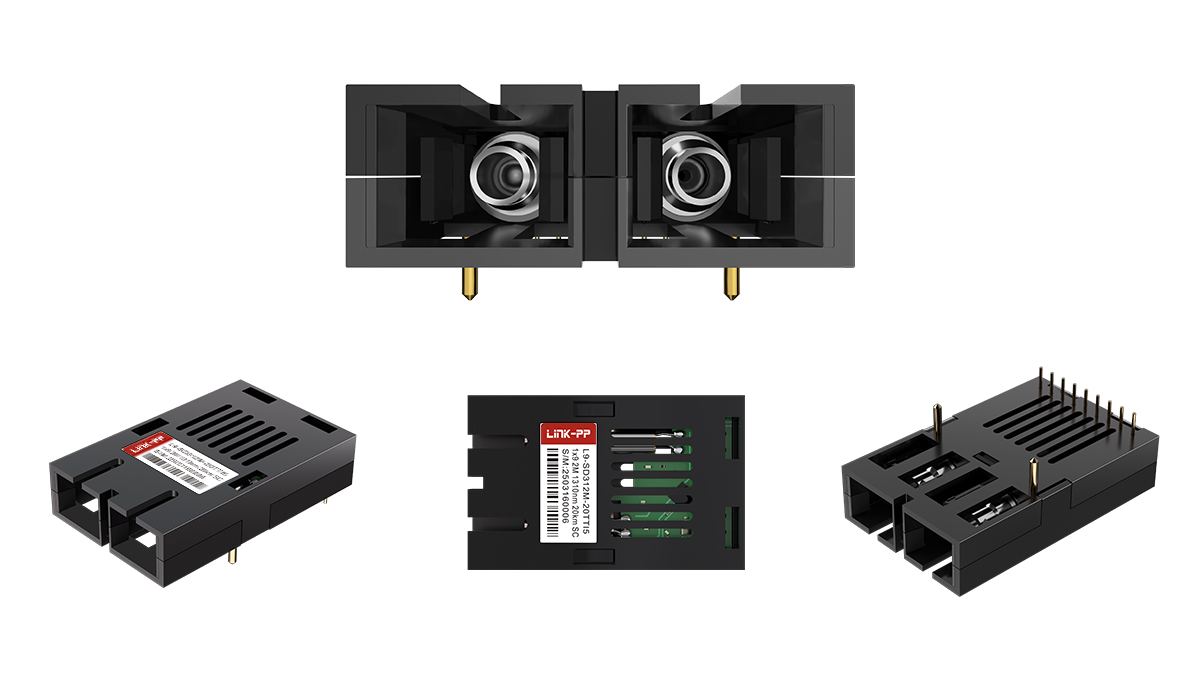
The 1×9 designation refers to the physical package – a metal casing with 9 pins for electrical connection. Unlike the hot-pluggable SFP (Small Form-factor Pluggable), modules 1×9 are typically soldered directly onto the host board. Key characteristics include:
Fixed Installation: Not hot-swappable; replacement requires board-level work.
Robustesse : Simple design often translates to high durability, crucial in industrial networking settings.
Support des systèmes hérités : Essential for maintaining older telecom equipment, industrial switches, routers, and des convertisseurs de support designed for this form factor.
Rentabilité : Often a lower-cost solution for applications not requiring hot-swap flexibility.
🚀 Critical Selection Criteria for Your 1×9 Transceiver
Selecting the wrong module leads to link failure, downtime, and frustration. Focus on these core parameters:
Required Transmission Distance:
Short Reach (SR): Utilise généralement Fibre multimode (MMF). Distances up to 2km (e.g., 1000BASE-SX standard). Common for intra-building or campus links.
Long Reach (LR): Uses Fibre monomode (SMF). Distances up to 20km, 40km, or even 80km (e.g., 1000BASE-LX, 1000BASE-ZX standards). Essential for connecting buildings or longer liaisons en fibre optique.
Match the distance exactement or choose a module rated for longer distances than needed. Never choose a module rated for a shorter distance.
Fiber Optic Cable Type:
Fibre multimode (MMF): Core diameter of 50µm or 62.5µm. Used with Longueur d’onde 850 nm transceivers (like 1000BASE-SX) for shorter distances. Ensure compatibility between the module’s fiber type requirement (OM1, OM2, OM3, OM4) and your installed cable.
Fibre monomode (SMF): Core diameter of 9µm. Used with 1310 nm or 1550nm wavelength transceivers (like 1000BASE-LX, 1000BASE-ZX) for long distances. Requires precise alignment.
Mixing fiber types (MMF with SMF module or vice versa) will NOT work!
Data Rate & Network Standard:
Fast Ethernet (100Mbps): Standards like 100BASE-FX.
Gigabit Ethernet (1Gbps / 1000Mbps): Dominant standard for 1×9 modules. Standards include:
1000BASE-SX : MMF, 850nm, up to 550m (OM2), 1km (OM3/OM4).
1000BASE-LX/LH : SMF, 1310nm, up to 10km or 20km. Some support MMF with a mode-conditioning patch cord.
1000BASE-ZX: SMF, 1550nm, up to 70km or 80km.
1000BASE-BX (BiDi): Utilise un laser single strand of fiber. Requires matched pairs (TX wavelength on one end must match RX wavelength on the other – e.g., 1310nm-TX/1550nm-RX paired with 1550nm-TX/1310nm-RX).
SONET/SDH : Common in telecom (e.g., OC-3/STM-1, OC-12/STM-4, OC-48/STM-16). Require specific wavelength and distance modules.
Match the module’s standard (e.g., 1000BASE-LX) exactly to the port configuration on your switch, router, or media converter.
Operating Wavelength:
Directly tied to fiber type and distance. Key wavelengths: 850nm (MMF, SR), 1310 nm (SMF, LR), Requiert un câblage standard OS1 ou OS2 de fil à vide simple. (SMF, ER/ZR). Modules BiDi use two different wavelengths (e.g., 1310nm/1490nm, 1490nm/1550nm) on the same fiber strand.
Operating Environment (Temperature & Ruggedness):
Commercial Temperature Range (C-temp): 0°C to +70°C. Standard office/DC environments.
Extended/Industrial Temperature Range (I-temp / E-temp): -40°C to +85°C (or sometimes -20°C to +75°C). Essential for industrial SFP applications like factory floors, outdoor cabinets, transportation, or harsh environments. LINK-PP specializes in robust, industrial-grade 1×9 modules.
diagnostics réseau (Digital Diagnostics Monitoring):
Also known as SFF-8472 compliance. Allows monitoring of real-time parameters like:
Température de l’émetteur-récepteur
Paramètres clés suivis via DDMI
Transmit Optical Power
Receive Optical Power
Troubleshooting plus rapide
Essentiel pour network monitoring, proactive maintenance, and troubleshooting. Verify if your host equipment supports and requires DDM/DOM.
Compatibility & Vendor Lock-in:
While standardized electrically and physically, some equipment vendors implement firmware locks restricting module use to their own branded (often expensive) optics.
Third-party compatible modules tels que ceux proposés par LIEN-PP offer significant cost savings and are rigorously tested for multi-vendor compatibility. Ensure the supplier guarantees compatibility with your specific equipment make and model.
🚀 Why Choose LINK-PP for Your 1×9 Transceivers Needs?
In critical infrastructure, industrial automation, or legacy telecom networks, reliability is non-negotiable. LIEN-PP stands out by focusing on the demanding requirements of transceiver 1×9 applications:
Industrial Strength: Our core expertise lies in industrial-grade optical modules. We rigorously design and test our des transceivers optiques 1×9 to perform flawlessly within the extended industrial temperature range (-40°C to +85°C), resisting vibration, dust, and humidity common in harsh settings. Keywords: Harsh environment SFP, reliable optical module.
Rigorous Compatibility Testing: We go beyond basic standards. Each batch of LINK-PP 1×9 modules undergoes stringent testing in actual equipment from major manufacturers (Cisco, Juniper, Huawei, Siemens, RuggedCom, Moxa etc.) to ensure seamless integration and reliable performance. Keywords: Multi-vendor compatible SFP, tested SFP modules.
Prise en charge complète de la DDM/DOM : Gain valuable insights into your fiber optic link health with comprehensive SFF-8472 compliant digital diagnostics on supported modules.
Quality Components & Manufacturing: We use high-grade optical components and adhere to strict quality control processes throughout manufacturing, ensuring longevity and minimizing failure rates.
Solutions rentables : Get enterprise-grade performance and industrial SFP ruggedness without the premium price tag of OEM modules.
Technical Specifications Decoded: Making Sense of the Labels
Understanding the codes on a module is key. A typical 1×9 transceiver part number might look like this: L9-SD3101-40PPI. Décortiquons-la :
L9: LINK-PP Brand, 1×9 form factor
SD: SC Duplex
31: Wavelength 1310nm
01: Data rate 155Mbps
40: Transmission 40km
PP: PECL Differential Input/Output and PECL signal detect
I: Industrial Temperature -40~85℃
Popular LINK-PP 1×9 Transceiver Models:
Short Reach Multimode: L9-SD3101-02CTC (155Mbps, 1310nm, MMF, 2km, Commercial Temp)
Long Reach Single-Mode: L9-SD311G-20PTC (1000BASE-LX, 1310nm, SMF, 20km, Commercial Temp) – The workhorse for robust long-distance industrial links.
Extended Reach Single-Mode: L9-SD5501-80PTI5 (155Mbps, 1550nm, SMF, 80km, Industrial Temp)
BiDi Single-Mode (Single Fiber):
L9-SC31551G-20PPC (1.25Gbps, 1310nm-TX/1550nm-RX, SMF, 20km, Commercial Temp)
L9-SC55311G-20PPC (1.25Gbps, 1550nm-TX/1310nm-RX, SMF, 20km, Commercial Temp) – Remember, BiDi modules require a matched pair.
Fast Ethernet: L9-TD3101-10CTC (100BASE-LX, 1310nm, SMF, 10km, Commercial Temp, ST Connector)
Common Pitfalls to Avoid
Ignoring Temperature Requirements: Using a commercial module in an industrial environment guarantees premature failure.
Mismatched Fiber Types: Plugging an SMF module into MMF cable (or vice versa) simply won’t work.
Sous-estimer la distance : Always add a safety margin (10-20%) to your measured fiber length when selecting a module.
Overlooking BiDi Pairing: Buying two identical BiDi modules instead of the required TX/RX pair.
Assuming Compatibility: Not verifying that a third-party module like a les émetteurs-récepteurs 1×9 LINK-PP is tested and guaranteed for your canal equipment model.
Neglecting DDM/DOM: Losing valuable diagnostic capabilities can make troubleshooting much harder.
👉 Need Help Finding the Perfect 1×9 Module? Contact Our technical experts now ➞
🚀 Conclusion: Selecting with Confidence
Choisir la bonne émetteur-récepteur optique 1×9 is crucial for stable, high-performance liaisons en fibre optique, especially in challenging industrial networking or legacy telecom environments. By systematically evaluating your requirements – distance, fiber type, data rate/standard, wavelength, temperature range – you can make an informed decision. Pay close attention to specifications and compatibility.
For applications demanding ruggedness, extended temperature operation, and proven reliability, LINK-PP’s industrial-grade 1×9 optical transceivers provide a cost-effective and high-performance solution. Our commitment to quality, rigorous testing, and focus on harsh environments ensures your critical links stay operational.
LIEN-PP
Explore our full range of high-performance 1×9 Transceivers
🚀 FAQ
What is a 1×9 optical transceiver?
A 1×9 optical transceiver is a network part with nine pins. It helps send and get data using fiber optic cables. Many factories and phone networks use it for strong connections.
Can you use a 1×9 transceiver with any fiber cable?
You need to match the transceiver to your fiber cable type. Use multimode transceivers with multimode cables. Use single-mode transceivers with single-mode cables. If you mix types, you will have connection problems.
How do you know if a 1×9 transceiver is working?
Look at the link lights on your device. If the lights are on, your transceiver works. You can also use a fiber tester to check the signal.
What should you do if your network does not connect?
Check every cable connection.
Clean the fiber connectors.
Make sure the transceiver matches your network speed and fiber type.
Try a different transceiver if it still does not work.
Are 1×9 optical transceivers hot-swappable?
No, you cannot swap 1×9 transceivers while the device is on. You must turn off your equipment before you remove or put in the module. This keeps your hardware safe.