















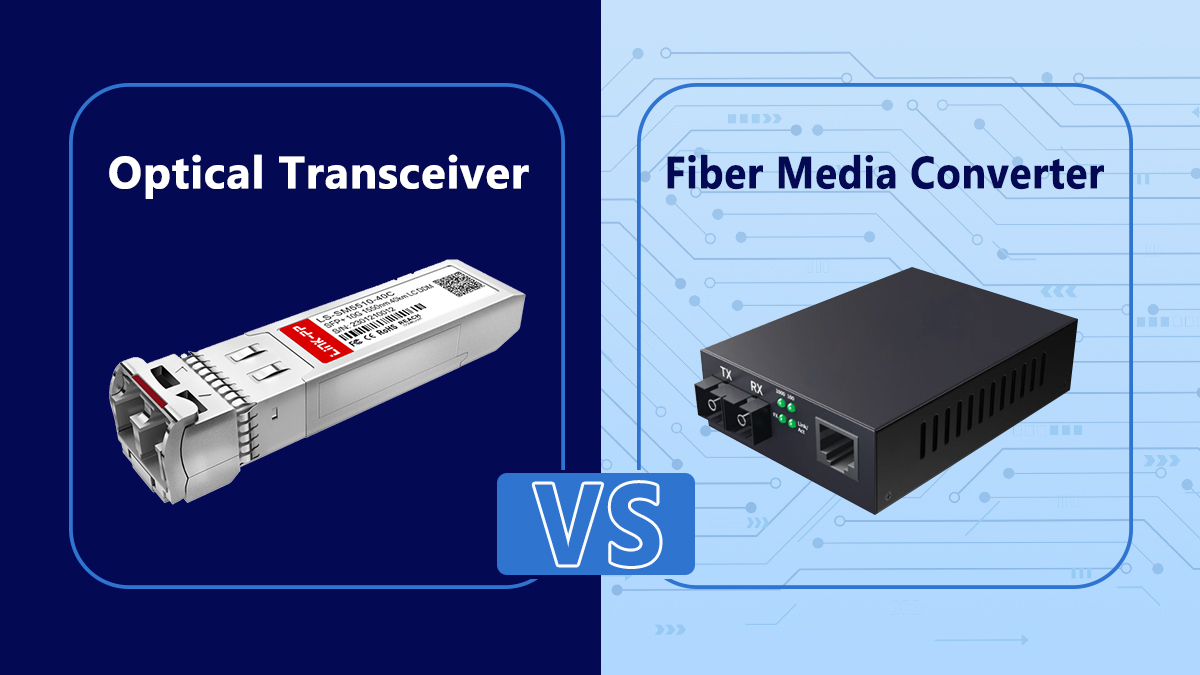
In modern networking, both émetteurs-récepteurs optiques and convertisseurs de support fibre
play critical roles in enabling la transmission de données à haut débit. However, these devices serve distinct purposes and are often confused. This article clarifies their differences, use cases, and how LIEN-PP optimize these technologies for seamless connectivity.
What is an Optical Transceiver?
An émetteur-récepteur optique is a compact, hot-pluggable device that converts electrical signals to optical signals (and vice versa). It’s typically installed in network switches, routers, or servers to enable communication over fiber optic cables. Key features include:
Supports multiple protocols (e.g., Ethernet, Fibre Channel).
Available in standardized form factors (SFP, QSFP, etc.).
Enables high-speed data transfer (1G/10G/100G and beyond).
Popular applications include centres de données, télécoms, and enterprise backbones. For example, émetteurs-récepteurs optiques LINK-PP are known for their compatibility with major switch brands and low-latency performance.
What is a Fiber Media Converter?
A fiber media converter acts as a bridge between different media types, such as converting fiber optic signals to copper Ethernet (or vice versa). These standalone devices are ideal for extending network reach. Key traits include:
Converts between fiber (single-mode/multimode) and copper.
Often used in industrial or legacy network upgrades.
Provides flexibility in mixed-media environments.
Optical Transceiver vs. Fiber Media Converter: Side-by-Side Comparison
Fonctionnalité | Émetteur-récepteur optique | Convertisseur de support en fibre |
|---|---|---|
Fonction principale | Signal conversion (electrical ⇄ optical) | Media conversion (fiber ⇄ copper) |
Emplacement de déploiement | Installed in network equipment ports | Standalone or DIN-rail mounted |
Cas d’utilisation typique | High-speed data center interconnects | Extending LANs over fiber |
Power Dependency | Powered by host device | Requires external power supply |
Évolutivité | Modular, easy to upgrade | Fixed configuration |
Efficacité coût | Higher per-port cost | Economical for point-to-point links |
Optical transceivers and fiber media converters play pivotal roles in modern networks, addressing different needs. Optical transceivers convert electrical signals to optical ones, facilitating la transmission de données à haut débit within equipment. Fiber media converters connect diverse media types, such as copper to fiber, enabling seamless integration. These technologies are critical for expanding data infrastructure and supporting bandwidth-intensive applications like AI and video traffic.
How to Choose Between Optical Transceivers and Fiber Media Converters
Factors to Consider for Network Design
Choosing between optical transceivers and convertisseurs de support fibre
depends on several factors that influence your network design. Each option offers unique benefits, and understanding these factors will help you make an informed decision.
Distance Constraints: Consider the distance your network needs to cover. Fibre monomode works best for long-distance connections, while fibre multimode is better suited for shorter ranges. For example, transceivers integrated into switches or routers can handle long-distance transmission with minimal signal loss, making them ideal for large-scale networks.
Bandwidth Specification: Evaluate the bandwidth requirements of your applications. Single-mode fiber supports higher bandwidth, which is essential for demanding tasks like data center interconnectivity. Transceivers excel in these scenarios, offering high-speed data transmission with low latency.
Financial Implications: Assess your budget. Single-mode fiber installations often cost more due to their complexity, while multimode fiber and fiber media converters provide a more affordable solution for extending network distances without replacing existing infrastructure.
Design Architecture: Review your current network setup. If your system already includes sfp modules, transceivers may integrate seamlessly, enhancing performance. Fiber media converters, however, are better suited for connecting legacy equipment to modern fiber networks.
Conditions of Use: Consider environmental factors. Single-mode fiber performs well in various conditions, but its deployment may face location-based limitations. Fiber media converters, with their plug-and-play design, offer flexibility and reliability in diverse environments.
By analyzing these factors, you can determine whether transceivers or fiber media converters align better with your network’s needs.
Conclusion
While émetteurs-récepteurs optiques focus on enabling high-speed communication within fiber networks, fiber media converters solve connectivity challenges between copper and fiber. By understanding their distinct roles, businesses can optimize investments and ensure network flexibility. Brands like LINK-PP bridge the gap between performance and affordability, offering tailored solutions for every layer of your infrastructure.
For more insights on high-performance optical transceiver modules or LINK-PP fiber media converters, explore our product guides or contact our experts today!
FAQ
1. Can you use optical transceivers and fiber media converters together?
Yes, you can combine them. émetteurs-récepteurs optiques handle la transmission de données à haut débit, while fiber media converters bridge copper and fiber networks for seamless integration.
2. Which is better for long-distance connections?
Optical transceivers work better for long distances. They support . Que vous soyez connectés aux bâtiments campus, établissement de liens métro ou mise en œuvre de DCI, comprendre les capacités et les meilleures pratiques de déploiement est clé pour le succès., which minimizes signal loss and ensures reliable performance over extended ranges.
3. Are fiber media converters compatible with modern networks?
Absolutely! Fiber media converters connect legacy systems to modern fiber networks. Their plug-and-play design ensures compatibility and simplifies integration across diverse setups.
Voir aussi
L’importance de la surveillance numérique dans les transceivers optiques