
















The digital world is moving to the edge. From smart factories and autonomous vehicles to real-time video analytics and AR/VR experiences, low-latency processing is no longer a luxury—it’s a requirement. This massive shift to computing edge deployments is revolutionizing industries, but it also brings a less-discussed challenge to the forefront: consommation d'énergie
.
While we often focus on the power draw of servers and switches, a critical, frequently overlooked component is the humble émetteur-récepteur optique. In a centralized data center, a transceiver’s few watts might seem negligible. But at the edge, where thousands of compact sites may have limited cooling and power budgets, the collective energy drain from these tiny devices becomes a monumental issue.
This article delves into why optimizing optical transceiver power consumption is no longer an afterthought but a core requirement for successful, sustainable, and scalable edge networks.
✅ The Power Dilemma at the Edge
Traditional cloud data centers are designed for power density and efficient cooling. Edge locations are not. They can be cramped cabinets on a factory floor, roadside enclosures, or even atop a cell tower. These environments have severe constraints:
Limited Power Budgets: Many sites rely on localized power, sometimes even backup batteries. Every watt saved extends operational life and reduces costs.
Thermal Management Challenges: Passive or minimal cooling is the norm. High-power components generate excessive heat, leading to premature hardware failure and reliability issues.
L'accès à l'énergie et les budgets sont restreints. With limited physical space, high power density leads to intense heat concentration.
In this context, the quest for energy-efficient network infrastructure becomes a direct driver of Total Cost of Ownership (TCO) and reliability.
✅ Why Optical Transceivers Are a Key Focus Point
émetteurs-récepteurs optiques are the essential translators of your network, converting electrical signals to light and back. In a large edge deployment, you might have hundreds or thousands of them. While a single high-performance transceiver might draw 3-4W, a cluster of them in a single switch can easily consume 50-100W—a significant load for an edge site.
The imperative for power efficiency in edge computing means that every component must be scrutinized. Optimizing optical transceiver power consumption directly contributes to:
Reduced Operational Expenditure (OpEx): Lower power draw cuts electricity bills across thousands of sites.
Une fiabilité accrue : Cooler running transceivers have a longer lifespan and higher mean time between failures (MTBF).
Improved Sustainability: Lower energy consumption reduces the carbon footprint of your edge network.
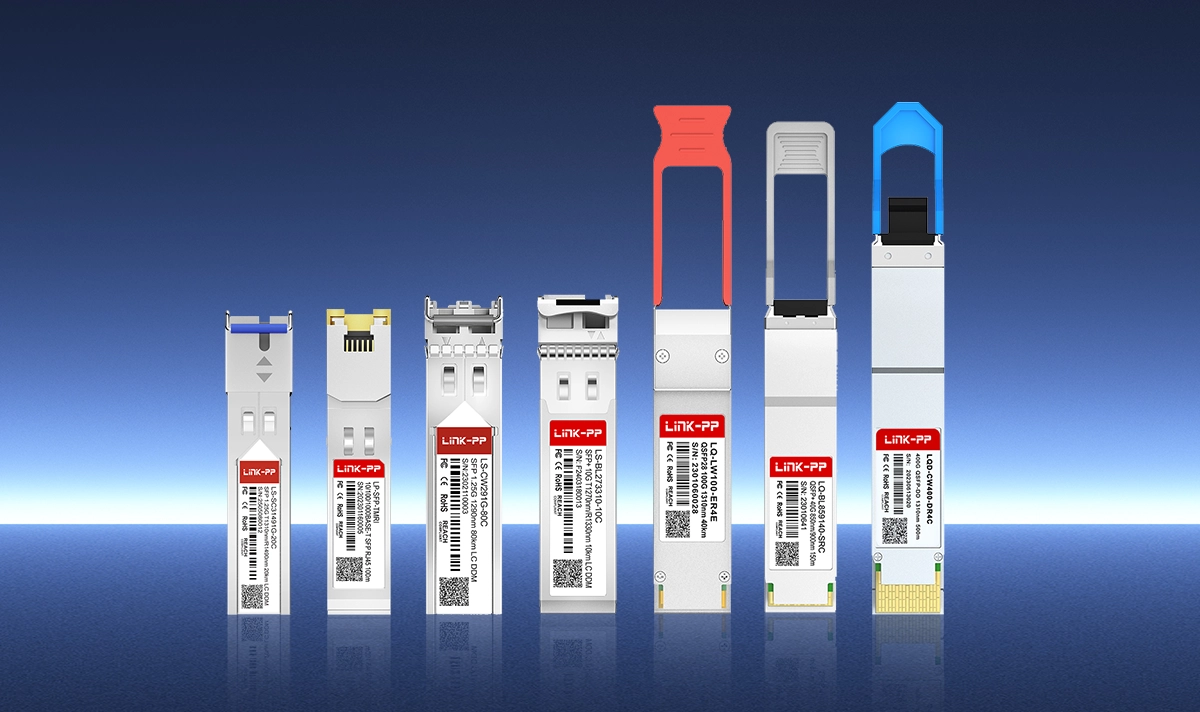
✅ How to Choose a Power-Efficient Optical Transceiver for Your Edge Deployment
Not all transceivers are created equal. When selecting transceivers for power-sensitive edge applications, consider these key factors, which are central to any strategy for optimizing network power usage.
Fonctionnalité | Spécifications clés des émetteurs-récepteurs conformes au DMD : | Power-Optimized Transceiver (e.g., LINK-PP) | Benefit for Edge Computing |
|---|---|---|---|
Consommation d’énergie | Higher (e.g., 3.5W+) | Lower (e.g., < 2.5W) | Directly reduces the total power load and heat output at the site. |
Température de fonctionnement | Standard (0°C to 70°C) | Extended (e.g., -40°C to 85°C) | Offers greater reliability in harsh, non-climate-controlled edge environments. |
Compliance & Design | May use older, less efficient components | Designed with advanced, low-power DSPs and optics | Built from the ground up for energy-efficient data transmission. |
Management & Diagnostics | Basique DDM/DOM | Advanced, granular power monitoring | Allows for precise tracking and management of power usage across the network. |
As the table illustrates, a purpose-built, power-optimized transceiver is not a minor upgrade but a fundamental enabler for robust edge networks.
✅ LINK-PP: Engineering Efficiency for the Edge
Leading the charge in this new paradigm are manufacturers who prioritize efficiency without compromising performance. This is where a brand like LIEN-PP stands out. They have engineered their transceivers specifically for the challenges of distributed computing.
Le module
approach goes beyond just using low-power components. They focus on system-level thermal and power design, ensuring their transceivers maintain signal integrity while running significantly cooler than industry averages. A prime example of this engineering philosophy is their LIEN-PP QSFP28 100G Optical Module série.
Par exemple, le LIEN-PP LQ-M85100-SR4C transceiver is a standout model designed for 100G edge aggregation switches. It consumes under 2.2W, a substantial saving compared to generic alternatives. By choosing a specific, power-optimized model like this, network architects can directly address the core challenges of heat dissipation and power budget limitations in edge data centers.
L’intégration de LIEN-PP‘s solutions is a practical answer to the question of how to reduce heat dissipation in edge data centers, making your deployment more resilient and cost-effective from the start.
✅ The Future is Efficient
The expansion of the edge will be built on sustainable and practical principles. Ignoring the power footprint of network components like émetteurs-récepteurs optiques is a costly mistake. By prioritizing power consumption optimization and partnering with innovators who understand the physics of the edge, like LIEN-PP, businesses can build networks that are not only high-performing but also lean, reliable, and ready for the future.
✅ FAQ
What is the best way to lower optical transceiver power use at the edge?
You should pick low-power optical modules and place them close to where you process data. This shortens the data path and saves energy. Always check your module’s power ratings before you buy.
How do you monitor power use in edge networks?
Set up sensors and use software tools to track power and temperature. Review your data often. If you see high numbers, act fast to fix the problem.
Can you upgrade old edge devices to save energy?
Yes! You can swap out old optical modules for new, energy-saving ones. Check if your devices support newer modules. Upgrading helps you cut power use and boost performance.
Why does temperature matter for optical transceivers?
High temperatures make transceivers use more power and work less well. Keep your devices cool with fans or heat sinks. Good airflow helps your network stay safe and efficient.
What tools help you test energy use before building your network?
Simulation tools like MintEDGE let you model your network. You can try different setups and see how much power each one uses. This helps you plan the best design.