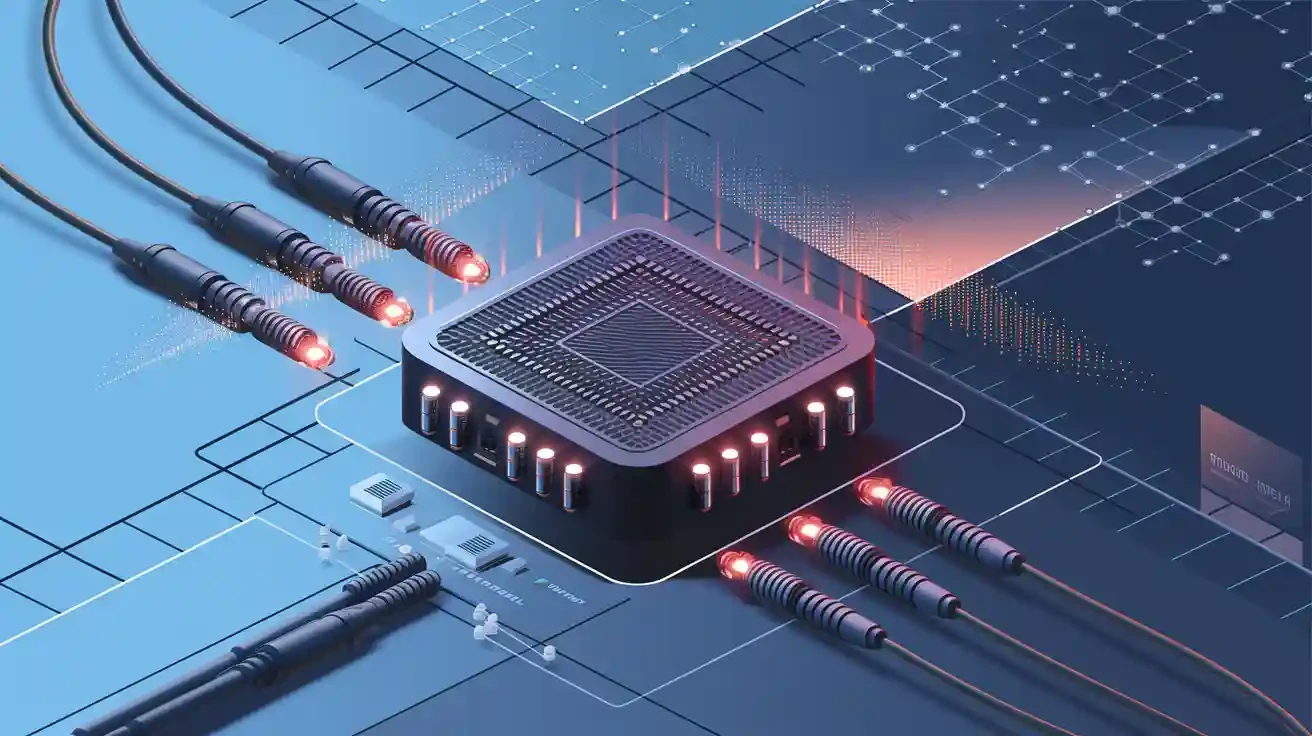
















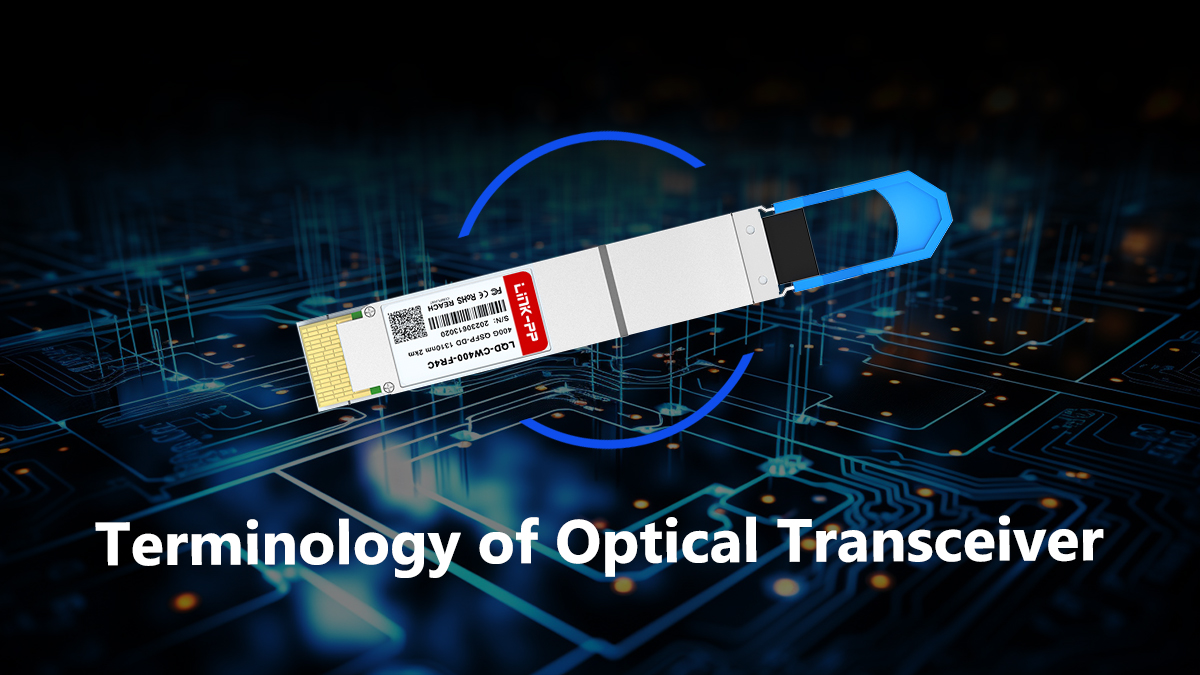
Transceptores ópticos son la columna vertebral de las redes modernas de comunicación de alta velocidad, ya que permiten la transmisión de datos entre centros de datos, sistemas de telecomunicaciones e infraestructuras empresariales. Para orientarse en este complejo ámbito, es fundamental comprender la terminología específica del sector. Aprenderemos muchos términos fundamentales relacionados con los módulos ópticos que se tratan en este blog.
Principales tipos y formatos de transceptores ópticos
SFP (Small Form-Factor Pluggable / Factor de forma reducido enchufable)
Un transceptor compacto y intercambiable en caliente que admite velocidades de hasta 4,25 Gbps, muy utilizado en redes Ethernet y Fibre Channel.
SFP+
Una versión mejorada del SFP, compatible con 10 Gbps, con una mayor resistencia a las interferencias electromagnéticas y diseños de carcasa más compactos.
QSFP+ (Quad Small Form-factor Pluggable)
Un módulo de cuatro canales para aplicaciones de 40 Gbps, ideal para interconexiones de centros de datos.
QSFP28
Diseñados para 100 Gbps, los módulos QSFP28 utilizan 25 Gbps por canal, lo que ofrece una mayor densidad y un menor consumo energético.
QSFP-DD (Módulo de factor de forma pequeño cuádruple de doble densidad)
Duplica la capacidad de los canales para permitir velocidades de 400G/800G en diseños compatibles con versiones anteriores.
OSFP (Octal Small Form-Factor Pluggable)
Diseñado para 800G y más allá, este nuevo formato permite una mayor eficiencia térmica.
CFP (C Form-Factor Pluggable)
Un módulo de mayor tamaño para redes metropolitanas y de largo recorrido de 100G/400G.
Parámetros técnicos e indicadores de rendimiento
Velocidad de datos
La velocidad de transmisión (por ejemplo, 10G, 25G, 100G, 400G). Las velocidades más altas requieren tecnologías avanzadas (modulación por amplitud de pulsos de 4 niveles) señalización.
Longitud de onda
Expresadas en nanómetros (nm), las longitudes de onda más habituales son 850 nm (multimodo), 1310 nm (monomodo) y 1550 nm (DWDM de largo alcance).
Tipo de interfaz
Interfaz física del lado de la red. Por ejemplo: LC, MPO/MTP, SC, RJ45.
Alcance (distancia)
SR (Alcance corto): Transmisión de corta distancia. Normalmente, de hasta 100 a 300 metros.
LR (Alcance largo): Transmisión a mayor distancia. Hasta 10 km.
ER (Extended Reach / Alcance Extendido): Transmisión de largo alcance. Hasta 40 km.
ZR (Zetta Reach): Transmisión de muy largo alcance. Hasta 80-120 km.
Potencia óptica
Potencia de transmisión: La intensidad luminosa media emitida por el módulo. .
Sensibilidad del receptor: La potencia óptica mínima necesaria para una recepción sin errores (normalmente entre -14 dBm y -28 dBm). .
Potencia de sobrecarga: La potencia óptica máxima que el receptor puede soportar sin sufrir daños.
CDR (Recuperación de reloj y datos)
Un circuito que extrae señales de sincronización y de datos de transmisiones de alta velocidad, reduciendo la fluctuación.
DDM (Monitorización diagnóstica digital)
Una función que permite supervisar en tiempo real la temperatura, la tensión y la potencia óptica en módulos como transceptores ópticos de LINK-PP.
MSO (Acuerdo de múltiples fuentes)
Normas (por ejemplo, MSA para QSFP28) que garantizan la compatibilidad entre distintos proveedores.
BER (Tasa de errores de bit)
La relación entre los bits erróneos y el total de bits transmitidos; una tasa de error de bits (BER) más baja indica una mayor integridad de la señal.
Dispersión cromática (CD)
Distorsión de la señal provocada por las variaciones en la velocidad de la luz en la fibra; se mitiga mediante fibra con desplazamiento de dispersión.
Dispersión por modo de polarización (PMD)
Otro tipo de distorsión, fundamental en sistemas de más de 100 Gbps.
Componentes ópticos en un transceptor óptico
Medio: Láser emisor superficial de cavidad vertical
FP: Láser de Fabry-Pérot
DFB: Láser de retroalimentación distribuida
EML: Láser modulado por electroabsorción
PIN: Fotodiodos PIN
APD: fotodiodos de avalancha
Tecnologías de multiplexación por división de longitud de onda (WDM)
La tecnología WDM permite que coexistan múltiples longitudes de onda en una sola fibra, lo que maximiza el ancho de banda:
CWDM (Multiplexación por división de longitud de onda gruesa): Utiliza un espaciado entre canales más amplio (20 nm) para redes metropolitanas rentables.
Transceptores DWDM (Multiplexación densa por división de longitudes de onda): Combina varias longitudes de onda (banda C o banda L) en una sola fibra para permitir un transporte de alta capacidad.
Protocolos y normas
Normas IEEE 802.3
Normas que regulan Ethernet 400G (802.3bs), FlexE, and CAUI-4 interfaces. Transceptor óptico SR8 de 400G de LINK-PP Cumple con la norma IEEE 802.3bs para infraestructuras en la nube.
MSA (Acuerdo Multifabricante)
Acuerdos sectoriales que garantizan la interoperabilidad, como especificación conjunta QSFP-DD (QSFP-DD MSA) and OSFP MSA. los transceptores ópticos de LINK-PP cumplen con el estándar MSA, lo que garantiza la compatibilidad «plug-and-play» con los principales fabricantes de conmutadores (Cisco, Juniper, etc.).
Tendencias e innovaciones emergentes
LPO (Óptica lineal enchufable): Elimina los chips DSP para reducir el consumo energético, lo que está ganando terreno en las cargas de trabajo de IA y aprendizaje automático.
CPO (óptica empaquetada conjuntamente): Integra la óptica con los circuitos ASIC, lo que reduce drásticamente el consumo energético en los centros de datos a hiperescala.
Fotónica de silicio: Combina chips de silicio con componentes ópticos para una producción rentable y a gran escala.
Conclusión
Dominar la terminología de los transceptores ópticos permite a los profesionales diseñar redes resilientes y de alta velocidad. Ya sea a la hora de evaluar la compatibilidad con DWDM o de seleccionar módulos compatibles con PAM4, la precisión en la terminología garantiza unas implementaciones óptimas. Elegir Transceptores ópticos de LINK-PP puede satisfacer tus necesidades en materia de 5G, computación en la nube e infraestructuras basadas en la inteligencia artificial.
Preguntas frecuentes
¿Cuál es la diferencia entre la fibra monomodo y la multimodo?
La fibra monomodo permite la comunicación a larga distancia con una pérdida mínima de señal. La fibra multimodo funciona mejor en distancias cortas y resulta más rentable. La fibra monomodo es ideal para aplicaciones como las redes metropolitanas, mientras que la multimodo es más adecuada para centros de datos y redes de área local.
¿Qué significa “intercambiable en caliente” en el caso de los transceptores ópticos?
Los transceptores intercambiables en caliente te permiten sustituirlos o actualizarlos sin necesidad de apagar la red. Esta característica garantiza un tiempo de inactividad mínimo y un funcionamiento ininterrumpido, lo que resulta muy práctico a la hora de realizar el mantenimiento o ampliar tu infraestructura.
¿Qué factores hay que tener en cuenta a la hora de elegir un transceptor óptico?
Presta especial atención a los requisitos de distancia, la velocidad de transmisión de datos y la compatibilidad con tu hardware actual. Además, ten en cuenta el tipo de fibra (monomodo o multimodo) y el consumo energético del transceptor para optimizar el rendimiento y la rentabilidad.
¿Cuáles son las aplicaciones más habituales de los transceptores ópticos?
Los transceptores ópticos se utilizan en centros de datos, telecomunicaciones, redes empresariales y redes de área metropolitana. Permiten la transmisión de datos a alta velocidad para la computación en la nube, los dispositivos del Internet de las cosas (IoT) y la infraestructura 5G.
Véase también
La importancia de la supervisión digital en los transceptores ópticos
Exploración del TOSA en los módulos ópticos y su importancia