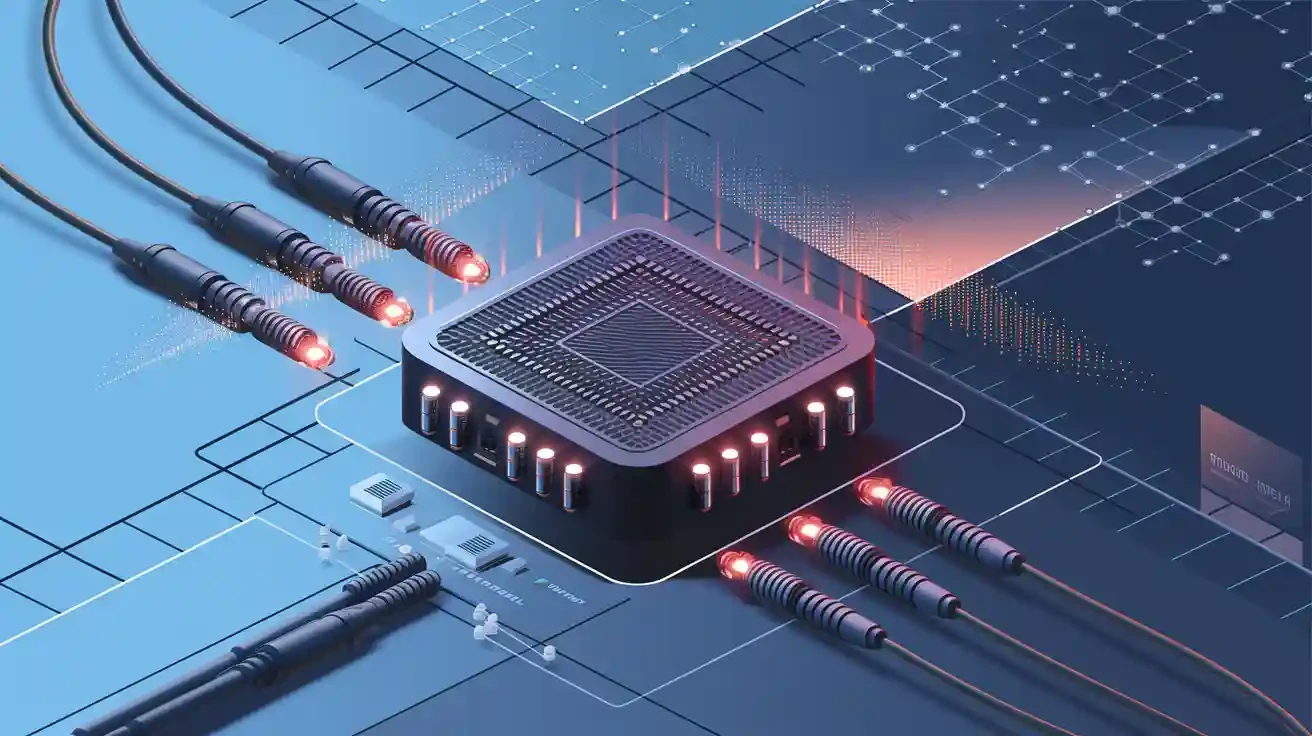

















Los módulos ópticos help 📜 Conclusión: Embracing the Coherent WDM Future move data very fast. These modules use fiber optic technology for quick and steady communication between edge nodes. Fast optical transmission lets edge networks handle information near users and devices. This makes the distance and number of network hops smaller, so speed goes up and delay goes down. More people want optical modules because of 5G, IoT, and new edge computing ways. Many edge data centers now use optical connections for real-time uses, which shows how important módulos ópticos
are in today’s network communication. Optical modules connect digital signals and optical transmission, so edge computing becomes faster and works better.
➣ The Edge Imperative & The Optical Enabler
The digital world is undergoing a seismic shift. Driven by IoT, AI, real-time analytics, autonomous systems, and immersive experiences, computing is moving relentlessly away from centralized cloud data centers and closer to the source of data generation – this is 📜 Conclusión: Embracing the Coherent WDM Future. While this delivers crucial benefits like ultra-low latencia, bandwidth savings, enhanced data privacy, and offline operation, it introduces unique infrastructure challenges:
Entornos agresivos: Edge sites (factories, rooftops, retail floors, cell towers) often lack controlled temperature, humidity, and cleanliness.
Restricciones de espacio: Physical space is often extremely limited.
Limitaciones de potencia: Power availability and budgets are restricted.
Diverse Connectivity Needs: Aggregating various sensors, devices, and backhauling to the core or cloud.
Scalability & Manageability: Deploying and managing thousands of remote sites efficiently.
Los módulos transceptores ópticos, the fundamental components converting electrical signals to light (and vice versa) for transmission over fiber optic cables, are uniquely positioned to address these edge computing challenges. Fiber optics inherently offer:
Ancho de banda masivo: Essential for handling growing edge data volumes.
Baja latencia: Critical for real-time applications (industrial control, AR/VR).
Alcance largo: Connecting dispersed edge nodes over kilometers without signal degradation.
EMI Immunity: Impervious to electrical noise common in industrial settings.
Seguridad: Difficult to tap compared to copper.
Why Traditional Data Center Optics Aren’t Enough for the Edge
While core data center transceptores ópticos are highly refined, they aren’t always the perfect fit for the demanding edge environment. The edge demands a different breed of optic:
Característica | Traditional Data Center Module | Edge-Optimized Module | Why it Matters at the Edge |
|---|---|---|---|
−40 °C a +85 °C (industrial) | 0 °C a 70 °C (comercial) | -40°C to 85°C+ (Industrial) | Withstands extreme heat/cold in uncontrolled sites |
Consumo de energía | Higher (Focus on density/speed) | Ultra-Low Power | Critical for sites with limited power budgets |
Tamaño del factor de forma | Often larger (e.g., CFP2, QSFP-DD) | Compact (SFP, SFP+, CSFP) | Fits into space-constrained edge devices/switches |
Robustez | Designed for controlled environments | Enhanced Shock/Vibration Resistance | Survives vibration in factories, transportation |
Cost Sensitivity | High Performance = Higher Cost | Cost-Optimized Performance | Enables massive scale-out deployments |
Management Complexity | Advanced diagnostics (e.g., DOM) | Gestión simplificada | Easier remote troubleshooting for IT generalists |
➣ Key Roles of Optical Modules in Edge Architectures
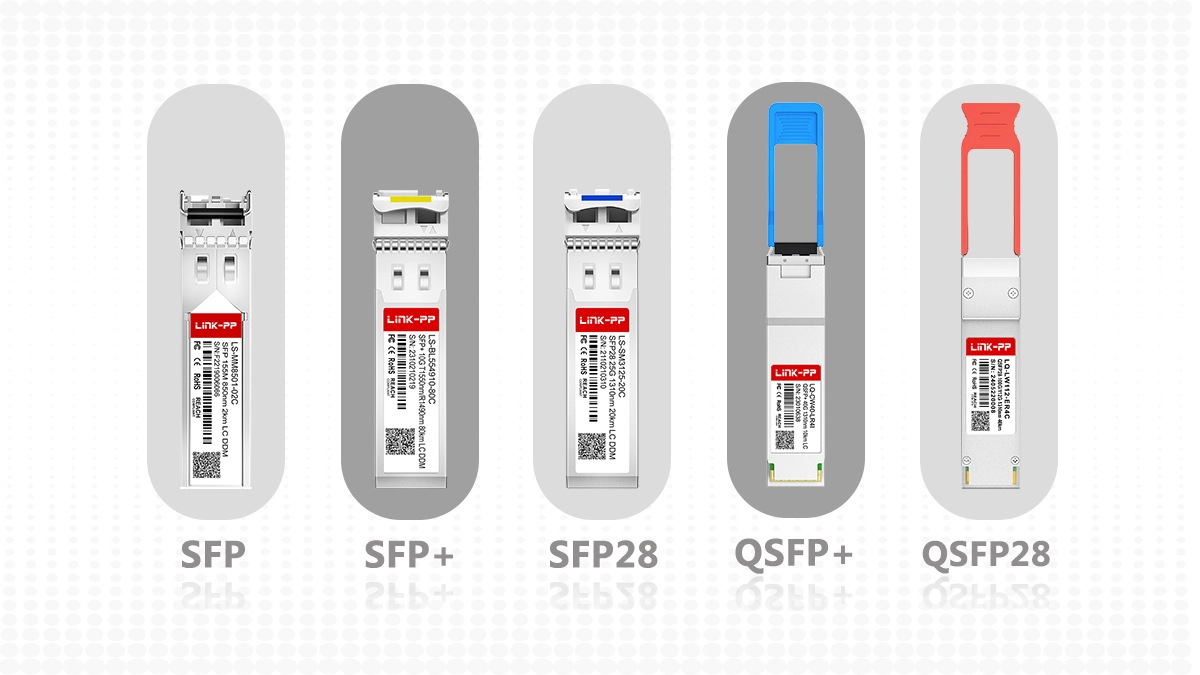
Edge Device Connectivity: Conectar
IoT sensors, cameras, machines, and pasarelas back to the edge aggregation switch using cost-effective, low-power optics (often SFP or SFP+ con 100BASE-FX, 1000BASE-LX, 1000BASE-SX). LINK-PP’s SFP-1G-LX is a workhorse for reliable long-reach 1G links in demanding environments.Edge Aggregation & Switching: Edge switches aggregate traffic from numerous devices. Higher-speed modules (SFP28 for 25G, QSFP28 for 100G, QSFP56 for 200G) handle internal traffic and uplinks. Density and power efficiency are paramount. LINK-PP’s SFP28-25G-SR offers excellent density and low power for high-bandwidth edge switching.
Edge-to-Edge Communication: Enabling low-latency communication between nearby edge nodes (e.g., between machines in a smart factory, between micro data centers in a city) using direct fiber links or simple optical switching. BiDi (Bidirectional) optics como la LINK-PP LS-BL49551G-80C save fiber strands.
Edge-to-Cloud/Core Backhaul: Transporting aggregated data from the edge site back to regional data centers or the cloud. This requires higher speeds (100G, 400G using QSFP28, QSFP-DD, OSFP) and potentially longer reach optics (ER, ZR, coherent options). LINK-PP’s QSFP28-100G-LR4 provides a robust 10km solution. For cost-effective multi-gigabit backhaul over existing fiber, PON (Red Óptica Pasiva) technologies using specialized OLT and ONU SFP modules are gaining traction.
Edge Data Center Interconnect (DCI): Connecting distributed micro or modular edge data centers within a region requires high-capacity, reliable links. Multiplexación densa por división de longitud de onda (DWDM) using tunable SFP+, SFP28, QSFP28 or pluggable coherent modules (CFP2-DCO, QSFP-DD ZR) provides scalable bandwidth over limited fiber. LINK-PP offers a range of DWDM SFP+ and QSFP28 solutions tailored for edge DCI.
➣ LINK-PP: Engineering Optics for the Edge Frontier

Understanding the unique demands of edge computing, LINK-PP has developed a portfolio specifically engineered for reliability, efficiency, and performance in harsh, distributed environments:
Rango de temperatura industrial: All key edge optical modules are rigorously tested and certified for -40 °C a 85 °C operation, ensuring consistent performance under extreme conditions.
Ultra-Low Power Design: Leveraging advanced DSP and laser technologies to minimize energy consumption, crucial for power-constrained sites. Our LINK-PP SFP-10G-LR consumes <1W, significantly below industry average.
Compact & Robust Form Factors: Focusing on SFP, SFP+, SFP28, QSFP28 to maximize port density and resilience against shock/vibration.
Cost-Effective Performance: Delivering the necessary bandwidth and reach without the premium cost of features unused at the edge.
Edge-Optimized Solutions: Including módulos PON SFP (OLT/ONU), Industrial BiDi optics, low-power DWDM, and extended temperature 25G/100G transceivers.
Simplified Management & Compatibility: Ensuring broad y MSA compliance for multi-vendor interoperability and providing clear, actionable DOM (monitoreo óptico digital) data for easier remote health checks.
Looking for reliable 10G connectivity at a cell tower or factory floor? The rugged LINK-PP SFP-10G-SR offers exceptional value and industrial-grade durability.
➣ Choosing the Right Optical Module for Your Edge Deployment: Key Considerations
La selección del transceptor óptico is critical for edge success. Go beyond just speed and reach:
Entorno: What are the min/max temperatures? Is there significant vibration or dust? Industrial temp (-40°C to 85°C) is non-negotiable for most true edge sites.
Presupuesto de potencia: Precisely calculate available power per device/switch. Ultra-low power optics (like LINK-PP’s offerings) directly impact deployment feasibility and OpEx.
Factor de forma y densidad: What modules does your edge switch/router support? How many ports are needed? SFP+/SFP28 often offer the best density/power balance for edge aggregation.
Required Reach & Bandwidth: Map distances between nodes and bandwidth requirements. Don’t over-provision with expensive long-haul optics if 500m or 2km suffices (e.g., SR, LR).
Fiber Type & Availability: Is it single-mode (FMU) or multi-mode (FMM)? How many strands are available? BiDi or PON optics can dramatically reduce fiber strand requirements.
Management & Diagnostics: How will you monitor health? Basic DOM support is essential for remote troubleshooting.
Coste total de propiedad (TCO): Factor in initial cost, power consumption, cooling (if any), reliability (failure rates), and manageability. High-quality, edge-optimized optics like LINK-PP deliver lower TCO despite potentially higher initial cost than commodity alternatives.
Vendor Reliability & Support: Choose a supplier with proven quality control, comprehensive warranties, and technical support experienced in edge networking challenges. LINK-PP provides global support and extended warranties for its edge module portfolio.
➣ The Future of Optics at the Edge: Speed, Simplicity & Co-location
The evolution continues rapidly:
Higher Speeds in Compact Packages: 100G (QSFP28), 200G (QSFP56), and eventually 400G (QSFP-DD, OSFP) becoming viable within edge power/thermal budgets. LINK-PP is actively developing next-gen low-power 100G/400G edge solutions.
Coherent Pluggables for the Edge: Lower-power, simplified coherent pluggable optics (ZR/ZR+) will enable 400G+ edge backhaul and DCI over 80km+ without complex external gear.
CPO (Óptica empaquetada en conjunto) y NPO (Óptica empaquetada cerca): While initially for hyperscale cores, concepts of integrating optics closer to the switch ASIC will trickle down, reducing power and complexity – potentially beneficial for dense edge compute nodes.
Enhanced Management & Automation: Integración con network orchestration platforms (like SDN) for zero-touch provisioning (ZTP), predictive failure analysis, and automated optimization of optical paths.
Converged Edge Access: Tecnologías como la 25GS-PON and 50GS-PON will offer multi-gigabit symmetric bandwidth over single fiber, simplifying FTTx deployments serving both residential/business and edge computing nodes simultaneously.
➣ Conclusion: Lighting the Path to Edge Success
Computación periférica (edge computing) is not a passing trend; it’s the foundation for the next wave of digital innovation. However, its success hinges critically on robust, high-performance, and resilient connectivity. Optical modules are the indispensable workhorses enabling the high bandwidth, low latency, and reliable communication that edge applications demand.
Moving beyond traditional data center optics is essential. Selecting edge-optimized optical transceivers designed for harsh environments, ultra-low power consumption, compact form factors, and simplified management – like those engineered by LINK-PP – is a strategic investment in the performance, scalability, and longevity of your edge infrastructure.
Ready to optimize your edge connectivity?
Explore LINK-PP’s comprehensive range of industrial-grade, low-power optical modules designed specifically for demanding edge environments.
Don’t let connectivity be the weakest link at your edge. Choose LINK-PP – Engineered for the Edge.