















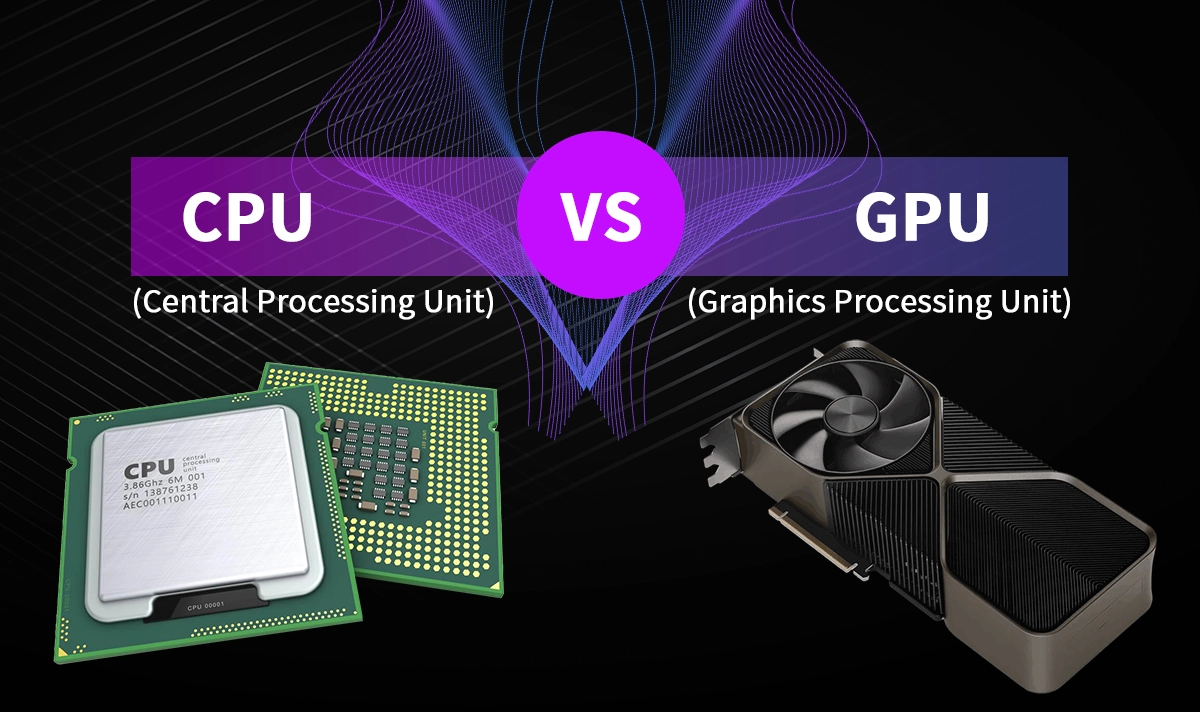
🖥️ Introduction
Graphics Processing Unit (GPU) and a Central Processing Unit (CPU) 🖥️ What Is a CPU? Key Characteristics of CPUs:.
Core Count:
Typically ranges from 4 to 16 cores.
Clock Speed:
High clock speeds (measured in GHz) for fast processing. Cache Memory:.
Large cache sizes to store frequently accessed data. Supports a wide range of instructions for various tasks.
🖥️ What Is a GPU? high-performance computing (HPC).
Key Characteristics of GPUs: Comprises thousands of smaller cores optimized for parallel processing.
Memory:
Equipped with high-bandwidth memory (e.g., GDDR6) to handle large data sets. Processing Model:.
Excels in executing the same operation across multiple data points simultaneously.
High clock speeds (measured in GHz) for fast processing. Applications:.
🖥️ CPU vs GPU: Architectural Differences CPU.
GPU Core Count.
4–16 cores 1,000–10,000+ cores.
Processing Type
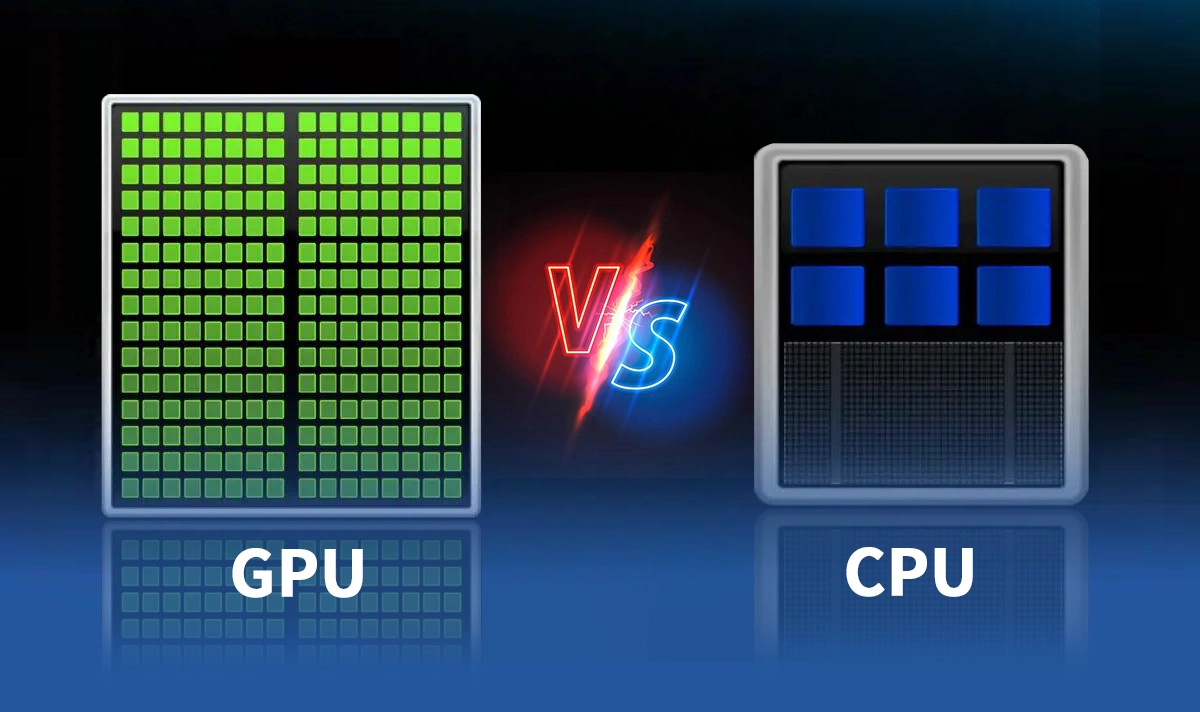
Característica | Sequential | Parallel |
|---|---|---|
Clock Speed | High (2–5 GHz) | Lower (1–2 GHz) |
Cache Size | Large (MBs) | Smaller (KBs) |
Task Suitability | General-purpose computing | Specialized computing tasks |
🖥️ Performance Benchmarks | Recent benchmarks highlight the performance disparities between CPUs and GPUs in various applications: | Machine Learning Training: |
GPUs can outperform CPUs by up to 76% in training times, especially with larger batch sizes. | For inference operations, GPUs can reduce processing times by approximately 68% compared to CPUs. | Gaming Performance: |
🖥️ Choosing the Right Processor for Your Needs
Selecting between a CPU and a GPU depends on the specific requirements of your tasks:
For General Computing: CPUs are suitable for everyday tasks such as web browsing, office applications, and system management.
For Graphics Rendering: GPUs are essential for tasks involving 3D rendering, video editing, and gaming.
For AI and HPC: GPUs are preferred for training AI models, running simulations, and processing large datasets due to their parallel processing capabilities.
🖥️ Conclusion
Understanding the differences between CPUs and GPUs is essential for optimizing computing performance. While CPUs are versatile and handle a wide range of tasks efficiently, GPUs excel in scenarios that require parallel processing and high computational throughput. Assessing your specific needs will guide you in selecting the appropriate processor to achieve optimal performance.
CPU vs GPU Explore the fundamental differences between GPUs and CPUs, their architectural distinctions, and performance benchmarks to understand which processor suits your computing needs.
For Graphics Rendering: GPUs are essential for tasks involving 3D rendering, video editing, and gaming.
For AI and HPC: GPUs are preferred for training AI models, running simulations, and processing large datasets due to their parallel processing capabilities.
🖥️ Conclusion
Understanding the differences between CPUs and GPUs is essential for optimizing computing performance. While CPUs are versatile and handle a wide range of tasks efficiently, GPUs excel in scenarios that require parallel processing and high computational throughput. Assessing your specific needs will guide you in selecting the appropriate processor to achieve optimal performance.